

Solarch
AIVisual backend architecture tool: draw node/edge graphs, validate with a rules engine, and generate matching backend code to prevent architectural drift.
Solarch
Visual backend architecture tool: draw node/edge graphs, validate with a rules engine, and generate matching backend code to prevent architectural drift.
About Solarch
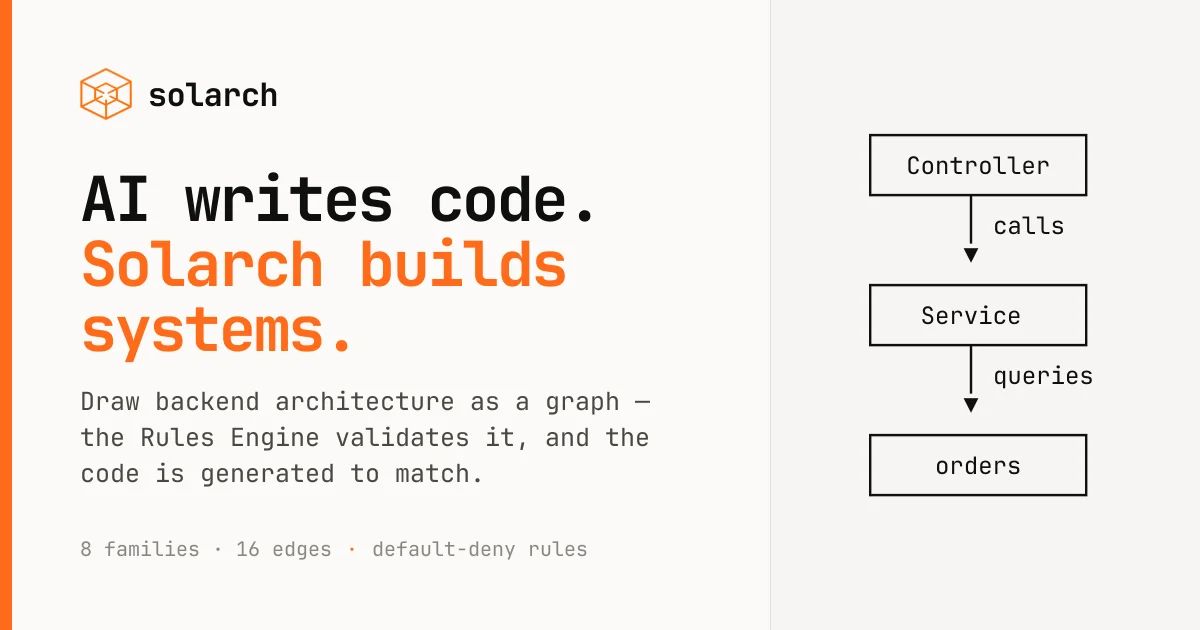
Solarch is a visual development tool that represents backend architectures as live node-and-edge graphs. Users draw services, data stores, and connections in the graph; a built-in rules engine validates the design against architectural constraints and best practices. Once validated, Solarch generates production-ready scaffold code that matches the drawn architecture, keeping design and implementation in sync to eliminate architectural drift. Its value is in treating architecture diagrams as the source of truth and automating the translation from design to runnable code, speeding delivery and improving governance.
Screenshots
Key Features
Use Cases



Frequently asked questions about Solarch
What is Solarch?
Solarch is an innovative platform that transforms backend architecture into a dynamic live node/edge graph. Users can visually design their architecture, which is then validated by a rules engine and automatically generates the corresponding code, ensuring zero architectural drift.
Key Points
- Dynamic Visualization: Solarch allows users to draw their backend architecture visually.
- Rules Engine: It validates the architecture in real-time, ensuring compliance with defined rules.
- Automated Code Generation: The platform generates code that matches the designed architecture, eliminating discrepancies.
Detailed Explanation
Solarch revolutionizes how developers and architects approach backend systems by providing a visual interface that simplifies complex architectures. Instead of manually coding each component, users can create a node/edge graph that represents their architecture. This graph is not just a visual aid; it’s an interactive model that reflects real-world systems.
How It Works:
-
Visual Design: Users can drag and drop components to create their architecture visually. This includes databases, servers, APIs, and other essential elements.
-
Validation with Rules Engine: As users design, the integrated rules engine checks for compliance with best practices and organizational standards. This real-time validation helps prevent errors and inconsistencies early in the design process.
-
Code Generation: Once the architecture is finalized, Solarch automatically generates the corresponding code. This means developers spend less time on repetitive coding tasks and can focus on more complex logic and functionalities.
Use Cases:
- Enterprise Applications: Large organizations can use Solarch to manage complex backend systems while ensuring that all components align with internal standards.
- Startups: New businesses can rapidly prototype their backend architecture, allowing for quick iterations and adjustments based on feedback.
- Education: Learning institutions can utilize Solarch to teach students about backend architecture in a more engaging and interactive way.
Best Practices / Tips
- Start Simple: Begin with basic components before adding complexity to avoid overwhelming the design.
- Utilize the Rules Engine: Take full advantage of the rules engine to maintain high standards and avoid architectural issues.
- Regularly Update Designs: As business needs evolve, routinely revisit and revise your architecture to ensure it remains relevant and efficient.
Additional Resources
How does Solarch work?
Solarch works by integrating advanced AI functionalities to streamline and enhance everyday workflows for users. By leveraging machine learning and automation, Solarch assists in data analysis, task management, and decision-making, ultimately improving productivity and efficiency in various applications.
Key Points
- AI Integration: Combines multiple AI technologies for seamless workflow enhancement.
- User-Friendly: Designed for ease of use, making AI accessible to all users.
- Versatile Applications: Applicable across various industries and tasks.
Detailed Explanation
Solarch operates by utilizing a blend of machine learning algorithms, natural language processing, and automation tools. This combination allows users to automate repetitive tasks, analyze large datasets, and generate insights quickly. For example, in content creation, Solarch can help generate topic ideas, suggest keywords, and even draft articles based on user prompts.
Use Cases:
- Data Analysis: Users can input datasets into Solarch, which then identifies trends and generates reports without manual intervention.
- Task Automation: Routine tasks such as email sorting, scheduling, and reminders can be automated, freeing up time for more critical activities.
- Decision Support: Solarch can analyze multiple scenarios and outcomes, providing users with data-driven recommendations for better decision-making.
Best Practices / Tips
- Start Small: Begin by automating simple tasks to familiarize yourself with Solarch's capabilities.
- Leverage Templates: Use pre-existing templates for common tasks to save time and improve efficiency.
- Regular Updates: Keep your Solarch instance updated to benefit from the latest features and security enhancements.
- Monitor Performance: Regularly review the outcomes of automated tasks to ensure they meet your expectations and adjust settings as needed.
Additional Resources
What are the main features of Solarch?
Solarch is an innovative AI platform that offers features such as advanced data analytics, real-time monitoring, and machine learning capabilities. These core AI functionalities enable users to optimize energy usage, improve efficiency, and make informed decisions based on actionable insights.
Key Points
- Advanced Data Analytics: Provides deep insights into energy consumption patterns.
- Real-time Monitoring: Allows users to track energy usage instantaneously.
- Machine Learning Capabilities: Adapts to user behavior for optimized performance.
Detailed Explanation
Solarch's advanced data analytics feature empowers users by analyzing vast datasets to reveal patterns and trends in energy consumption. For instance, businesses can identify peak usage hours and adjust their operations accordingly, leading to substantial cost savings.
The real-time monitoring system is crucial for users who need immediate feedback on their energy consumption. This feature ensures that energy managers can spot inefficiencies as they occur, enabling quick corrective actions. It also provides alerts for unusual consumption spikes, which could indicate equipment malfunctions or unauthorized usage.
Machine learning capabilities within Solarch continuously improve the system's effectiveness. By learning from historical data and user interactions, Solarch can make personalized recommendations for energy optimizations, such as suggesting the best times to run energy-intensive machinery.
Use Cases
- Commercial Buildings: Optimize HVAC systems based on occupancy patterns.
- Manufacturing: Reduce energy costs by scheduling machinery during off-peak hours.
- Renewable Energy Management: Analyze solar energy production and consumption for efficiency.
Best Practices / Tips
- Regularly Review Data: Schedule monthly reviews of analytics to stay updated on energy trends.
- Set Alerts: Use the real-time monitoring feature to set alerts for unusual usage patterns.
- Engage Staff: Train employees on energy-saving practices informed by Solarch’s insights.
Additional Resources
Who is Solarch for?
Solarch is designed for individuals and teams looking to enhance their daily workflows using AI technology. It's particularly beneficial for professionals in sectors like marketing, project management, data analysis, and education, enabling them to streamline tasks, improve productivity, and foster innovation.
Key Points
- Target Audience: Professionals, teams, and individuals.
- Industry Applications: Marketing, education, data analysis, and project management.
- Workflow Enhancement: Automates repetitive tasks and boosts productivity.
Detailed Explanation
Solarch is a versatile AI tool tailored for various users. It caters to professionals across multiple industries looking to optimize their day-to-day tasks. For instance, marketers can automate content creation and social media scheduling, while educators can streamline lesson planning or grading. Data analysts benefit from Solarch by quickly processing large datasets and generating insights with minimal effort.
Here are a few specific use cases:
- Marketing Teams: Use Solarch to generate targeted email campaigns, analyze customer data, and create social media content that resonates with audiences.
- Project Managers: Automate status updates, create project plans, and monitor team productivity, allowing for better resource allocation and time management.
- Educators: Leverage AI to design personalized learning experiences, grading automation, and administrative task management, freeing up time for instructional activities.
Best Practices / Tips
- Identify Your Needs: Before implementing Solarch, assess your workflow to determine which tasks can be automated.
- Integrate with Existing Tools: Ensure that Solarch is compatible with other tools you use, such as CRM or project management software, for a seamless experience.
- Regularly Update Your Skills: Stay informed about new features and best practices by participating in Solarch’s training sessions and webinars.
- Monitor Performance: Keep track of how well Solarch is enhancing your workflow and make adjustments as necessary to maximize its benefits.
Additional Resources
Leveraging Solarch can significantly enhance productivity and creativity for users in various fields, making it a valuable asset for anyone looking to harness the power of AI in their daily routines.
How much does Solarch cost?
Solarch offers a free tier that allows users to access basic features, while its paid plans start at $10 per month, providing advanced functionalities tailored for businesses and professionals. This pricing structure makes it accessible for both individual users and larger teams.
Key Points
- Free Tier: Access to basic features at no cost.
- Paid Plans: Starting at $10 per month for advanced tools.
- Scalability: Options for businesses of all sizes.
Detailed Explanation
Solarch’s pricing is designed to cater to a diverse audience, starting with a free tier that includes fundamental features like project tracking and collaboration tools. This is ideal for individual users or small teams looking to experience the platform without financial commitment.
For users needing more advanced capabilities, Solarch offers paid plans starting at $10 per month. These plans typically include features such as enhanced reporting, priority support, and integrations with other software, which are essential for businesses aiming to optimize their workflow. As you explore the options, you may find tiered pricing that accommodates larger teams and additional functionalities, allowing for greater scalability as your project demands increase.
For example, a small marketing team might benefit from the basic features in the free tier initially. As their projects grow and require more sophisticated tools, upgrading to a paid plan can unlock automation features and comprehensive analytics, streamlining their operations.
Best Practices / Tips
- Evaluate Your Needs: Start with the free tier to understand your requirements before committing to a paid plan.
- Trial Periods: Take advantage of any trial periods offered for paid plans to assess whether the features are worth the investment.
- Monitor Usage: Regularly review your usage to determine if you need to upgrade or can downgrade your plan.
Additional Resources
How do I get started with Solarch?
To get started with Solarch, simply visit solarch.dev to sign up. After creating an account, you can explore its features, including project management tools, collaboration options, and AI-driven insights tailored for developers and teams.
Key Points
- Easy Registration: Signing up is fast and straightforward.
- Feature Exploration: Access a range of tools designed for various development needs.
- Community Support: Engage with other users for tips and best practices.
Detailed Explanation
Solarch is a powerful platform designed to enhance software development through AI-driven tools and collaborative features. To start, navigate to solarch.dev where you can create an account by providing your email and setting a password. Once registered, you'll gain access to a user-friendly dashboard that allows you to manage projects efficiently.
Features to Explore:
- Project Management: Utilize Kanban boards and task management features to organize workflows.
- Collaboration Tools: Share projects with team members and communicate seamlessly through integrated chat functions.
- AI Insights: Leverage AI analytics for code quality and performance metrics, helping you make informed decisions.
Use Cases:
- Developers can streamline their workflow by using Solarch to track progress and automate repetitive tasks.
- Teams can collaborate on projects in real-time, ensuring everyone is aligned and informed throughout the development process.
Best Practices / Tips
- Complete Your Profile: Fill in your user profile to enhance collaboration and networking opportunities.
- Utilize Tutorials: Take advantage of Solarch's onboarding tutorials and resources to maximize your understanding of the platform.
- Engage with the Community: Join forums and discussion groups related to Solarch for shared insights and troubleshooting.
Additional Resources
- Solarch Documentation - Comprehensive guides and tutorials.
- Community Forum - Connect with other users for support and sharing ideas.
- Feature Updates - Stay informed about new features and improvements.
Explore more AI Ai Tools tools
Browse all Ai Tools tools →Browse by use case: Code Generation · Automation & Productivity
Compare Solarch: vs Juggler · vs Elva · vs GhostWriter by MyHandler · vs Neopress