

Milvus
AIOpen SourceFreeOpen-source, cloud-native vector database for high-performance, scalable nearest-neighbor search and managing embedding vectors.
Milvus
Open-source, cloud-native vector database for high-performance, scalable nearest-neighbor search and managing embedding vectors.
About Milvus
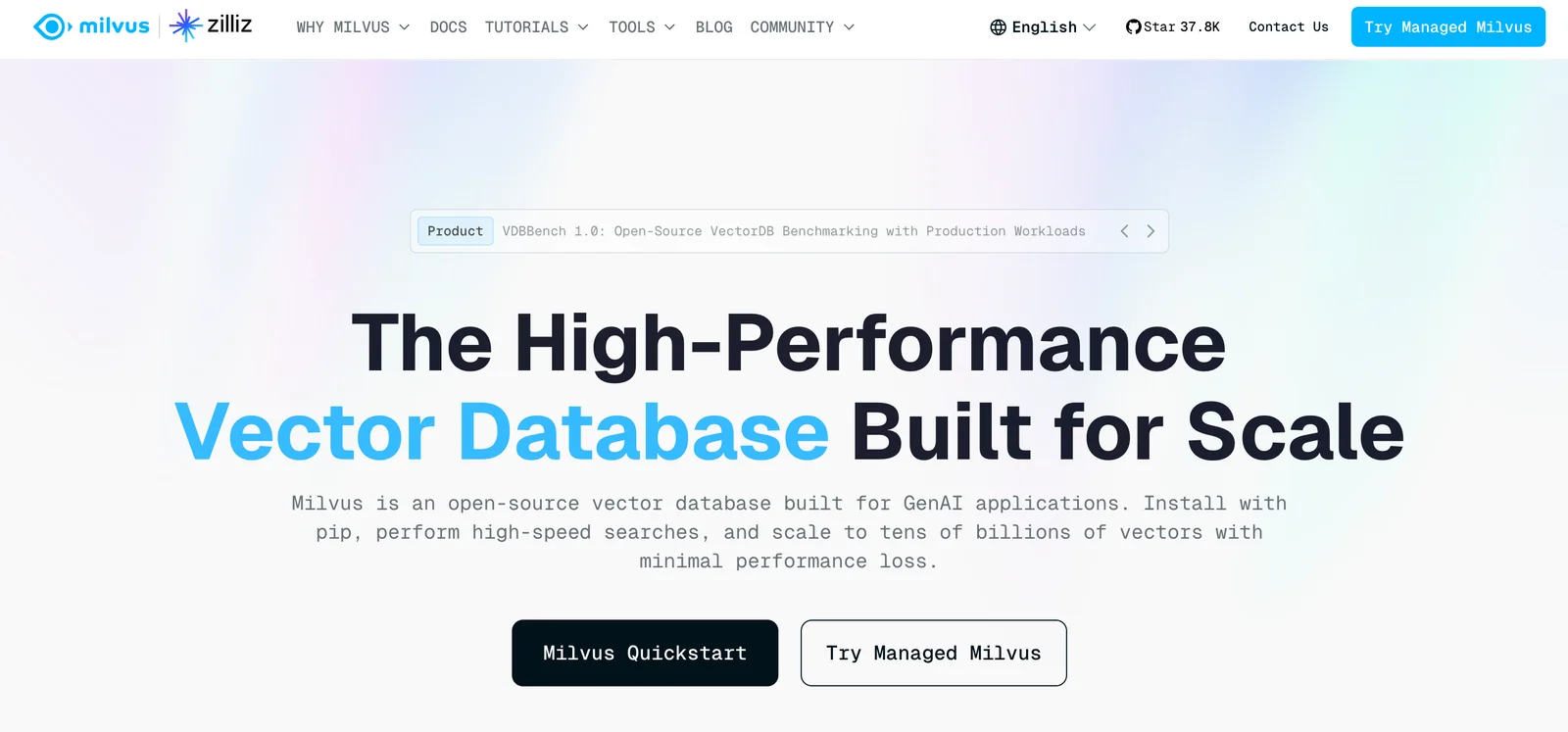
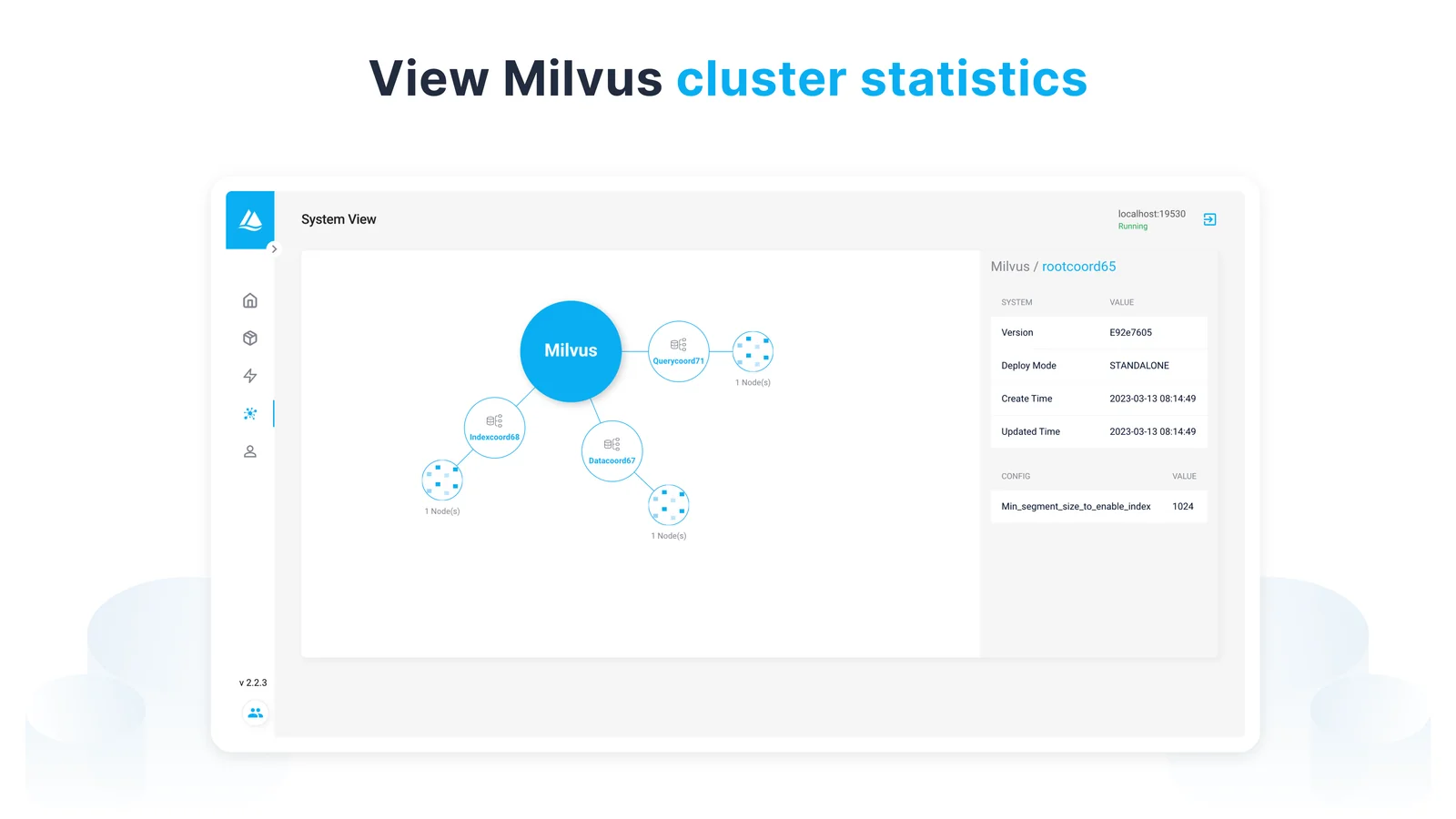
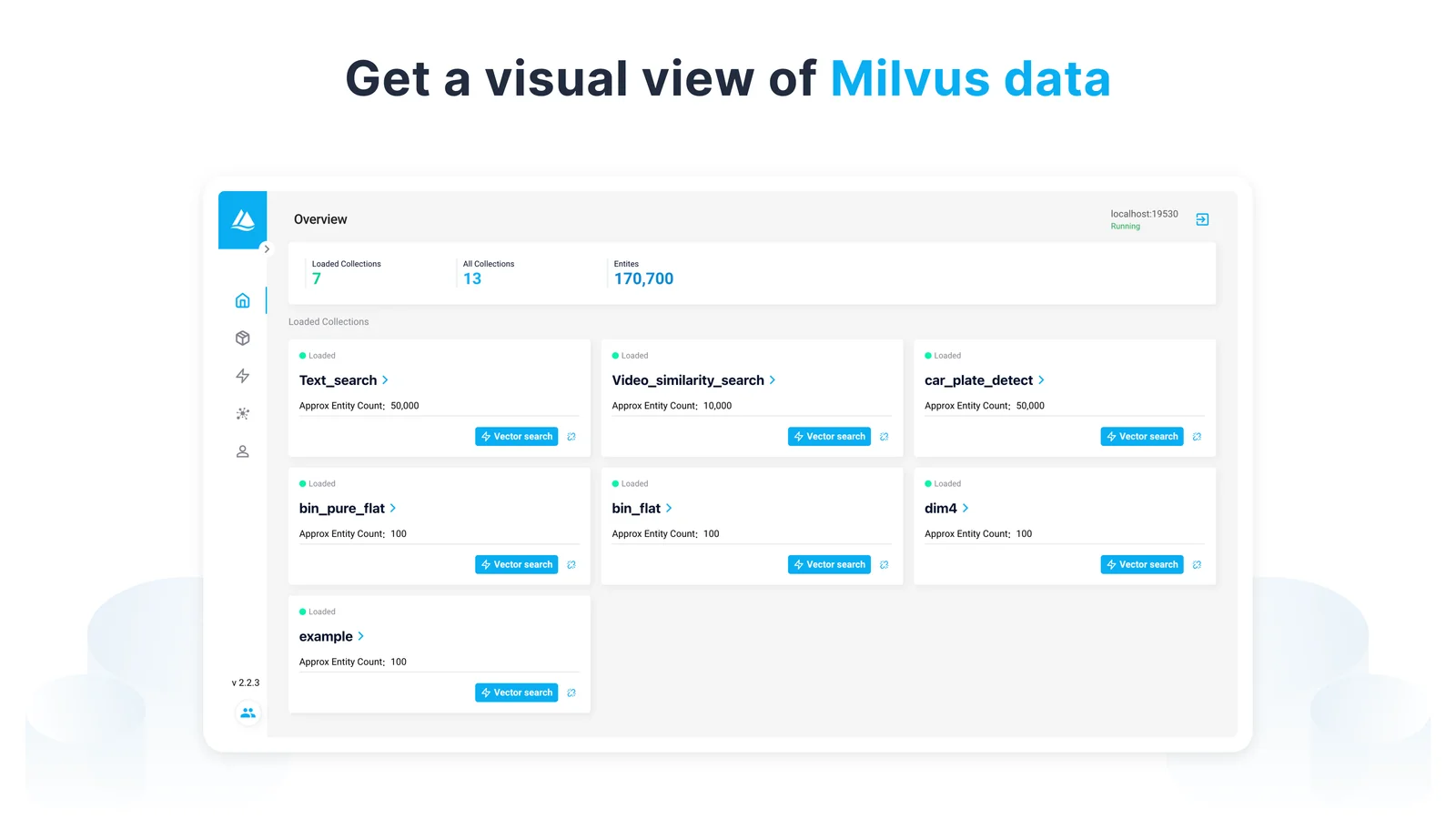
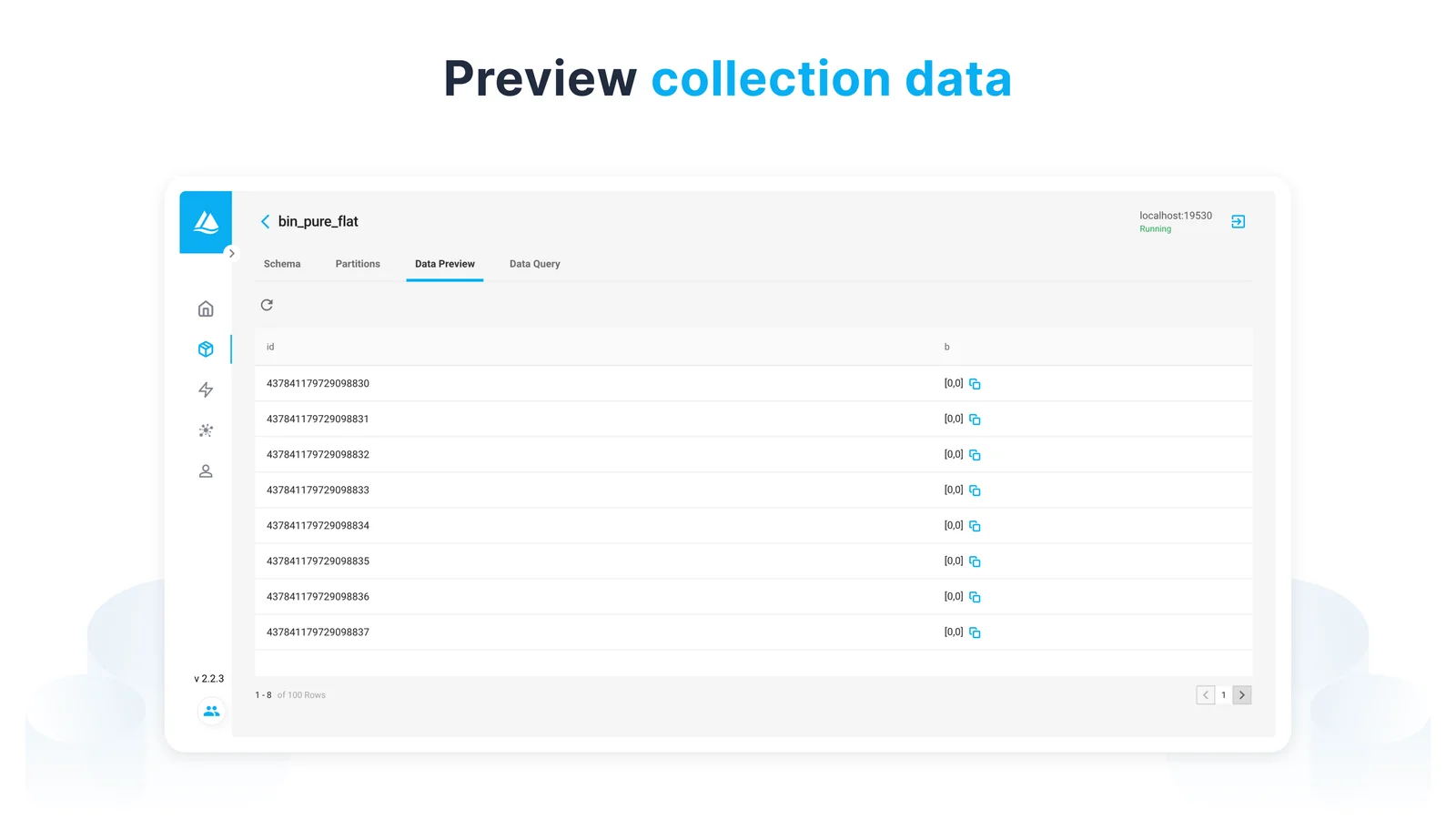
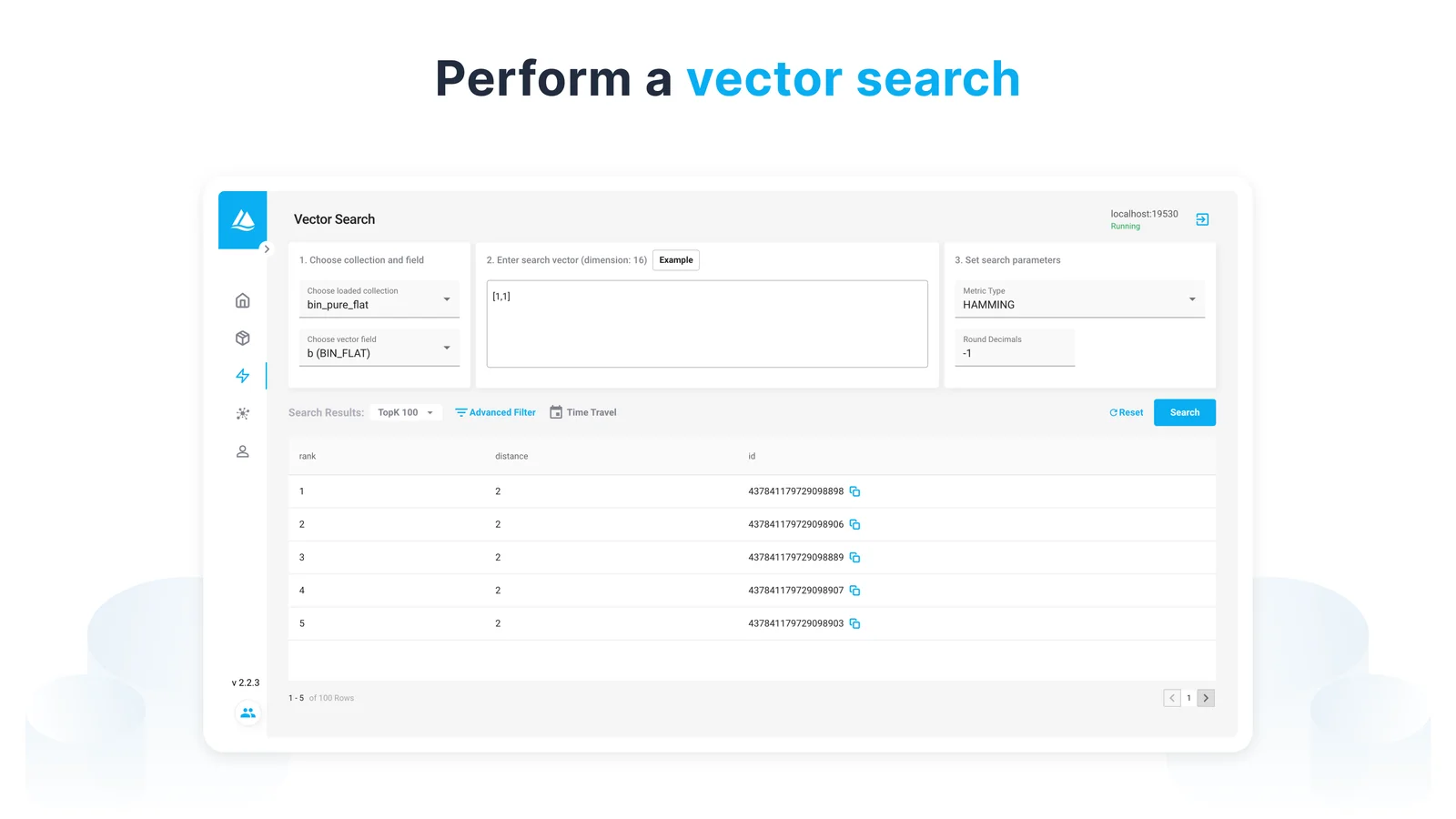
Milvus is an open-source, cloud-native vector database designed to store, index, and search massive volumes of embedding vectors generated by machine learning and neural models. It extends best-in-class ANN libraries (e.g., Faiss, NMSLIB, Annoy) to provide high-speed nearest neighbor search, real-time insertion and query, and indexing at large scale (tens of billions of vectors). Milvus supports production deployment patterns with high availability and on-demand scalability, offers SDKs for multiple languages, Kubernetes operator support for declarative cluster management, and ecosystem tools for migration, backup, and UI-based management. Its unique value is combining ANN performance with database features (partitions, collections, role management) to power GenAI scenarios like semantic search, RAG, and similarity search at scale.
Screenshots
Key Features
Use Cases


Frequently asked questions about Milvus
What is the pricing structure for Milvus?
Milvus is available for free under an open-source model, offering self-hosted options at no cost. Zilliz provides a managed version with usage-based pricing, ensuring flexibility for users. Community support accompanies the open-source version, making it accessible for developers and businesses alike.
Key Points
- Milvus operates under an open-source model.
- Self-hosted options are available for free.
- Zilliz offers a managed version with usage-based pricing.
Detailed Explanation
Milvus is a powerful vector database optimized for AI applications, enabling efficient similarity search and analytics of large datasets. The open-source version allows users to deploy Milvus on their own infrastructure without incurring any costs. This is particularly beneficial for startups and developers seeking to test the capabilities of Milvus without financial commitment.
Self-Hosted Options
- Cost-Free Deployment: Users can download and install Milvus on their servers, customizing it according to their needs.
- Community Support: The open-source community provides forums and resources for troubleshooting and optimization, ensuring users can get help when needed.
Managed Version by Zilliz
- Usage-Based Pricing: Zilliz offers a managed service that scales with your usage, making it suitable for businesses that require more robust features and support.
- Enterprise Features: This version includes additional functionalities such as enhanced security, automated backups, and priority support, which are crucial for enterprise-level applications.
Best Practices / Tips
- Evaluate Your Needs: Assess whether the free self-hosted version meets your requirements or if the managed version is necessary for your business scale.
- Leverage Community Resources: Engage with the Milvus community to access tutorials, optimization tips, and best practices.
- Monitor Usage: If opting for Zilliz’s managed version, keep an eye on your usage to manage costs effectively.
Additional Resources
What are the key features of Milvus?
Milvus is a high-performance vector database designed for AI applications, featuring approximate nearest neighbor search, scalability to billions of vectors, and real-time insertion. It is cloud-native with Kubernetes integration and supports multiple SDKs for programming languages including Python, Java, and Go.
Key Points
- High-Performance Search: Offers rapid approximate nearest neighbor search capabilities.
- Scalability: Efficiently handles billions of vectors, accommodating the needs of large datasets.
- Real-Time Insertion: Facilitates dynamic data updates without downtime.
Detailed Explanation
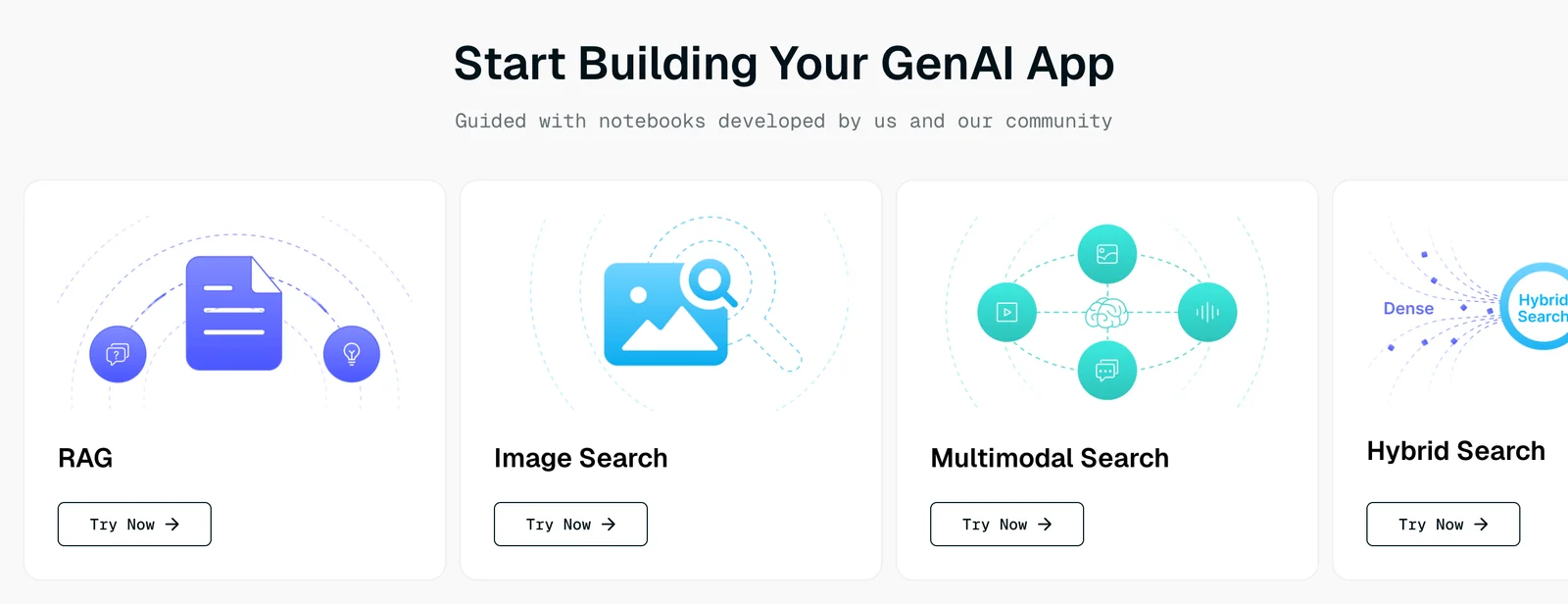
Milvus excels in various use cases, such as recommendation systems, image and video search, and natural language processing. Its core features include:
-
Approximate Nearest Neighbor Search: This feature allows for quick retrieval of similar vectors, making it ideal for applications like image recognition or semantic search. For example, in e-commerce, Milvus can help recommend products based on user preferences by quickly finding similar items.
-
Scalability: Milvus can scale horizontally, allowing users to handle vast amounts of data seamlessly. It supports billions of vectors, making it suitable for businesses with growing datasets. This scalability ensures that performance remains consistent as demand increases.
-
Real-Time Insertion: Unlike traditional databases that require batch updates, Milvus allows users to insert new vectors in real-time. This is crucial for applications that rely on up-to-date information, such as social media platforms or dynamic content delivery systems.
-
Cloud-Native Architecture: Milvus is designed to integrate with cloud environments effortlessly. Its compatibility with Kubernetes enables automated deployment and management, facilitating scalability and resource efficiency. This feature is particularly beneficial for businesses looking to optimize their cloud infrastructure.
-
Multiple SDK Support: With SDKs for Python, Java, Go, and more, developers can easily integrate Milvus into their existing applications, ensuring flexibility and ease of use across diverse programming environments.
Best Practices / Tips
- Optimize Vector Size: Ensure that vector dimensions are optimized for your specific use case to improve search speed and accuracy.
- Monitor Performance: Regularly analyze query performance and adjust parameters to fine-tune your Milvus deployment.
- Leverage Cloud Features: Take advantage of cloud-native functionalities like auto-scaling to manage workloads efficiently.
- Use Batch Insertions: While real-time insertion is beneficial, using batch insertions can improve performance when updating large datasets.
Additional Resources
How do I get started with Milvus?
To get started with Milvus, first download the open-source version from the official Milvus website. You can choose to deploy it using pip, Docker, or Kubernetes, depending on your infrastructure needs. Follow the provided installation guide for a smooth setup experience.
Key Points
- Download from the Official Website: Access the latest version of Milvus directly.
- Deployment Options: Choose from pip, Docker, or Kubernetes based on your environment.
- Installation Guide: Follow the detailed instructions for a successful setup.
Detailed Explanation
Milvus is an open-source vector database designed for AI applications, enabling efficient storage and retrieval of embeddings. To begin, visit the Milvus official website and download the latest version suitable for your operating system.
-
Choose Your Deployment Method:
- Pip: If you prefer a Python-based environment, install Milvus using pip. Execute the command
pip install pymilvusto get started. - Docker: For containerized applications, use Docker. Pull the Milvus image with
docker pull milvusdb/milvus:latestand run it with the appropriate configuration. - Kubernetes: For cloud deployments, utilize Kubernetes. Deploy Milvus with the provided Helm chart, ensuring you have a running Kubernetes cluster.
- Pip: If you prefer a Python-based environment, install Milvus using pip. Execute the command
-
Follow the Installation Guide: Each method comes with specific installation steps. Detailed instructions can be found in the Milvus installation documentation.
-
Verify Installation: After installation, confirm that Milvus is running correctly by connecting to it using the Milvus Python SDK or CLI.
Best Practices / Tips
- Environment Setup: Ensure your system meets the necessary requirements, including adequate RAM and CPU, particularly for production environments.
- Data Management: Plan your data schema in advance to optimize performance. Consider indexing strategies that suit your queries.
- Testing: Before moving to production, thoroughly test your setup in a development environment to identify potential issues.
Additional Resources
- Milvus Installation Guide
- Milvus GitHub Repository
- Milvus Community Forum for support and discussions.
Does Milvus offer an API for integration?
Yes, Milvus offers a comprehensive RESTful API along with SDKs for Python, Java, Node.js, and TypeScript. This enables developers to seamlessly integrate Milvus into a variety of applications, enhancing workflows that require high-performance vector search capabilities.
Key Points
- RESTful API: Milvus provides a flexible and powerful API for easy integration.
- Multiple SDKs: Supports popular programming languages, including Python, Java, Node.js, and TypeScript.
- Enhanced Workflows: Facilitates smooth integration into diverse applications, especially in AI and machine learning.
Detailed Explanation
Milvus, an open-source vector database, is designed to handle massive-scale vector data efficiently. Its RESTful API allows developers to interact with the database over HTTP, making it platform-independent and easily accessible from any environment. This API is crucial for applications that require real-time data retrieval and processing, such as recommendation systems, image and video retrieval, and natural language processing.
SDKs for Various Languages
Milvus simplifies development by providing SDKs for several programming languages. For example:
- Python SDK: Ideal for data scientists and machine learning engineers, enabling quick setup and data manipulation.
- Java SDK: Suited for enterprise applications and backend services, providing robust performance.
- Node.js and TypeScript SDKs: Perfect for web developers looking to integrate Milvus into modern web applications.
These SDKs significantly reduce development time and effort while allowing for efficient handling of high-dimensional data.
Best Practices / Tips
- Choose the Right SDK: Select the SDK that best fits your project’s language and framework to enhance performance and maintainability.
- Optimize API Calls: Minimize the number of API calls by batching requests where possible to improve efficiency and reduce latency.
- Monitor Performance: Regularly assess the performance of your integrations and make adjustments to API usage patterns as necessary.
Additional Resources
By leveraging Milvus's powerful API and SDKs, developers can create applications that efficiently handle complex data queries and enhance user experiences in AI-driven environments.
How does Milvus compare to other vector databases?
Milvus stands out among vector databases for its exceptional performance and scalability, supporting billions of vectors with advanced features like real-time indexing. This makes it an excellent choice for production workloads, particularly in AI applications where speed and efficiency are critical.
Key Points
- High Performance: Milvus delivers rapid query responses, significantly reducing latency.
- Scalability: It efficiently handles vast amounts of data, scaling horizontally to accommodate growing datasets.
- Advanced Features: Real-time indexing and flexible storage options enhance usability for diverse applications.
Detailed Explanation
Milvus is designed specifically for handling vector data, which is crucial in machine learning and AI applications. Its architecture enables efficient data storage and retrieval, allowing users to perform complex queries on large datasets swiftly.
For instance, Milvus employs a variety of indexing methods, including IVF (Inverted File) and HNSW (Hierarchical Navigable Small World), optimizing search queries based on the use case. This versatility means it can adapt to different workloads, whether for image recognition, natural language processing, or recommendation systems. Users can manage billions of vectors without significant performance degradation, making it a preferred choice for enterprises.
When comparing Milvus to other vector databases like FAISS or Annoy, one notable advantage is its ability to provide real-time indexing. This feature allows users to add new vectors into the database without the need for re-indexing the entire dataset, which is a time-consuming process in many other systems.
For example, in a real-time recommendation engine, Milvus can update recommendations on the fly as new user data comes in, enhancing the user experience significantly.
Best Practices / Tips
- Optimize Index Types: Choose the right index type based on your specific use case to balance speed and accuracy.
- Monitor Performance: Regularly assess query performance and system load to make necessary adjustments.
- Utilize Batch Processing: For large datasets, use batch processing techniques to improve indexing speed and reduce downtime.
Additional Resources
- Milvus Official Documentation
- Milvus GitHub Repository
- Comparison of Milvus with Other Vector Databases
By understanding these factors, organizations can effectively leverage Milvus to enhance their AI capabilities, ensuring optimal performance and scalability in their applications.
Explore more AI Ai Tools tools
Browse all Ai Tools tools →Compare Milvus: vs ToneBird · vs Decode · vs LibreChat · vs AppGrowthKit