

RAGatouille
AIOpen SourceFreePython library that simplifies using ColBERT retrieval methods in RAG pipelines for scalable, accurate BERT-based search.
RAGatouille
Python library that simplifies using ColBERT retrieval methods in RAG pipelines for scalable, accurate BERT-based search.
About RAGatouille
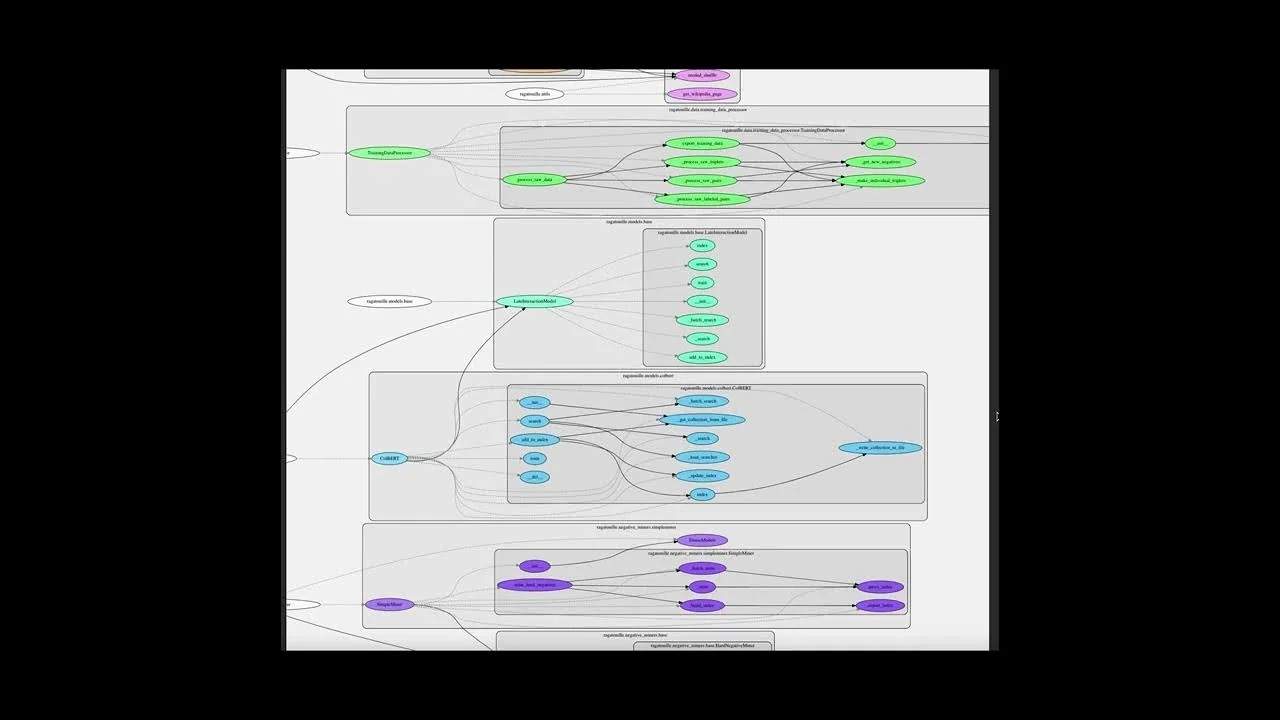
RAGatouille is an open-source Python library designed to make ColBERT-style late-interaction retrieval methods easy to use and train within Retrieval-Augmented Generation (RAG) systems. It provides high-level APIs, modular components for indexing/encoding/scoring, and utilities to train and evaluate retrieval models on custom corpora. The project emphasizes bridging research and production by exposing practical workflows, LangChain integration points, and tools to deploy scalable BERT-based search over large text collections with improved accuracy over basic vector search.
Screenshots
Key Features
Use Cases


Frequently asked questions about RAGatouille
Is RAGatouille free to use?
Yes, RAGatouille is a free open-source library available for installation via pip. There are no paid tiers, and users can easily access the complete source code and documentation on GitHub, making it an excellent option for developers looking to utilize its features without any financial commitment.
Key Points
- RAGatouille is completely free and open-source.
- Installation is straightforward via pip.
- The source code is accessible on GitHub.
Detailed Explanation
RAGatouille is designed for developers who want to implement retrieval-augmented generation (RAG) in their applications. As a free open-source library, it allows users to leverage its functionalities without incurring any costs. This makes it particularly appealing for startups, individual developers, and researchers who may have limited budgets.
Installation
To install RAGatouille, users can run the following command in their terminal:
pip install ragatouille
This command fetches the latest version from the Python Package Index (PyPI) and installs it in the user’s environment.
Accessing the Source Code
The complete source code for RAGatouille can be found on its GitHub repository. The repository includes detailed documentation, example projects, and community support, enabling users to contribute to ongoing development or modify the code as needed.
Use Cases
RAGatouille is particularly useful for applications requiring natural language processing (NLP) capabilities, such as chatbots, virtual assistants, and content generation tools. For instance, it can be used to create a customer support bot that retrieves relevant information from a database to answer user queries effectively.
Best Practices / Tips
- Stay Updated: Regularly check the GitHub repository for updates, bug fixes, and new features.
- Contribute to the Community: If you have suggestions or improvements, consider contributing to the repository. Open-source projects thrive on community input.
- Explore Examples: Utilize example projects available in the repository to understand best practices and implementation strategies.
- Check Dependencies: Ensure that your development environment meets all necessary dependencies for optimal performance.
Additional Resources
- RAGatouille GitHub Repository
- OpenAI Documentation
- Python Package Index (PyPI)
- Community Forums for discussions and support.
What are the key features of RAGatouille?
RAGatouille is a powerful tool featuring ColBERT integration, modular components, training utilities, LangChain compatibility, and efficient indexing for seamless BERT-based search capabilities. These features enable developers to enhance search functionalities while maintaining high performance and flexibility in their applications.
Key Points
- ColBERT Integration: Enhances search efficiency.
- Modular Components: Offers customization options.
- LangChain Compatibility: Facilitates integration with various AI tools.
Detailed Explanation
RAGatouille is designed for developers looking to optimize their search functionalities using advanced natural language processing techniques. Here’s a closer look at its key features:
-
ColBERT Integration: RAGatouille’s integration with ColBERT allows for efficient retrieval and ranking of documents. ColBERT uses late interaction techniques, enabling faster and more relevant search results. Developers can leverage this feature to improve the user experience by delivering prompt and accurate responses.
-
Modular Components: The modular architecture of RAGatouille means developers can easily plug in or modify components as needed. This flexibility allows for tailored solutions based on specific project requirements. For instance, a developer can replace a component responsible for indexing with a more advanced one without overhauling the entire system.
-
LangChain Compatibility: By being compatible with LangChain, RAGatouille can work seamlessly with other AI tools and frameworks. This compatibility enhances the ability to implement complex workflows, such as combining search with generative AI, making it a versatile choice for developers.
-
Efficient Indexing: RAGatouille provides tools for efficient indexing of documents, crucial for BERT-based search. This feature ensures that the system can handle large datasets without significant performance degradation, making it suitable for enterprise-level applications.
Best Practices / Tips
- Utilize Modular Design: Take advantage of the modular components to customize RAGatouille for your specific needs, ensuring the system is optimized for performance.
- Experiment with ColBERT: Conduct tests on different configurations of ColBERT to find the optimal settings for your search requirements.
- Leverage LangChain: Use LangChain’s capabilities to integrate RAGatouille with other AI tools, enhancing your application’s functionalities.
Additional Resources
By utilizing RAGatouille’s features effectively, developers can create robust search applications that deliver exceptional performance and accuracy.
How do I get started with RAGatouille?
To get started with RAGatouille, simply install it using the command pip install ragatouille. After installation, refer to the official documentation for detailed setup instructions, usage guidelines, and examples to help you effectively utilize this powerful tool for your AI projects.
Key Points
- Installation: Use
pip install ragatouille - Documentation: Access extensive setup and usage guides
- Community Support: Engage with user forums for tips and troubleshooting
Detailed Explanation
RAGatouille is an innovative tool designed to enhance AI applications, particularly in the realm of text generation and processing. To begin, follow these steps:
-
Install RAGatouille: Open your terminal and run the command:
pip install ragatouilleThis will download and install the latest version of RAGatouille along with its dependencies.
-
Refer to Documentation: Once installed, visit the official RAGatouille documentation to understand its capabilities better. The documentation provides step-by-step instructions for setup and usage, including configuration options and examples.
-
Basic Usage: Start by importing RAGatouille in your Python script:
import ragatouilleYou’ll find various functionalities, such as data processing and model integration, outlined in the documentation.
-
Explore Use Cases: RAGatouille is versatile and can be used for numerous applications, including chatbots, content generation, and data analysis. The documentation includes examples of its practical applications.
Best Practices / Tips
- Start Small: Initially, focus on simple tasks to familiarize yourself with RAGatouille. Gradually explore more complex functionalities as you gain confidence.
- Utilize Community Forums: Engage with the RAGatouille community on platforms like GitHub and Stack Overflow. This can provide insights, tips, and troubleshooting help.
- Keep Updated: Regularly check for updates to RAGatouille, as new features and improvements are frequently added.
- Experiment with Examples: Use the example projects in the documentation to understand how different features work and can be applied to your projects.
Additional Resources
- RAGatouille Official Documentation
- GitHub Repository
- Stack Overflow RAGatouille Tag for community support and troubleshooting.
Can RAGatouille integrate with other tools?
Yes, RAGatouille can seamlessly integrate with other tools, particularly LangChain. This compatibility enables users to incorporate RAGatouille's advanced retrieval methods into their existing systems effortlessly, enhancing functionality and performance.
Key Points
- RAGatouille supports integration with LangChain.
- Enhances existing systems with advanced retrieval methods.
- Facilitates seamless data management and workflow efficiency.
Detailed Explanation
RAGatouille is designed for flexibility and interoperability with various software tools. Its primary integration capability is with LangChain, a framework that enables the development of applications using large language models. By connecting RAGatouille with LangChain, users can leverage its retrieval-augmented generation capabilities to enhance the performance of their applications.
For example, when building a chatbot that requires access to a database of FAQs, integrating RAGatouille allows the chatbot to retrieve relevant information quickly and accurately. This can significantly improve user experience by providing timely and precise responses.
To integrate RAGatouille with LangChain, follow these steps:
- Install LangChain: Ensure you have LangChain installed in your development environment.
- Set Up RAGatouille: Install RAGatouille and set up its configurations according to your needs.
- Integration: Use LangChain’s API methods to connect RAGatouille’s retrieval functions within your application.
- Testing: Conduct thorough testing to ensure seamless interaction between RAGatouille and LangChain.
Best Practices / Tips
- Documentation: Always refer to the latest RAGatouille and LangChain documentation for updates on integration processes.
- Performance Monitoring: After integration, monitor system performance to identify any bottlenecks or areas for improvement.
- User Feedback: Gather user feedback regularly to fine-tune the integration for better usability and functionality.
- Scalability: Plan for future scalability by ensuring that both RAGatouille and LangChain can handle increased workloads.
Additional Resources
How does RAGatouille compare with other retrieval tools?
RAGatouille stands out among retrieval tools due to its high-accuracy BERT-based search capabilities and modular components, offering greater flexibility for custom datasets compared to traditional options. Its design allows users to tailor the retrieval process to meet specific needs, enhancing overall search performance.
Key Points
- High-Accuracy Retrieval: Utilizes BERT for improved understanding of context.
- Modular Architecture: Allows customization for various datasets and applications.
- User-Friendly Interface: Simplifies integration and management of search functionalities.
Detailed Explanation
RAGatouille leverages advanced BERT (Bidirectional Encoder Representations from Transformers) technology, which significantly enhances its ability to process language and understand context during searches. This high-accuracy retrieval system is particularly beneficial for organizations requiring precise information retrieval from large or complex datasets.
Comparison with Traditional Tools
While many traditional retrieval tools often rely on keyword matching, RAGatouille utilizes semantic search, enabling it to comprehend the intent behind queries better. This results in more relevant search outcomes, especially for nuanced queries. For example, if a user searches for "best practices in machine learning," RAGatouille can return results that encompass a broader understanding of machine learning, rather than just exact keyword matches.
Modular Components
The modular architecture of RAGatouille means users can select and integrate specific components based on their needs. This flexibility allows for easy adaptation to various industries, whether in healthcare, finance, or e-commerce. Users can customize the search functionality to include features such as natural language processing, data augmentation, or machine learning integrations, tailoring the experience to specific use cases.
Best Practices / Tips
- Define Your Dataset Needs: Clearly outline what types of data you will be searching to utilize RAGatouille's modular features effectively.
- Utilize BERT Fine-Tuning: Consider fine-tuning the BERT model on your specific dataset to enhance accuracy and relevance.
- Regularly Update Your Components: Keep your modular components current to take advantage of the latest advancements in retrieval technology and ensure optimal performance.
Additional Resources
Explore more AI Ai Tools tools
Browse all Ai Tools tools →Compare RAGatouille: vs Decode · vs LibreChat · vs AppGrowthKit · vs Humanizer