

Asimov
AIFoundational search and module platform enabling AI agents to discover, compose, and manage neurosymbolic capabilities.
Asimov
Foundational search and module platform enabling AI agents to discover, compose, and manage neurosymbolic capabilities.
About Asimov
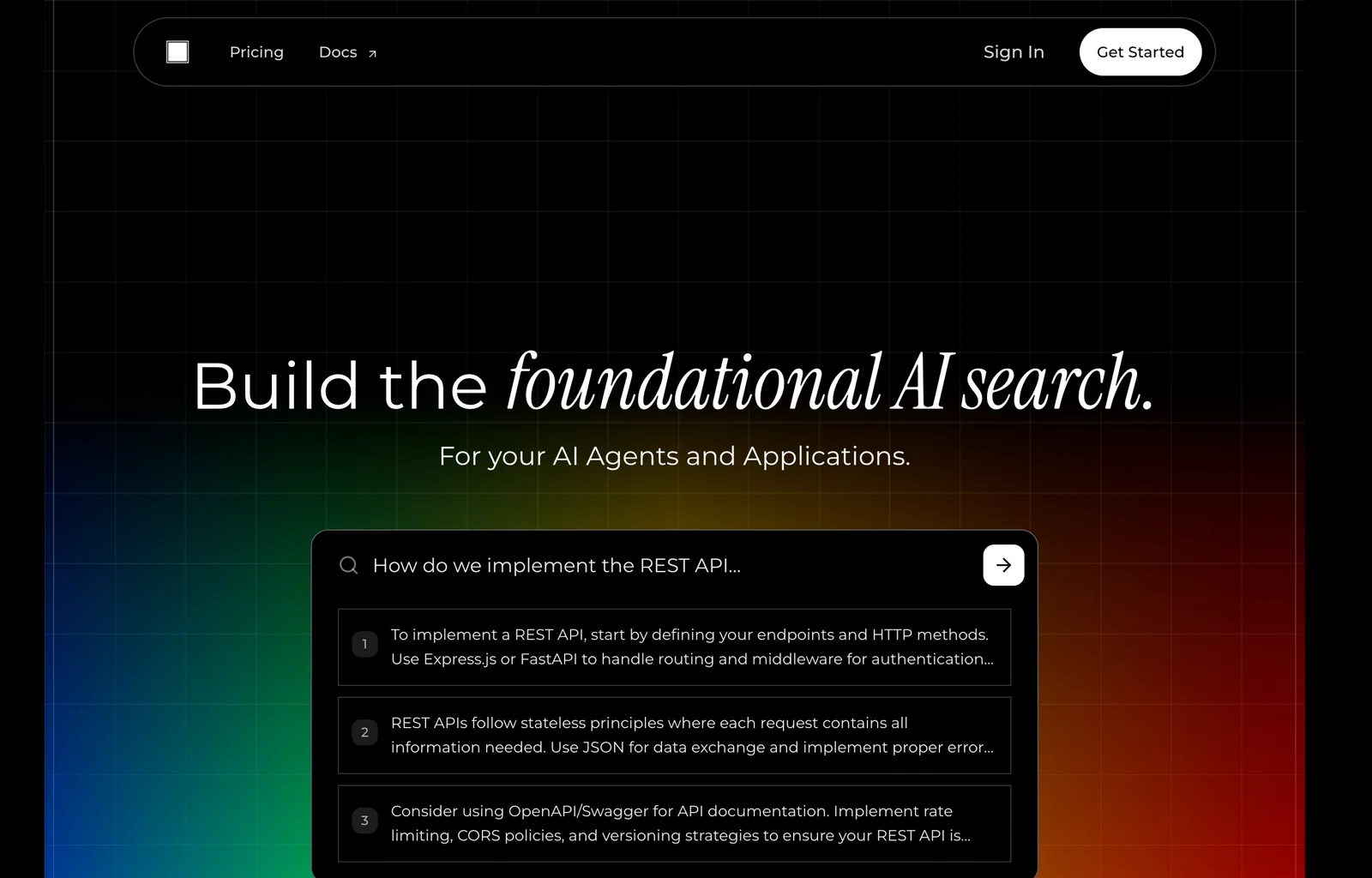
Asimov is a foundational search and development platform designed to help AI agents find, compose, and manage reusable neurosymbolic modules and capabilities. It provides a polyglot SDK and tooling ecosystem (including Rust SDKs and CLIs) to register, snapshot, and distribute modules, plus package installers for easy local deployment. Asimov focuses on trustworthiness and verification for neurosymbolic AI by enabling structured discovery, versioned snapshots, and module lifecycle management so agents and developers can reliably build complex, auditable agent stacks.
Screenshots
Key Features
Use Cases



Frequently asked questions about Asimov
What are the pricing options available for Asimov?
Asimov offers three pricing tiers: Open Source ($0), Free ($0), and Enterprise (custom pricing). The Open Source tier provides SDKs and community repositories, the Free tier includes basic search functionality, and the Enterprise tier requires direct contact for personalized quotes tailored to specific business needs.
Key Points
- Open Source Pricing: Completely free with SDKs and community support.
- Free Tier: No cost, offering essential search features.
- Enterprise Solutions: Customized pricing based on organizational requirements.
Detailed Explanation
Asimov's pricing structure caters to diverse user needs, making it accessible for individuals, startups, and large enterprises.
-
Open Source Tier: This option is ideal for developers and tech enthusiasts. You gain access to Software Development Kits (SDKs) and community repositories, enabling you to customize and extend functionalities without incurring costs. This tier is suitable for those looking to experiment with the platform and contribute to its development.
-
Free Tier: Perfect for small businesses or individuals, the Free tier offers basic search functionality. Users can utilize essential features without any financial commitment, allowing them to assess the platform's capabilities. This tier is beneficial for users who need straightforward search solutions without advanced tools.
-
Enterprise Tier: For larger organizations with specific needs, Asimov provides a custom pricing option. Interested businesses should reach out directly to Asimov's sales team for tailored quotes that address their unique requirements. This tier often includes advanced features, enhanced support, and integration options, making it appealing for companies looking to leverage Asimov's full potential.
Best Practices / Tips
- Evaluate Your Needs: Before choosing a plan, assess your requirements and the scale of your project. The Open Source tier may suffice for smaller projects, while the Enterprise tier is ideal for complex implementations.
- Utilize Community Resources: Take advantage of the community repositories and forums available in the Open Source tier for troubleshooting and feature enhancements.
- Contact Sales for Enterprise: If you're considering the Enterprise tier, prepare a list of your organization's specific needs to facilitate a productive conversation with Asimov's sales team.
Additional Resources
What are the key features of the Asimov platform?
The Asimov platform offers key features such as foundational search for agent knowledge, polyglot Software Development Kit (SDK) support, module command-line interface (CLI) management, snapshot tooling, and trust verification primitives. These capabilities empower users to effectively manage neurosymbolic systems and enhance AI performance.
Key Points
- Foundational Search for Agent Knowledge: Facilitates efficient retrieval of information.
- Polyglot SDK Support: Ensures compatibility with multiple programming languages.
- Module CLI Management: Simplifies command-line operations for better control.
Detailed Explanation
The Asimov platform stands out with its foundational search capability, which enables users to quickly access and utilize agent knowledge. This feature is crucial for developing intelligent applications that rely on diverse datasets. For instance, a healthcare application could leverage this search functionality to access patient records and research data, enhancing decision-making processes.
Moreover, Asimov's polyglot SDK support allows developers to work in various programming languages, such as Python, Java, or JavaScript. This flexibility ensures that teams can integrate Asimov into existing projects without the need to overhaul their technology stack. For example, a company using Python for its backend can seamlessly incorporate Asimov's features without switching to a different language.
The module CLI management feature streamlines the interaction between users and the system. By using command-line interfaces, developers can efficiently manage modules, execute scripts, and automate workflows. This is particularly beneficial in development environments where time efficiency is critical, such as in agile software development.
Snapshot tooling is another powerful feature, allowing users to create point-in-time images of their modules. This functionality is essential for debugging and maintaining the integrity of neurosymbolic systems, enabling developers to revert to previous states if issues arise.
Lastly, the trust verification primitives are designed to enhance security and reliability within the Asimov framework. By integrating these primitives, users can ensure that the data being processed is trustworthy, which is vital for applications spanning finance, healthcare, and other sensitive sectors.
Best Practices / Tips
- Leverage Foundational Search: Regularly update your agent knowledge base to ensure the search functionality yields relevant results.
- Utilize Polyglot SDK: Choose the most suitable programming language for your project to maximize efficiency and maintainability.
- Automate Module Management: Use scripts and CLI commands to automate repetitive tasks, reducing human error and saving time.
- Regularly Test Snapshots: Create snapshots before major changes and test them regularly to ensure your system can recover from failures quickly.
- Implement Trust Verification Early: Incorporate trust verification from the start to minimize vulnerabilities and enhance system integrity.
Additional Resources
How do I get started with using Asimov for my project?
To get started with Asimov for your project, visit the official Asimov website to access SDKs and CLI tools. Follow the community documentation for step-by-step guidance on building neurosymbolic pipelines and managing module lifecycles effectively.
Key Points
- Explore the Asimov SDKs and CLI tools.
- Utilize community documentation for support.
- Understand neurosymbolic pipeline construction and module management.
Detailed Explanation
Asimov is a powerful platform designed for building neurosymbolic applications. To begin your journey with Asimov, follow these steps:
-
Visit the Official Website: Start by navigating to the Asimov website. Here, you'll find essential resources including SDK downloads, CLI tools, and links to community forums.
-
Download SDKs and CLI Tools: Depending on your project requirements, download the appropriate Software Development Kits (SDKs) and Command-Line Interface (CLI) tools. These tools are necessary for developing and deploying your applications efficiently.
-
Review Community Documentation: The Asimov community provides extensive documentation that covers a wide range of topics, from installation to advanced usage. This documentation is crucial for understanding how to implement features effectively.
-
Build Your Neurosymbolic Pipeline: Once you have the tools set up, you can start constructing your neurosymbolic pipelines. This involves integrating symbolic reasoning with neural network capabilities to create sophisticated AI applications.
-
Manage Module Lifecycles: Learn how to manage the lifecycle of different modules within your project. This includes version control, updates, and deployment strategies, which are essential for maintaining the integrity and performance of your application.
Best Practices / Tips
- Start Simple: Begin with a small project to familiarize yourself with Asimov's tools and documentation. This will build your confidence and understanding.
- Engage with the Community: Join forums and discussion groups where you can ask questions, share experiences, and learn from other users' challenges and solutions.
- Regularly Update Tools: Keep your SDKs and CLI tools up to date to take advantage of the latest features and security improvements.
- Document Your Progress: Maintain records of your project development, including challenges faced and solutions implemented, which can serve as a reference for future projects.
Additional Resources
- Asimov Documentation
- Asimov GitHub Repository
- Asimov Community Forum
- Asimov Blog for Updates and Tutorials
By following these steps and utilizing available resources, you can effectively start your project with Asimov and harness the power of neurosymbolic AI.
What are the technical requirements for integrating Asimov into my application?
Asimov requires specific technical prerequisites for integration, including a compatible environment for its SDKs, particularly with Rust for optimal performance. You must ensure that your system meets the necessary dependencies for CLI tools and module management to successfully implement Asimov into your application.
Key Points
- Environment Compatibility: Ensure your system supports Rust and other necessary dependencies.
- SDK Requirements: Familiarize yourself with the Asimov SDK specifications.
- Module Management: Set up proper CLI tools for seamless integration.
Detailed Explanation
To integrate Asimov into your application effectively, it is essential to meet the following technical requirements:
-
Rust Environment: Asimov's SDK is primarily designed for Rust, which means you need to have Rust installed on your machine. You can download Rust from rust-lang.org. Ensure you’re using the latest stable version for optimal performance.
-
Dependencies: Besides Rust, Asimov may require other dependencies based on your application’s architecture. Check the documentation for a complete list of dependencies, which might include libraries for data handling and network requests.
-
CLI Tools: Command Line Interface (CLI) tools are essential for executing commands and managing modules within Asimov. Familiarize yourself with tools such as Cargo (Rust’s package manager) to easily handle dependencies and build processes.
-
Module Management: Understand how to manage modules within Asimov effectively. This includes installing, updating, and configuring modules to ensure that your application runs smoothly. Follow the guidelines provided in the Asimov documentation for accurate module setup.
Best Practices / Tips
- Version Control: Always use version control for your application to manage changes and updates effectively.
- Testing: Implement a robust testing framework to ensure that your integration works seamlessly across different environments.
- Documentation: Regularly consult Asimov's official documentation for updates or changes in requirements to avoid compatibility issues.
Additional Resources
By adhering to these technical requirements and best practices, you can ensure a successful integration of Asimov into your application, enhancing its functionality and performance.
How does Asimov compare to other AI module platforms?
Asimov distinguishes itself from other AI module platforms by offering a robust foundational search layer and comprehensive module lifecycle management. Its focus on reproducibility and governance, aided by snapshot tooling, makes it particularly effective for complex AI agent workflows, enhancing both reliability and efficiency.
Key Points
- Foundational Search Layer: Asimov's architecture enhances discoverability and usability.
- Module Lifecycle Management: Streamlined processes for deploying and updating AI modules.
- Reproducibility and Governance: Snapshot tooling ensures consistency and compliance in AI workflows.
Detailed Explanation
Asimov’s foundational search layer simplifies the integration of AI modules by providing an intuitive interface that allows users to efficiently locate and utilize various AI components. This search capability is crucial for developers and data scientists who often work with multiple models and datasets.
The module lifecycle management feature is particularly noteworthy. It encompasses the entire process from development to deployment, allowing teams to systematically manage updates and improvements to AI models. This structured approach minimizes downtime and ensures that modifications can be rolled back if necessary, enhancing overall productivity.
Asimov's emphasis on reproducibility and governance through snapshot tooling sets it apart. This tooling allows users to create snapshots of their AI environment at any point, enabling them to track changes, replicate experiments, and maintain compliance with regulatory standards. For organizations working in sensitive sectors, such as healthcare or finance, these features are invaluable.
Use Cases
- Research and Development: Data scientists can use Asimov to manage experimental AI models without losing previous versions.
- Compliance-Heavy Industries: Organizations can rely on snapshot tooling to meet regulatory requirements, ensuring that every model deployed is backed by a verifiable history.
Best Practices / Tips
- Leverage Snapshots: Regularly create and document snapshots during development to ensure reproducibility.
- Utilize the Search Layer: Familiarize yourself with the search capabilities to optimize module retrieval and integration.
- Monitor Lifecycle: Actively manage the lifecycle of your modules to stay updated with the latest features and improvements.
Additional Resources
Explore more AI Ai Tools tools
Browse all Ai Tools tools →Compare Asimov: vs Mise · vs BiBimba · vs VoiceCap · vs NM Signals