

App Store
AIUnifies and coordinates AI agents and models across your devices, letting you run, monitor, and scale AI workflows from a single Superbrain.
App Store
Unifies and coordinates AI agents and models across your devices, letting you run, monitor, and scale AI workflows from a single Superbrain.
About App Store
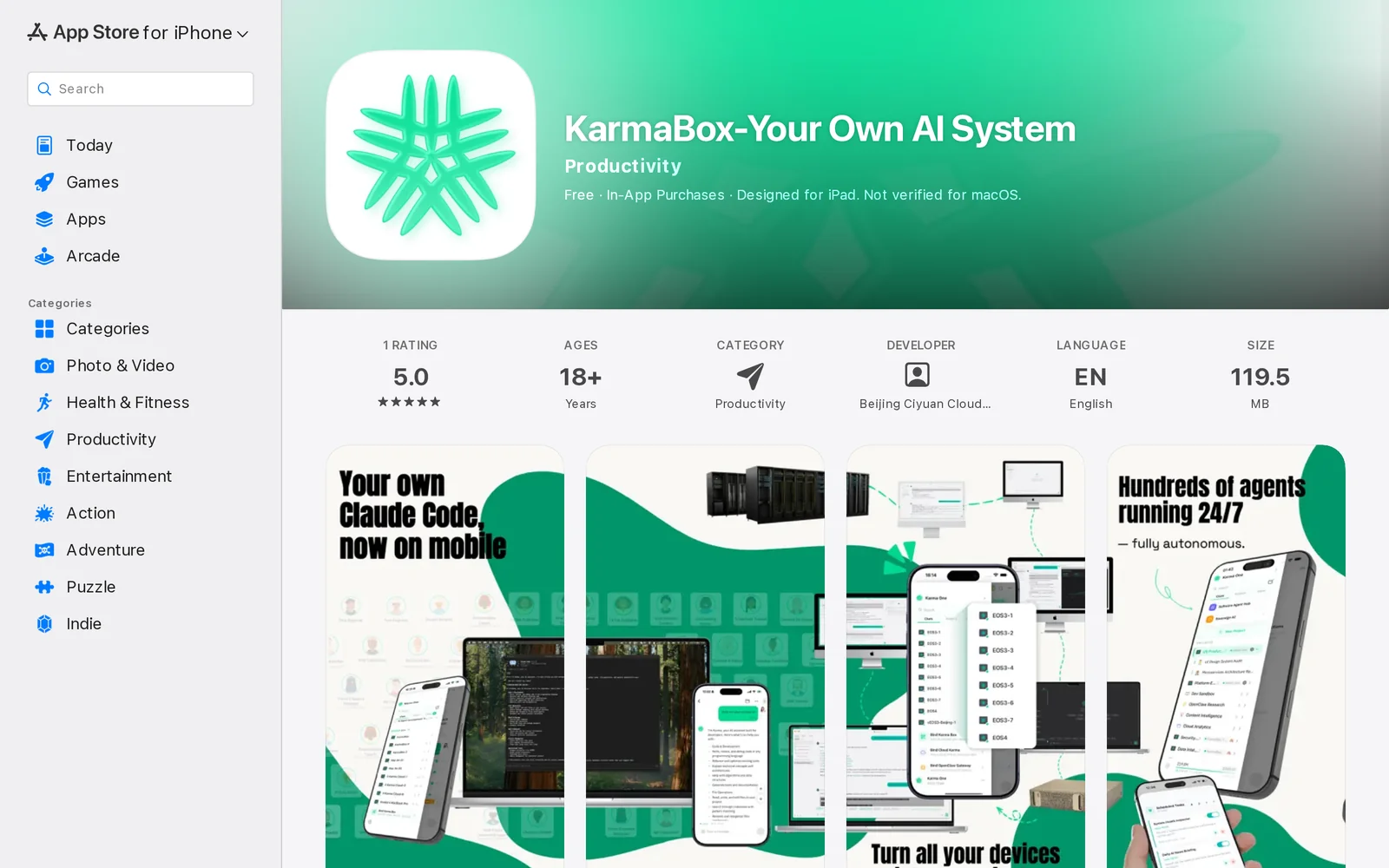
KarmaBox transforms a set of disparate AI tools into a unified system that runs across all your devices. It creates a private compute pool from laptops, workstations, and remote GPUs, and coordinates agents, skills, and models through a central Superbrain layer that automatically routes tasks to the best available model or agent. Users can start workflows from a terminal and continue on mobile, trigger parallel agent execution, and keep agents running 24/7 on their own infrastructure to preserve data control and privacy. KarmaBox integrates cloud and local models (Claude, Codex, Gemini, local models, custom agents) without vendor lock-in and focuses on orchestration, automation, and secure on-premise execution.
Screenshots
Key Features
Use Cases


Frequently asked questions about App Store
What is App Store?
The App Store is a digital distribution platform created by Apple Inc. for iOS applications. Users can browse, download, and update apps, including games, productivity tools, and more. Developers can publish their applications, reaching millions of potential customers worldwide, enhancing their visibility and engagement.
Key Points
- User-Friendly Interface: The App Store offers an intuitive design for easy navigation.
- Diverse App Categories: Users can explore a wide range of apps across various categories.
- Developer Support: The platform provides robust tools and resources for developers.
Detailed Explanation
The App Store is essential for iOS users, providing access to a vast library of apps. Launched in 2008, it has grown to feature millions of applications, including games, productivity tools, educational software, and social media platforms. Here’s how it works:
-
Browsing and Searching: Users can search for apps via keywords, categories, or curated lists. The App Store showcases featured apps and top charts to help users discover popular options.
-
Downloading: Users can download apps directly to their iPhones, iPads, or iPod Touch devices. Most apps are offered for free, while some require a one-time purchase or subscription fee.
-
Updating: The App Store simplifies app updates, notifying users when new versions are available, which is crucial for security and functionality.
-
User Reviews and Ratings: Users can leave ratings and reviews, helping others make informed decisions and providing feedback to developers.
-
Purchasing: In-app purchases allow users to enhance their experience within an app by accessing premium features or content.
Best Practices / Tips
- Explore Curated Lists: Regularly check the "Today" tab for daily app recommendations and promotions.
- Read Reviews: Before downloading, read user reviews to gauge the app’s performance and reliability.
- Manage App Storage: Regularly assess your downloaded apps and remove those you no longer use to free up space.
- Enable Automatic Updates: Turn on automatic updates in settings to ensure you always have the latest app versions, improving security and functionality.
Additional Resources
How does App Store work?
The App Store operates as a digital marketplace where users can discover, download, and purchase applications for their devices. It utilizes advanced AI capabilities to enhance user experiences, streamline app recommendations, and facilitate day-to-day AI workflows, making it easier for users to find relevant apps quickly.
Key Points
- Digital Marketplace: The App Store serves as a central hub for apps.
- AI Integration: It employs AI to enhance personalization and recommendations.
- User Experience: It simplifies the process of finding and managing apps.
Detailed Explanation
The App Store is a vital platform for app distribution, available on devices such as iPhones, iPads, and Macs. It allows developers to publish their applications, while users can browse, purchase, and download apps tailored to their needs.
How It Works:
- App Submission: Developers submit their apps for review through the App Store Connect platform. Each app undergoes a strict vetting process to ensure quality and compliance with Apple’s guidelines.
- Discoverability: Users can search for apps using keywords or browse categories. AI algorithms analyze user behavior and preferences to recommend apps that align with their interests.
- Purchasing and Downloading: Users can download free apps or purchase paid ones. Payment is processed through the user's Apple ID, ensuring secure transactions.
- Updates and Management: The App Store notifies users of available updates for their apps, helping maintain security and performance. Users can manage app settings and subscriptions directly from their devices.
Use Cases:
- Productivity: Users can find apps to enhance work efficiency, like project management tools and note-taking applications.
- Entertainment: The App Store offers a variety of games and media apps, catering to diverse interests.
- Health and Fitness: Users can download apps that track fitness goals or provide workout routines, leveraging AI to customize experiences.
Best Practices / Tips
- Maximize Visibility: Developers should optimize app descriptions with relevant keywords to enhance searchability within the App Store.
- Regular Updates: Continuous improvements and updates can keep user engagement high and improve app ratings.
- Leverage Analytics: Utilize App Store analytics to understand user behavior and preferences, adjusting marketing strategies accordingly.
Additional Resources
By understanding how the App Store works and utilizing these insights, both users and developers can enhance their experiences on this critical platform.
What are the main features of App Store?
The main features of the App Store include a vast selection of applications, user-friendly navigation, personalized recommendations, and robust security measures. Additionally, it supports app updates, integrates with Apple services, and provides user reviews and ratings, enhancing the overall user experience.
Key Points
- Vast Selection of Applications: Access to millions of apps across various categories.
- User-Friendly Navigation: Intuitive interface for easy app discovery.
- Robust Security Measures: Ensures safety and privacy for users.
Detailed Explanation
The App Store is a digital distribution platform created by Apple Inc. for iOS applications. Here’s a breakdown of its main features:
-
Vast Selection of Applications:
- The App Store boasts millions of apps available for download, ranging from productivity tools to games and everything in between. In 2023, the store features over 1.8 million apps, catering to diverse user needs.
-
User-Friendly Navigation:
- The App Store's interface is designed for easy use. Users can browse through categories, view top charts, and utilize the search function to quickly find desired apps. The “Today” tab highlights featured apps, editorial content, and app stories, helping users discover new favorites.
-
Personalized Recommendations:
- Utilizing advanced algorithms, the App Store provides personalized suggestions based on user behavior and preferences. This feature enhances user experience by making it easier to find relevant apps.
-
Robust Security Measures:
- Apple enforces strict app review processes to ensure that all apps meet security standards. Additionally, features like App Tracking Transparency empower users to control their data privacy.
-
App Updates:
- Developers regularly update their applications to improve functionality and security. The App Store notifies users when updates are available, ensuring they have the latest features and security patches.
-
User Reviews and Ratings:
- Users can leave reviews and ratings, providing valuable feedback for potential users. This feature helps maintain app quality and gives developers insights into user experience.
Best Practices / Tips
- Explore Categories: Regularly check different app categories to discover trending applications and new releases.
- Read Reviews: Before downloading an app, read user reviews to gauge its reliability and performance.
- Enable Automatic Updates: To keep apps secure and functional, enable automatic updates in your device settings.
- Check for Promotions: Occasionally, the App Store offers discounted or free apps; keep an eye out for these deals.
Additional Resources
Who is App Store for?
The App Store is designed for anyone seeking to enhance their daily workflows using AI tools. This includes individual users, businesses, and developers looking to streamline tasks, improve productivity, or incorporate innovative AI solutions into their operations.
Key Points
- Target Audience: Individuals, businesses, and developers.
- Workflow Enhancement: Focus on daily productivity and task management.
- Diverse Applications: Range of tools for various needs, from creative tasks to data analysis.
Detailed Explanation
The App Store caters to a wide audience interested in leveraging artificial intelligence to optimize their workflows. Whether you're a student looking for apps to assist with research, a small business owner aiming to automate customer service, or a developer seeking advanced tools for coding and app creation, the App Store offers a myriad of options.
Examples of Use Cases:
- Students: Utilize AI-driven note-taking and study apps to enhance learning efficiency.
- Small Businesses: Implement customer relationship management (CRM) tools that use AI to analyze customer interactions and improve service.
- Developers: Access AI programming assistants that can suggest code snippets or debug programs in real-time.
The App Store's vast library allows users to discover tools tailored to their specific needs, making it a versatile resource for anyone interested in integrating AI into their daily routines.
Best Practices / Tips
- Research Tools: Before downloading, read reviews and check ratings to ensure the app meets your needs.
- Trial Versions: Take advantage of free trials to test functionality and compatibility with your existing systems.
- Stay Updated: Regularly check for updates and new AI tools to keep your workflows optimized and efficient.
Additional Resources
How much does App Store cost?
The App Store does not have a flat fee for users; instead, it operates on a revenue-sharing model. Developers pay a commission of 15% to 30% on app sales and in-app purchases. For exact pricing details, visit the official App Store website.
Key Points
- Revenue Model: Developers pay a commission.
- Commission Rates: Typically ranges from 15% to 30%.
- Access to Resources: Various pricing plans available for developers.
Detailed Explanation
The App Store's pricing structure is primarily based on a commission model, which means that developers share a percentage of their earnings with Apple. This commission varies depending on the income level of the app:
- Standard Commission: For most developers, the standard commission is 30% on app sales and in-app purchases.
- Small Business Program: Developers earning less than $1 million annually can qualify for a reduced commission rate of 15%. This program aims to support smaller developers, encouraging innovation and growth within the app ecosystem.
- Subscriptions: For subscriptions, after the first year, the commission drops to 15%, further incentivizing developers to build long-term customer relationships.
For consumers, the cost of apps can range from free to several hundred dollars, depending on the app's complexity and functionality. In-app purchases can also vary widely, from small one-time fees to ongoing subscription models.
Best Practices / Tips
- For Developers: Understand the different commission structures and choose the right program that fits your business model.
- For Users: Keep an eye out for promotions and discounts on apps, especially during major sales events like Black Friday or holiday seasons.
- Avoiding Pitfalls: Developers should ensure compliance with App Store guidelines to avoid potential rejections during the app review process.
Additional Resources
How do I get started with App Store?
To get started with the App Store, visit this link to sign up and explore various apps. You can browse, download, and manage apps easily through your Apple device, whether it's an iPhone, iPad, or Mac.
Key Points
- Create an Apple ID: A necessary step for accessing the App Store.
- Explore App Categories: Understand various categories like games, productivity, and utilities.
- Manage Downloads: Learn how to download, update, and delete apps.
Detailed Explanation
To begin your journey with the App Store, you first need an Apple ID, which acts as your account. If you don't have one, you can create it during the sign-up process. After signing in, you can easily explore thousands of apps available for download.
-
Creating an Apple ID:
- Go to the Apple ID website or create one directly on your device.
- Provide your email address, create a password, and answer security questions.
- Verify your email to complete the setup.
-
Navigating the App Store:
- Open the App Store app on your device.
- Use the search function to find specific apps or browse categories such as "Top Charts," "Categories," or "Today" for recommendations.
- Review app details, including ratings, reviews, and screenshots before downloading.
-
Downloading and Managing Apps:
- Tap on the “Get” or download icon next to the app to install it.
- Once downloaded, you can open the app from your home screen.
- To manage apps, go to your device's settings to update or delete them as needed.
Best Practices / Tips
- Regularly Update Your Apps: Keeping apps updated ensures you have the latest features and security updates. Enable automatic updates in your settings.
- Read Reviews: Before downloading, check user reviews and ratings to gauge the app's quality and functionality.
- Set Up Family Sharing: If you have multiple Apple devices, consider setting up Family Sharing to share apps and purchases with family members.
Additional Resources
Explore more AI Ai Tools tools
Browse all Ai Tools tools →Browse by use case: Automation & Productivity
Compare App Store: vs Decode · vs LibreChat · vs AppGrowthKit · vs Humanizer