

KodHau MCP — The Governance Layer for your AI Agents
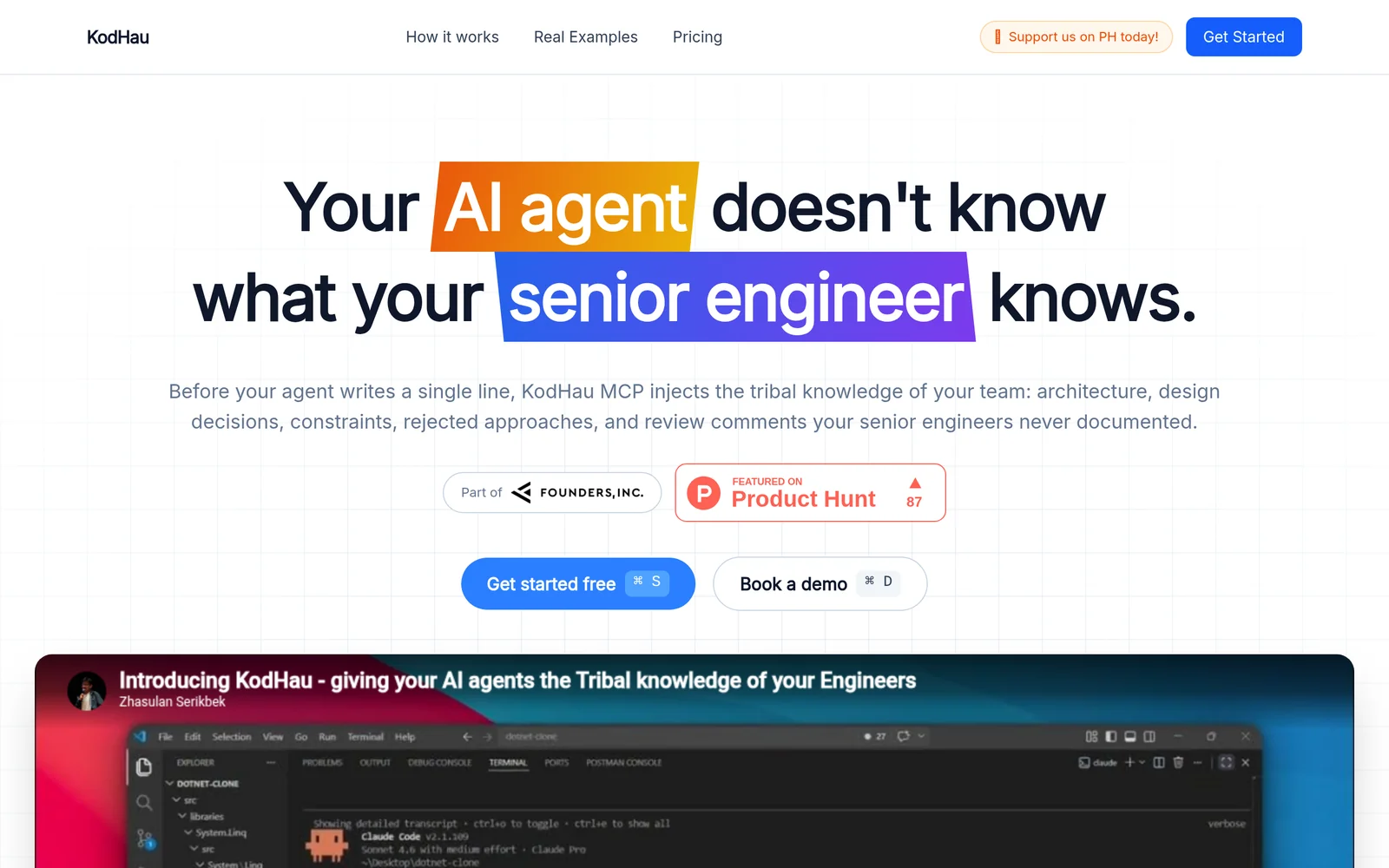
AIKodHau MCP gives your AI agents the tribal knowledge of your team—PR history, design decisions, and review comments your engineers never documented.
KodHau MCP — The Governance Layer for your AI Agents
KodHau MCP gives your AI agents the tribal knowledge of your team—PR history, design decisions, and review comments your engineers never documented.
About KodHau MCP — The Governance Layer for your AI Agents
KodHau MCP is a governance layer that injects an organization’s undocumented tribal knowledge into AI agents so they act with team context and historical rationale. It consolidates PR history, design discussions and review comments to provide contextual signals that inform agent decisions, preserving institutional memory and reducing knowledge gaps. The platform is designed to align agent behavior with team conventions, speed onboarding, and improve traceability of agent-driven actions.
Screenshots
Key Features
Use Cases


Frequently asked questions about KodHau MCP — The Governance Layer for your AI Agents
What is KodHau MCP — The Governance Layer for your AI Agents?
KodHau MCP is a governance layer designed for AI agents, providing them with essential team knowledge including PR history, design decisions, and unrecorded review comments from senior engineers. This enhances the AI's contextual understanding, resulting in better decision-making and improved performance.
Key Points
- Centralized Knowledge Base: KodHau MCP consolidates critical information for AI agents.
- Enhanced Contextual Awareness: It equips AI with historical insights from team members.
- Improved Decision-Making: The governance layer fosters better outcomes by utilizing tribal knowledge.
Detailed Explanation
KodHau MCP stands for "KodHau Management Control Protocol," and it acts as a governance layer for AI agents, ensuring they are equipped with vital information that might otherwise go undocumented. This includes information such as:
-
PR History: The pull request history encapsulates changes made to the codebase, allowing AI agents to understand the evolution of projects and the rationale behind specific decisions.
-
Design Decisions: The platform retains insights into why certain design choices were made. This helps in maintaining consistency in future projects and assists AI agents in making informed recommendations aligned with the team’s vision.
-
Review Comments: Often, senior engineers provide valuable insights during code reviews that are not formally documented. KodHau MCP captures these comments, allowing AI agents to learn from past critiques and enhance their output.
Use Cases
-
Onboarding New Team Members: New engineers can leverage KodHau MCP to quickly get up to speed with existing projects, understanding past decisions without needing extensive personal onboarding.
-
Project Continuity: When projects are handed over, KodHau MCP helps maintain continuity by providing AI agents with historical context, enabling smoother transitions.
-
Decision Support: AI agents can offer suggestions based on historical data, significantly improving the decision-making process during project development.
Best Practices / Tips
-
Regular Updates: Ensure the knowledge base is regularly updated with new insights and changes to maintain relevance.
-
Encourage Documentation: Foster a culture where team members document key decisions and comments to enrich the knowledge base.
-
Utilize AI Insights: Regularly review insights generated by AI agents to identify areas for improvement in team processes and governance.
Additional Resources
How does KodHau MCP — The Governance Layer for your AI Agents work?
KodHau MCP, the Governance Layer for your AI agents, functions by integrating essential AI capabilities to streamline and enhance everyday AI workflows. It provides users with tools for managing, monitoring, and optimizing AI interactions, ensuring effective governance and performance.
Key Points
- Integration of Core AI Capabilities: Combines various AI functionalities into a cohesive platform.
- User-Centric Workflow Management: Facilitates day-to-day tasks for users managing AI agents.
- Enhanced Governance and Monitoring: Provides tools for oversight and optimization of AI performance.
Detailed Explanation
KodHau MCP serves as a comprehensive governance framework designed for managing AI agents effectively. By combining core AI capabilities, it streamlines workflows and allows users to harness the full potential of AI technology.
Key Features:
-
Workflow Automation: KodHau MCP automates repetitive tasks, enabling users to focus on higher-level decision-making rather than mundane processes.
-
Real-Time Monitoring: Users can monitor the performance of AI agents in real-time, ensuring they operate within desired parameters and adhere to governance standards.
-
Customizable Governance Policies: Organizations can define specific governance policies that AI agents must follow, which enhances compliance with regulatory requirements and internal protocols.
Use Cases:
- Customer Support: Automate responses to common inquiries, allowing human agents to handle more complex issues.
- Data Analysis: Streamline the process of data collection and analysis, providing actionable insights more efficiently.
Best Practices / Tips
- Regular Updates: Keep your KodHau MCP system updated to benefit from the latest features and security enhancements.
- Define Clear Policies: Establish clear governance policies tailored to your organization’s needs to ensure compliance and effectiveness.
- User Training: Educate users on the features of KodHau MCP to maximize its potential and minimize errors.
Additional Resources
What are the main features of KodHau MCP — The Governance Layer for your AI Agents?
KodHau MCP is a robust governance layer designed for AI agents, featuring core capabilities such as real-time decision-making, compliance monitoring, and automated resource management. It enables seamless integration of AI technologies with governance frameworks, ensuring transparency and accountability in AI operations.
Key Points
- Real-Time Decision-Making: Enables immediate responses to dynamic conditions.
- Compliance Monitoring: Ensures adherence to regulatory standards and internal policies.
- Automated Resource Management: Optimizes the allocation and utilization of resources.
Detailed Explanation
KodHau MCP is essential for organizations leveraging AI agents, providing a governance layer that enhances operational efficiency and compliance.
-
Real-Time Decision-Making: The platform utilizes advanced algorithms to process data and make instant decisions, which is crucial for applications like autonomous vehicles or financial trading systems. For example, an AI-driven trading bot can adapt to market changes on the fly, maximizing profits while minimizing risks.
-
Compliance Monitoring: With increasing regulatory scrutiny surrounding AI technologies, KodHau MCP includes built-in monitoring tools that track compliance with laws such as GDPR or HIPAA. This feature is particularly beneficial for industries like healthcare and finance, where data privacy and security are paramount.
-
Automated Resource Management: This feature enhances operational efficiency by automating the allocation of resources based on real-time analytics. For instance, an AI agent managing cloud resources can dynamically scale computing power according to demand, reducing costs and improving performance.
By integrating these capabilities, KodHau MCP not only streamlines AI governance but also fosters a culture of accountability and transparency.
Best Practices / Tips
- Regularly Update Governance Policies: Ensure that your governance policies evolve with technological advancements and regulatory changes.
- Utilize Analytics: Leverage the analytics capabilities of KodHau MCP to gain insights into AI performance and compliance status.
- Train Staff on Compliance Protocols: Regular training sessions can help your team better understand the compliance requirements and the importance of governance in AI applications.
Additional Resources
Who is KodHau MCP — The Governance Layer for your AI Agents for?
KodHau MCP — The Governance Layer for your AI Agents is designed for developers, businesses, and organizations seeking to streamline AI workflows and ensure compliance with best practices. It enhances the management and operational efficiency of AI systems, making it invaluable for teams integrating AI into their daily activities.
Key Points
- User-Friendly Governance: Simplifies the management of AI agents for various users.
- Compliance Assurance: Ensures AI systems adhere to industry regulations and ethical standards.
- Enhanced Collaboration: Facilitates teamwork among developers and stakeholders involved in AI projects.
Detailed Explanation
KodHau MCP serves as a governance framework that helps organizations manage their AI agents effectively. This governance layer is especially beneficial for:
-
Developers and Engineers: They can utilize KodHau MCP to maintain control over the AI systems they build, ensuring that these systems operate within predetermined guidelines and protocols.
-
Businesses: Companies can leverage KodHau MCP to align AI operations with corporate goals, ensuring that AI applications work efficiently and ethically. For example, a retail business using AI for inventory management can ensure that the AI makes decisions in compliance with consumer protection laws.
-
Regulatory Compliance: With increasing scrutiny around AI technologies, KodHau MCP provides the necessary tools to ensure compliance with data protection regulations like GDPR and CCPA, minimizing the risk of legal issues.
KodHau MCP enhances AI workflows by providing a centralized platform for monitoring, adjusting, and governing AI agents. It allows users to set performance metrics, track operational efficiency, and adjust parameters in real-time. This not only improves the reliability of AI systems but also fosters innovation by allowing teams to experiment within safe boundaries.
Best Practices / Tips
- Regular Audits: Conduct frequent audits of your AI systems using KodHau MCP to identify and address compliance issues proactively.
- Clear Documentation: Maintain comprehensive documentation of all governance protocols and decisions made within the system to ensure transparency and accountability.
- Engage Stakeholders: Regularly involve stakeholders in the governance process to ensure diverse perspectives are considered, enhancing the effectiveness of AI applications.
Additional Resources
How much does KodHau MCP — The Governance Layer for your AI Agents cost?
The cost of KodHau MCP — The Governance Layer for your AI Agents varies based on specific features and usage scenarios. For precise pricing details, please visit the official KodHau website, where you can find tailored pricing options to meet your organization's needs.
Key Points
- Pricing Structure: Different tiers based on features.
- Customization Options: Tailored solutions for specific requirements.
- Free Trials: Availability of trial versions for evaluation.
Detailed Explanation
KodHau MCP offers a range of pricing plans designed to accommodate diverse user needs. Typically, the pricing is structured into multiple tiers, allowing organizations to choose a plan that best fits their operational requirements.
-
Basic Plan: Ideal for startups and smaller teams, this plan usually includes essential governance features for AI agents at an economical rate. It might start at around $29/month.
-
Professional Plan: Aimed at medium-sized enterprises, this plan includes advanced tools and analytics. Pricing for this tier often ranges from $99 to $199/month, depending on the number of AI agents you manage.
-
Enterprise Solutions: For larger organizations requiring extensive customization and support, KodHau offers bespoke pricing. This can include dedicated account management, advanced security features, and compliance support. Pricing is typically available upon request.
Additionally, many users can take advantage of free trials, which allow potential customers to explore the platform's functionality before committing to a subscription.
Best Practices / Tips
- Evaluate Features: Before selecting a plan, assess which features are critical for your organization’s AI governance.
- Consider Scalability: Choose a pricing tier that allows for growth and scalability as your AI needs evolve.
- Utilize Free Trials: Always take advantage of free trials to ensure the solution meets your expectations.
- Stay Updated: Regularly check the official website for any promotional offers or updates to pricing plans.
Additional Resources
How do I get started with KodHau MCP — The Governance Layer for your AI Agents?
To get started with KodHau MCP, the Governance Layer for your AI Agents, visit KodHau’s website to sign up. Create an account, explore the platform features, and begin managing your AI agents effectively with governance tools tailored for automation and decision-making.
Key Points
- User-Friendly Interface: KodHau MCP offers an intuitive design for easy navigation.
- Robust Features: Manage, monitor, and optimize your AI agents seamlessly.
- Community Support: Access resources and forums for user assistance and best practices.
Detailed Explanation
KodHau MCP (Multi-Chain Protocol) serves as an advanced governance layer designed for AI agents, allowing users to manage and automate decision-making processes. Here’s how to get started:
- Sign Up: Visit KodHau’s website and complete the registration process by providing your email and creating a password.
- Dashboard Overview: Once logged in, familiarize yourself with the user-friendly dashboard that presents various features such as agent management, governance settings, and analytics tools.
- Creating AI Agents: Follow the guided steps to create your AI agents. You can define their roles, responsibilities, and the specific tasks they should automate.
- Governance Setup: Utilize the governance tools to set permissions, establish protocols, and monitor compliance. This ensures your AI agents operate within predefined guidelines.
- Monitoring and Optimization: Use the analytics features to track agent performance and make necessary adjustments for optimal operation.
Use Cases: Businesses can leverage KodHau MCP for automating customer service, streamlining internal processes, or managing data entry tasks. This governance layer helps ensure that actions taken by AI agents align with company policies.
Best Practices / Tips
- Start Small: Begin with a single AI agent to understand the platform before scaling.
- Regularly Review Settings: Continuously monitor agent performance and governance settings to adapt to changing business needs.
- Engage with the Community: Participate in forums and user groups to learn from others’ experiences and share your insights.
- Test Features: Utilize the trial features to explore advanced capabilities without committing financially.
Additional Resources
By following these steps and utilizing the resources, you can effectively harness the power of KodHau MCP for your AI governance needs.
What is KodHau?
KodHau MCP is an AI tool designed to empower your AI agent with the collective knowledge of your team, including PR histories, design decisions, and essential review comments that senior engineers may have overlooked or failed to document. This ensures better decision-making and efficiency in projects.
Key Points
- Team Knowledge Integration: Combines insights from various team members to enhance AI performance.
- Documentation of Tribal Knowledge: Captures critical project information that is often undocumented.
- Improved Decision-Making: Guides AI agents with historical context for better outcomes.
Detailed Explanation
KodHau MCP (Knowledge-Driven Human-AI Collaboration) serves as a bridge between human expertise and artificial intelligence. By integrating the tacit knowledge of your team, it transforms how AI agents operate within your organization. Here are some key aspects:
-
Team Knowledge Integration: KodHau MCP aggregates insights from engineers, designers, and product managers. This integration ensures that AI agents are not only relying on formal documentation but also on valuable, informal knowledge that can significantly affect project outcomes.
-
Documentation of Tribal Knowledge: Many organizations struggle with the loss of knowledge when experienced team members leave. KodHau MCP collects and organizes PR histories, design rationales, and feedback from reviews, creating a comprehensive knowledge base that helps maintain continuity and reduces onboarding time for new hires.
-
Improved Decision-Making: By utilizing the collective wisdom stored in KodHau, AI agents can make informed decisions based on past experiences and insights. For instance, when faced with a design challenge, the AI can reference previous design decisions and feedback, leading to more effective solutions.
Use Cases
- Software Development: Developers can access past PR histories to understand the rationale behind certain design choices and coding practices.
- Product Management: PMs can leverage historical feedback to refine product features and prioritize future enhancements.
- Onboarding New Team Members: New hires can quickly get up to speed by reviewing documented tribal knowledge, reducing their time to productivity.
Best Practices / Tips
- Regular Updates: Ensure that team members frequently update the knowledge base to reflect new insights and decisions.
- Encourage Documentation: Foster a culture where documenting decisions and feedback is seen as valuable and necessary.
- Utilize AI Insights: Regularly review the insights generated by KodHau to spot trends and areas for improvement.
Additional Resources
How does KodHau work?
KodHau operates by integrating advanced AI technologies to streamline everyday workflows for users. It automates tasks, enhances productivity, and simplifies complex processes, enabling individuals and teams to focus on strategic objectives rather than routine activities.
Key Points
- AI Integration: Combines multiple AI technologies for efficiency.
- Workflow Automation: Streamlines day-to-day tasks.
- User-Focused Design: Tailors solutions to meet specific user needs.
Detailed Explanation
KodHau is designed to facilitate a range of AI-driven workflows, making it an essential tool for businesses and professionals. The platform employs machine learning, natural language processing, and data analytics to automate repetitive tasks, analyze large datasets, and provide actionable insights.
How KodHau Works:
-
AI Capabilities: KodHau leverages core AI technologies, allowing it to understand context and learn from user interactions. For example, it can analyze emails to prioritize important messages automatically.
-
Automated Workflows: Users can set up workflows that trigger actions based on specific criteria. For instance, if a project deadline is approaching, KodHau can send reminders to team members, ensuring timely task completion.
-
User Interface: The platform is designed with usability in mind, utilizing a simple dashboard that allows users to customize their workflows easily. It includes drag-and-drop functionality and pre-built templates for common tasks.
Use Cases:
- Project Management: Automate status updates and resource allocation with KodHau's project tracking features.
- Customer Support: Use AI chatbots to handle frequently asked questions, freeing up support teams for more complex inquiries.
- Data Analysis: KodHau can analyze customer feedback and sales data to produce reports that help in strategic decision-making.
Best Practices / Tips
- Define Clear Objectives: Before implementing KodHau, outline your specific goals to maximize its effectiveness.
- Utilize Templates: Take advantage of pre-built templates to save time and ensure best practices in workflow automation.
- Regularly Update Workflows: As your business needs change, revisit and modify your workflows to maintain efficiency.
Additional Resources
What are the main features of KodHau?
KodHau offers a range of advanced features, including powerful AI-driven analytics, automated reporting, intuitive dashboards, and seamless integration with various data sources. These capabilities empower users to harness the full potential of their data, driving insightful decision-making and enhancing productivity.
Key Points
- AI-Driven Analytics: Leverage machine learning for deeper insights.
- Automated Reporting: Streamline your reporting processes with automated generation.
- Intuitive Dashboards: Visualize data effectively for easy comprehension.
Detailed Explanation
KodHau stands out due to its core AI capabilities that enhance data analysis and reporting. Its AI-Driven Analytics feature utilizes machine learning algorithms to identify patterns and trends within large datasets, enabling users to make informed decisions quickly. For example, businesses can analyze customer behavior to tailor marketing strategies effectively.
The Automated Reporting feature saves users time by generating reports automatically based on predefined metrics and schedules. This is particularly useful for businesses that require regular updates without the manual effort. Users can customize report formats, making them suitable for different stakeholders.
Additionally, KodHau's Intuitive Dashboards allow users to visualize data in real time. The drag-and-drop functionality makes it easy to create customized dashboards that highlight key performance indicators (KPIs) relevant to specific business goals. This visual representation aids in the quick understanding of complex data.
Best Practices / Tips
- Utilize AI Features: Take full advantage of KodHau’s AI capabilities by integrating them into your daily workflows to enhance decision-making.
- Customize Reports: Regularly update your reporting templates to reflect changing business needs and ensure they meet stakeholder expectations.
- Explore Dashboard Options: Experiment with different dashboard layouts and metrics to find the best way to visualize your data for your audience.
Additional Resources
Who is KodHau for?
KodHau is designed for anyone looking to enhance their daily workflows using AI, including professionals, entrepreneurs, students, and tech enthusiasts. It simplifies complex tasks, streamlines processes, and increases productivity through user-friendly AI tools tailored for various applications.
Key Points
- Target Audience: Professionals, students, and tech enthusiasts.
- Workflow Enhancement: Streamlines daily tasks with AI tools.
- Versatility: Supports multiple applications across industries.
Detailed Explanation
KodHau is a versatile platform that caters to a diverse audience. Professionals in fields such as marketing, content creation, and data analysis can utilize KodHau to automate repetitive tasks, generate insights, and enhance creativity. For instance, marketers can use AI-driven analytics to optimize campaigns, while content creators can generate high-quality blogs or social media posts quickly.
Students also benefit from KodHau by using AI tools for research, writing assistance, and study aids. For example, they can leverage AI summarizers to condense lengthy articles or use grammar checkers to polish their assignments. Furthermore, tech enthusiasts can explore KodHau to experiment with various AI applications, gaining hands-on experience in a rapidly evolving field.
KodHau's user-friendly interface makes it accessible to individuals with varying levels of technical expertise. The platform provides guided tutorials and templates, allowing users to implement AI solutions seamlessly into their daily routines.
Best Practices / Tips
- Identify Needs: Before diving into KodHau, assess your specific needs to choose the right AI tools for your tasks.
- Start Small: Begin with one or two features to avoid overwhelm, then gradually explore more functionalities.
- Leverage Community Support: Engage with the KodHau community for tips, troubleshooting, and sharing best practices.
Additional Resources
How much does KodHau cost?
KodHau is completely free to use, providing users with no-cost access to its features and functionalities. This makes it an attractive option for individuals and businesses looking for efficient solutions without a financial commitment.
Key Points
- KodHau offers a fully free platform.
- No hidden costs or premium features that require payment.
- Ideal for users seeking budget-friendly AI tools.
Detailed Explanation
KodHau stands out in the market of AI tools as it provides a comprehensive suite of features without charging users. This includes tools for content generation, data analysis, and automation, all available at no cost.
Use Cases
- Content Creation: Users can leverage KodHau to generate high-quality written content, making it suitable for bloggers and marketers.
- Data Insights: Businesses can utilize its data analysis tools to gain insights without incurring costs, ideal for startups and small enterprises.
- Automation Tasks: For those looking to automate repetitive tasks, KodHau offers functionalities that save time and resources, enhancing productivity.
How to Get Started
- Sign Up: Visit the KodHau website and create an account by providing basic information.
- Explore Features: Familiarize yourself with the various tools available, such as content generators and data analytics.
- Utilize Resources: Access tutorials and guides offered on the platform to maximize your use of the tools.
Best Practices / Tips
- Stay Updated: Regularly check for any updates or new features added to KodHau, as the platform may enhance its offerings.
- Engage with Community: Join forums or user groups to share experiences and tips on how to best utilize KodHau.
- Test Features: Experiment with different tools to understand their capabilities and how they can benefit your specific needs.
Additional Resources
By taking advantage of KodHau's free offerings, users can effectively harness the power of AI tools without financial barriers, making it a valuable resource for various applications.
How do I get started with KodHau?
To get started with KodHau, simply visit kodhau.com to sign up. After creating your account, you can explore its features, tools, and resources tailored for developers and creators to enhance their productivity and collaboration.
Key Points
- Sign up for an account at KodHau.
- Explore the platform's features and tools.
- Utilize resources for enhanced productivity.
Detailed Explanation
KodHau is designed to streamline workflows and enhance collaboration for developers and creators. To kick off your journey:
- Visit the Website: Go to kodhau.com and click on the “Sign Up” button.
- Create an Account: Fill in your details, including email, username, and password. You may receive a verification email—follow the link to activate your account.
- Explore Features: Once logged in, navigate through various tools such as project management, version control, and code collaboration features. KodHau offers seamless integrations with popular platforms like GitHub and Slack, making it easier to connect with your existing workflows.
For example, you can start a new project, invite team members, and utilize KodHau's collaborative coding tools to enhance your development process.
Best Practices / Tips
- Utilize Tutorials: After signing up, take advantage of KodHau’s tutorial resources to familiarize yourself with its features. These tutorials can significantly reduce your learning curve.
- Engage with the Community: Join forums or community groups related to KodHau to share insights and troubleshoot common challenges with other users.
- Regularly Update Your Profile: Keep your project details and profile information current to ensure better collaboration and networking opportunities.
Additional Resources
- KodHau Official Documentation
- KodHau Community Forum
- Getting Started with KodHau: A Beginner's Guide
By following these steps and utilizing the resources provided, you can effectively integrate KodHau into your workflow, enhancing both productivity and collaboration.
Explore more AI Mcps tools
Browse all Mcps tools →Browse by use case: Automation & Productivity
Compare KodHau MCP — The Governance Layer for your AI Agents: vs DocsAlot · vs Toolport · vs Kit for AI · vs In Parallel MCP