

App Store
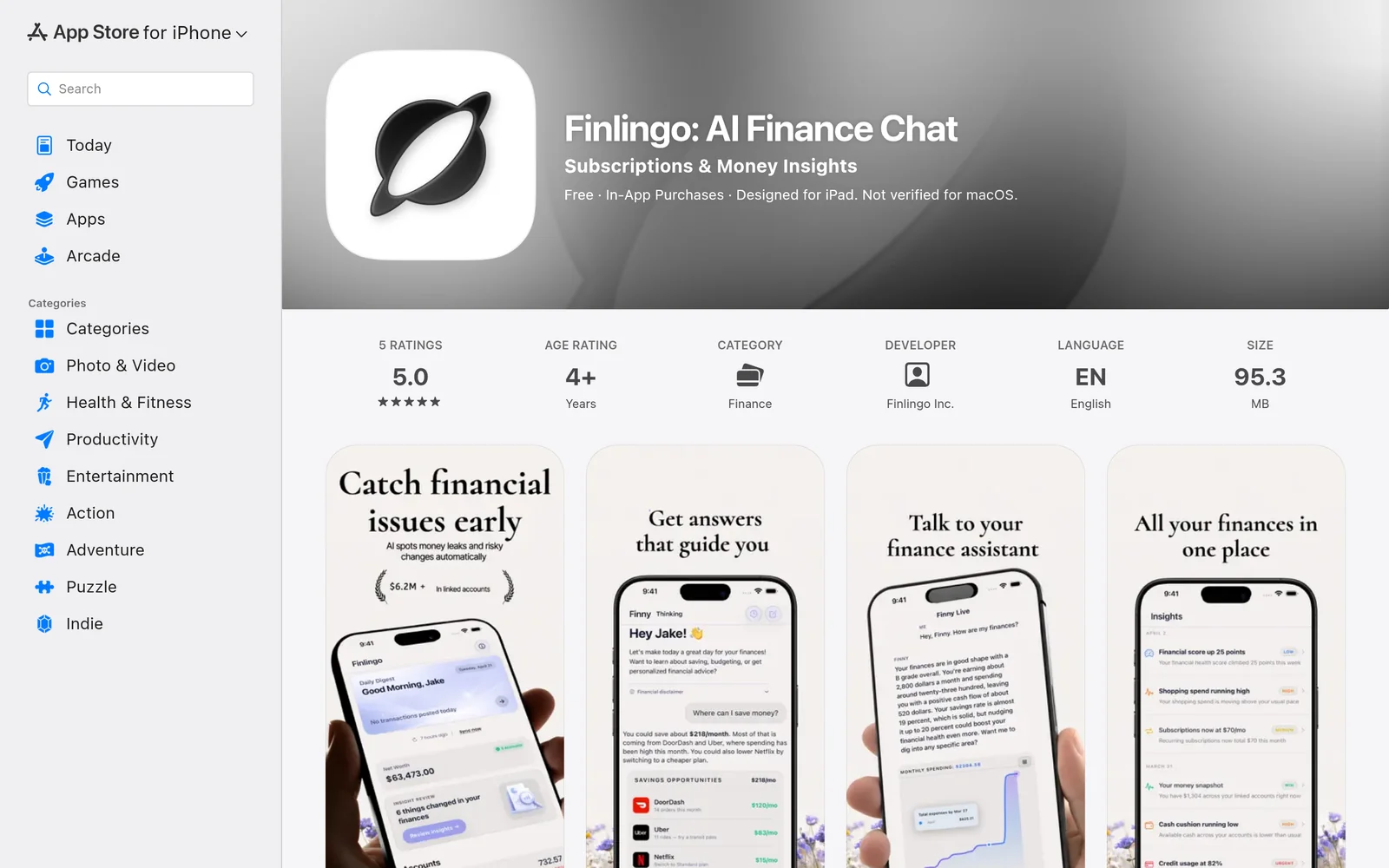
AIAn AI finance assistant that analyzes transactions, tracks subscriptions, detects leaks, and answers financial questions via chat.
App Store
An AI finance assistant that analyzes transactions, tracks subscriptions, detects leaks, and answers financial questions via chat.
About App Store
Finlingo is a mobile AI-driven finance assistant that runs in the background to analyze transactions, surface spending trends, and identify subscriptions and cash-flow changes. It automatically detects subscription renewals, hidden leaks, unusual activity, and recurring bills without manual setup or rigid budgeting rules, then delivers concise, actionable insights and answers via an intelligent chat interface. Designed with a clean, privacy-conscious architecture and secure account connections, Finlingo reduces manual tracking and financial noise so users can stay aware and act early on money issues.
Screenshots
Key Features
Use Cases

Frequently asked questions about App Store
What is App Store?
The App Store is Apple's official digital marketplace for iOS applications, allowing users to download, purchase, and update apps for their iPhone, iPad, and iPod Touch devices. It features a wide range of applications, including games, productivity tools, and finance apps like Finlingo: AI Finance Chat.
Key Points
- Wide Selection of Apps: The App Store offers millions of applications across various categories.
- User Ratings and Reviews: Users can view ratings and reviews to make informed choices about apps.
- Regular Updates: Developers frequently update apps to enhance features and fix bugs.
Detailed Explanation
The App Store is an essential platform for iOS users to access a vast selection of applications. It was launched in July 2008 and has evolved significantly, featuring over 2 million apps as of 2023. Users can browse through categories such as games, productivity, health, and finance, making it easy to find apps that suit their needs.
When a user searches for an app like Finlingo: AI Finance Chat, they can view detailed information, including screenshots, user ratings, and reviews. This information helps potential users assess the app's functionality and usability before downloading. Additionally, the App Store allows users to update their apps easily, ensuring they have access to the latest features and security enhancements.
Use Cases
- Personal Finance Management: Users can download finance apps to track spending, create budgets, and analyze their financial health.
- Education and Learning: The App Store provides various educational apps, making learning accessible through mobile devices.
- Entertainment: Users can find gaming apps and streaming services to enhance their entertainment experience.
Best Practices / Tips
- Read Reviews: Always check user reviews and ratings before downloading an app to gauge its quality.
- Update Regularly: Enable automatic updates to ensure you always have the latest features and security patches.
- Explore Categories: Use the App Store's categories to discover new and trending apps that may fit your interests.
Additional Resources
How does App Store work?
The App Store functions as a digital marketplace where users can discover, download, and purchase applications for their devices. It leverages advanced AI capabilities to enhance user experience by personalizing recommendations, optimizing search results, and streamlining the app discovery process.
Key Points
- Marketplace Functionality: A hub for applications across various categories.
- AI-Powered Recommendations: Uses algorithms to suggest apps based on user behavior.
- User Interaction: Simplifies downloading and purchasing apps with secure transactions.
Detailed Explanation
The App Store operates primarily as a platform for users to access a wide range of applications, from games to productivity tools. Each app is submitted by developers who must adhere to specific guidelines set by the platform. The App Store employs core AI capabilities to optimize user experience in several significant ways:
-
Personalization: The App Store analyzes user preferences and past downloads to recommend apps tailored to individual needs. For example, if a user frequently downloads fitness apps, the store will prioritize similar applications in search results and featured sections.
-
Search Optimization: Advanced algorithms ensure that users can quickly find what they are looking for. The AI considers factors such as keyword relevance, app ratings, and user engagement metrics. This means that popular apps are more likely to appear at the top of search results, enhancing discoverability.
-
User Reviews and Ratings: The App Store incorporates user feedback to refine its recommendations. Highly rated apps gain visibility, while lower-rated apps may be deprioritized. This system encourages developers to maintain high-quality standards.
-
Secure Transactions: The App Store provides a secure environment for in-app purchases and app downloads. Users can trust that their payment information is protected, which encourages more transactions.
Best Practices / Tips
-
Optimize App Listings: Developers should ensure that their app descriptions, keywords, and visuals are optimized for search queries. This involves using clear, descriptive titles and incorporating relevant keywords that potential users might search for.
-
Encourage User Reviews: Positive reviews significantly impact an app's visibility and attractiveness. Developers should actively encourage satisfied users to leave feedback.
-
Regular Updates: Keep the app updated to improve functionality and address user concerns. Regular updates can lead to better reviews and higher rankings in the App Store.
-
Monitor Analytics: Utilize app analytics to understand user behavior and identify areas for improvement. This data can guide marketing strategies and enhance the app's performance.
Additional Resources
- Apple's App Store Review Guidelines
- App Store Optimization (ASO) Guide
- How to Increase App Visibility
By leveraging these strategies and understanding the App Store's functionality, both users and developers can maximize their experience and outcomes within this essential digital marketplace.
What are the main features of App Store?
The main features of the App Store include a vast selection of apps, user-friendly interface, personalized recommendations, and robust security measures. Additionally, it offers seamless payment options and regular updates, ensuring users have access to the latest applications and features.
Key Points
- Vast selection of apps
- User-friendly interface
- Personalized recommendations
- Robust security measures
- Seamless payment options
- Regular updates
Detailed Explanation
The App Store is a digital distribution platform that provides users with access to millions of applications across various categories, including games, productivity, education, and health. Here’s a deeper look at its main features:
-
Vast Selection of Apps: The App Store hosts over 2 million apps, catering to diverse interests and needs. This extensive library allows users to find everything from popular games to essential productivity tools.
-
User-Friendly Interface: The App Store is designed with a clean and intuitive layout, making it easy for users to navigate and discover new applications. Features like the "Today" tab highlight trending apps and curated lists, enhancing the user experience.
-
Personalized Recommendations: Leveraging AI algorithms, the App Store provides tailored app suggestions based on user preferences and download history. This personalization helps users discover apps that align with their interests.
-
Robust Security Measures: Apple prioritizes user security by screening apps for malware and ensuring compliance with privacy standards. The App Store’s strict guidelines help maintain a safe environment for downloads.
-
Seamless Payment Options: The App Store supports various payment methods, including credit cards and Apple Pay, facilitating an easy and secure purchasing process for in-app purchases and subscriptions.
-
Regular Updates: Developers frequently update their apps to enhance functionality and fix bugs. The App Store notifies users about available updates, ensuring they benefit from the latest features and improvements.
Best Practices / Tips
- Explore Categories: Utilize the category filters to find apps that suit your specific needs, whether for productivity or entertainment.
- Read Reviews: Check user reviews and ratings before downloading to gauge app performance and reliability.
- Update Regularly: Always keep your apps updated to benefit from new features and security enhancements.
- Manage Subscriptions: Be aware of your app subscriptions to avoid unexpected charges and ensure you’re using services that are valuable to you.
Additional Resources
Who is App Store for?
The App Store is designed for anyone looking to enhance their daily routines with AI tools, including professionals, students, and casual users. It offers a wide range of applications that streamline workflows, boost productivity, and simplify tasks across various domains.
Key Points
- Target Audience: Professionals, students, and casual users.
- Diverse Applications: A variety of AI tools for different needs.
- Workflow Enhancement: Tools that improve productivity and efficiency.
Detailed Explanation
The App Store caters to a broad spectrum of users interested in leveraging artificial intelligence to optimize their daily activities. Here are some specific examples of who benefits from the App Store:
-
Professionals: Business analysts, marketers, and project managers utilize AI applications for data analysis, customer engagement, and project management. For instance, tools like Trello and Asana incorporate AI to streamline team collaborations.
-
Students: Learners can access AI-driven educational apps for personalized study plans, language learning, and research assistance. Apps such as Grammarly help improve writing skills by providing real-time feedback.
-
Casual Users: Individuals seeking to enhance their everyday tasks, like personal finance management or fitness tracking, can find a wealth of options. For example, apps like Mint use AI to help users budget effectively.
By providing easy access to these tools, the App Store empowers users to integrate AI into their workflows, leading to increased efficiency and better outcomes.
Best Practices / Tips
- Explore User Reviews: Before downloading an app, read user reviews to understand its performance and reliability.
- Trial Versions: Utilize free trials to determine if an app meets your needs before committing to any subscriptions or purchases.
- Stay Updated: Regularly check for updates to ensure you're using the latest features and security enhancements.
Additional Resources
How much does App Store cost?
The App Store itself is free to access; however, developers must pay an annual fee to publish apps. As of 2023, the Apple Developer Program costs $99 per year. For more details, visit the official App Store website.
Key Points
- The App Store is free for consumers.
- Developers pay an annual fee of $99 to publish apps.
- Additional costs may apply for app features and services.
Detailed Explanation
The App Store, part of Apple's ecosystem, provides a platform for app distribution to millions of iOS users worldwide. While users can download apps for free or purchase them, developers face costs associated with app publishing.
Developer Costs
- Apple Developer Program Fee: Developers must enroll in the Apple Developer Program, which costs $99 per year. This fee grants access to essential tools, resources, and the ability to publish apps on the App Store.
- Additional Costs: Depending on the app's functionality, costs may arise for services like cloud storage, analytics, or third-party integrations. For example, using Apple's In-App Purchase system incurs a commission of 15% to 30% on sales.
Subscription Services
Some apps on the App Store offer subscription models. For instance, apps like Netflix or Spotify charge monthly fees for access to premium content. Developers should consider these pricing strategies to enhance revenue.
Best Practices / Tips
- Evaluate Your App's Value: Before setting a price, assess the value your app provides and compare it to competitors.
- Optimize for Subscriptions: If applicable, consider offering a free trial period to attract users, increasing the likelihood of conversion to paid subscriptions.
- Stay Informed: Regularly check Apple's guidelines and pricing structure as they may change yearly.
Additional Resources
How do I get started with App Store?
To get started with the App Store, visit Apple's App Store page to sign up for an Apple ID. Once registered, explore thousands of apps tailored to your interests and needs.
Key Points
- Create an Apple ID: Essential for accessing the App Store.
- Explore Categories: Apps are categorized for easy navigation.
- Download and Purchase: Understand the process of acquiring apps.
Detailed Explanation
To effectively utilize the App Store, begin by creating an Apple ID, which is necessary for downloading apps or making purchases. Follow these steps:
- Visit the App Store: Open the App Store app on your iPhone, iPad, or Mac, or visit the App Store website.
- Sign Up: Click on "Sign Up" and provide your email address, password, and other required information. Ensure your password is strong to protect your account.
- Explore Apps: Once you have logged in, browse through various categories like Games, Education, or Finance. Use the search bar for specific apps.
- Download Apps: To download a free app, simply click "Get." For paid apps, click on the price and confirm your purchase. Depending on your settings, you may need to enter your Apple ID password or use Face ID/Touch ID.
- Manage Downloads: After downloading, manage your apps through the "Updates" tab to ensure you always have the latest features and security patches.
Best Practices / Tips
- Use Family Sharing: If you have a family, set up Family Sharing to share purchased apps without extra costs.
- Check App Reviews: Read user reviews and ratings to gauge app quality before downloading.
- Set Up Payment Options: If you plan to purchase apps, add a payment method to your Apple ID for seamless transactions.
- Regularly Update Apps: Enable automatic updates to keep your apps current and secure.
Additional Resources
What is Finlingo?
Finlingo is an AI-powered finance chat application developed by Finlingo Inc. It provides users with personalized financial advice, investment insights, and budget management tips. Available on the App Store, Finlingo aims to simplify financial literacy through interactive conversations tailored to user needs.
Key Points
- AI-Driven Insights: Finlingo leverages artificial intelligence to offer tailored financial advice.
- User-Friendly Interface: The app is designed for ease of use, making financial management accessible to everyone.
- Comprehensive Features: Users can explore budgeting, investing, and savings strategies within the app.
Detailed Explanation
Finlingo combines advanced artificial intelligence algorithms with user-friendly design to help individuals manage their finances effectively. Here’s how it works:
-
Personalized Financial Advice: After downloading the app, users can engage in conversations with Finlingo, receiving personalized financial recommendations based on their input. For example, if a user expresses interest in saving for a house, Finlingo will provide tailored savings plans and investment options.
-
Investment Insights: Finlingo keeps users informed about market trends and investment opportunities. Users receive real-time updates on stocks, bonds, and mutual funds, enabling them to make informed decisions.
-
Budget Management: The app offers tools for tracking expenses and creating budgets. By analyzing spending habits, Finlingo can suggest areas where users can save more effectively.
-
Interactive Learning: Users can ask questions about finance-related topics, and Finlingo provides comprehensive answers, enhancing financial literacy. This feature is particularly beneficial for those unfamiliar with financial jargon.
-
Community and Support: Users can access forums and support directly within the app, allowing for community engagement and shared learning experiences.
Best Practices / Tips
- Set Clear Financial Goals: Before using Finlingo, define your financial objectives. Whether it's saving for retirement or paying off debt, having clear goals will help the app provide more relevant advice.
- Regularly Update Your Preferences: As your financial situation changes, update your preferences within the app to receive the most accurate and helpful insights.
- Engage with the Community: Take advantage of the community features to learn from other users’ experiences and strategies.
- Utilize All Features: Explore all the app's features, including the budget and investment tools, to maximize its potential.
Additional Resources
For anyone looking to improve their financial literacy and management skills, Finlingo offers a powerful, AI-driven solution that simplifies complex financial concepts.
How does Finlingo work?
Finlingo operates by leveraging advanced artificial intelligence to streamline and enhance everyday workflows. It integrates various AI capabilities, enabling users to automate tasks, access insights, and improve productivity across multiple domains, from data analysis to content generation.
Key Points
- AI Integration: Combines multiple AI technologies for efficient task management.
- User-Friendly Interface: Designed to simplify complex workflows for all users.
- Versatile Applications: Applicable in various fields such as marketing, finance, and education.
Detailed Explanation
Finlingo utilizes cutting-edge AI technologies like natural language processing (NLP), machine learning, and predictive analytics to assist users in their daily operations.
-
AI Integration: Finlingo integrates various AI tools that allow users to automate repetitive tasks. For example, marketers can use it to generate content ideas based on trending topics, while finance professionals can analyze large data sets quickly.
-
User-Friendly Interface: The platform is designed with an intuitive interface that minimizes the learning curve. Users can easily navigate through features such as task automation, data visualization, and report generation, making it accessible for both tech-savvy and non-technical users.
-
Versatile Applications: Finlingo supports a wide range of applications. In marketing, it can help with content creation and audience analysis. In finance, it can assist in forecasting trends and managing investments. In education, it can facilitate personalized learning experiences by analyzing student data.
Best Practices / Tips
- Leverage Automation: Take full advantage of Finlingo’s automation features to save time and reduce human error. Identify repetitive tasks in your workflow that can be automated.
- Utilize Data Insights: Regularly review the analytics provided by Finlingo to make data-driven decisions. Use these insights to refine your strategies and improve outcomes.
- Stay Updated: Make sure to follow Finlingo’s updates and new feature releases to continuously enhance your use of the platform.
Additional Resources
What are the main features of Finlingo?
Finlingo features advanced AI capabilities, including natural language processing, real-time translation, and customizable learning modules. These tools enhance communication, streamline workflows, and support multilingual interactions, making Finlingo an essential solution for businesses operating in diverse linguistic environments.
Key Points
- Natural Language Processing (NLP): Enables effective communication.
- Real-Time Translation: Supports instant multilingual conversations.
- Customizable Learning Modules: Tailors learning experiences to user needs.
Detailed Explanation
Finlingo leverages cutting-edge Natural Language Processing (NLP) to understand and generate human-like text. This feature allows businesses to enhance their customer service through AI-driven chatbots that can comprehend and respond in multiple languages, improving user engagement.
The Real-Time Translation functionality allows users to conduct conversations in different languages seamlessly. For instance, a customer in Spain can communicate with a support agent in the U.S. without language barriers. This capability not only fosters better relationships with global clients but also boosts sales by making products accessible to a wider audience.
Moreover, Finlingo's Customizable Learning Modules allow organizations to tailor the AI's training based on specific industry vocabulary and user preferences. This adaptability is particularly useful for sectors like healthcare and finance, where precise terminology is crucial. Companies can choose to develop their own content or utilize Finlingo's extensive library of resources.
Best Practices / Tips
- Leverage NLP: Regularly update your NLP models to improve understanding and relevance.
- Utilize Real-Time Features: Encourage your team to use real-time translation during international calls to enhance customer satisfaction.
- Customize Learning Modules: Regularly review and adapt learning modules to reflect changes in your business or industry trends, ensuring that the AI remains effective.
Additional Resources
Who is Finlingo for?
Finlingo is designed for individuals and organizations seeking to enhance their daily productivity through AI-driven workflows. It caters to a wide range of users, including professionals, students, and businesses looking to automate tasks, improve efficiency, and leverage AI technology in everyday operations.
Key Points
- Target Audience: Professionals, students, and businesses.
- Use Cases: Automating routine tasks, enhancing productivity, and leveraging AI.
- Accessibility: User-friendly interface for all skill levels.
Detailed Explanation
Finlingo serves a diverse audience, making it an ideal tool for anyone looking to integrate AI into their daily routines. Here are some specific categories of users who can benefit from Finlingo:
-
Professionals: Individuals in various industries can utilize Finlingo to automate repetitive tasks such as scheduling meetings, managing emails, and generating reports. For instance, a marketing manager can use Finlingo to analyze customer data and create targeted campaigns efficiently.
-
Students: Learners can enhance their study habits through Finlingo by organizing notes, generating study materials, and even summarizing research papers. By automating these processes, students can focus more on understanding the content rather than getting lost in administrative tasks.
-
Businesses: Companies can implement Finlingo to streamline operations, improve team collaboration, and enhance customer interactions. For example, a customer service department can use AI chatbots powered by Finlingo to handle inquiries, freeing up human agents for more complex issues.
Finlingo’s features allow users to create custom workflows tailored to their specific needs, making it versatile for various applications.
Best Practices / Tips
- Define Specific Goals: Clearly outline what you want to achieve with Finlingo to maximize its benefits.
- Start Small: Begin by automating one or two tasks before expanding to ensure you understand how to use the platform effectively.
- Utilize Templates: Take advantage of pre-built templates offered by Finlingo to save time and streamline your setup process.
- Regularly Review Workflows: Periodically assess the effectiveness of your workflows to make necessary adjustments and improvements.
Additional Resources
By leveraging Finlingo, users across various sectors can transform their daily tasks into streamlined processes, enhancing overall productivity and efficiency.
How much does Finlingo cost?
Finlingo is completely free to use, providing users with valuable language learning tools without any associated costs. This accessibility makes it an attractive option for learners of all levels seeking to improve their language skills without financial barriers.
Key Points
- No Cost: Finlingo is entirely free for users.
- User-Friendly: The platform features an intuitive interface.
- Accessible Learning: Ideal for learners across various language proficiency levels.
Detailed Explanation
Finlingo offers a variety of language learning tools without any fees, making it a unique platform in the crowded market of educational resources. Users can access a wide range of features, including interactive exercises, vocabulary builders, and pronunciation guides, all designed to enhance language acquisition.
Features:
- Interactive Exercises: Engage with gamified quizzes that make learning fun and effective.
- Vocabulary Builders: Users can expand their vocabulary through targeted practice sessions.
- Pronunciation Guides: Audio examples help learners master the correct pronunciation of words and phrases.
Because Finlingo is free, it allows users to explore different languages and learning methods without the commitment of a paid subscription. This is particularly beneficial for beginners who may be unsure which language to pursue or for those who want to dabble in multiple languages.
Best Practices / Tips
- Consistency: Regular practice is key to language learning. Set aside daily time to use Finlingo.
- Engage with Community: Take advantage of any community features for peer support and motivation.
- Set Goals: Define clear language learning objectives to stay focused and measure your progress.
Common pitfalls include neglecting to practice regularly or getting overwhelmed by new vocabulary. To avoid this, pace your learning and utilize Finlingo’s spaced repetition tools.
Additional Resources
- Finlingo Official Website
- Language Learning Tips and Techniques
- Community Forums for Language Learners
By leveraging these resources, you can maximize your learning experience with Finlingo and achieve your language goals effectively.
How do I get started with Finlingo?
To get started with Finlingo, simply visit Finlingo on the App Store to sign up and explore its features. Download the app, create an account, and begin enhancing your financial knowledge with AI-driven insights.
Key Points
- User-Friendly Interface: Finlingo is designed for both beginners and experienced users.
- AI-Powered Insights: Access personalized financial advice and tips.
- Secure and Private: Your data is protected with robust security measures.
Detailed Explanation
Finlingo is an innovative AI finance chat application that simplifies financial understanding for users of all experience levels. Here’s how to get started:
-
Download the App: Go to the App Store and download the Finlingo app. It's available for iOS devices.
-
Create Your Account: Open the app and follow the prompts to sign up. You’ll need to provide basic information such as your email address and create a password.
-
Explore Features: Once logged in, you can begin exploring various features, including:
- AI Financial Advisor: Ask questions about finance, investments, or budgeting, and receive tailored advice.
- Interactive Learning: Engage with interactive tools that help you understand complex financial concepts.
- Regular Updates: Stay informed with the latest financial news and trends curated by the app's AI.
-
Utilize Help Resources: If you have questions, Finlingo offers comprehensive support resources within the app to guide you.
Best Practices / Tips
- Engage Regularly: The more you interact with Finlingo, the better the AI understands your preferences, leading to more personalized advice.
- Set Financial Goals: Use the app to set and track your financial goals effectively.
- Stay Updated: Regularly check for updates in the app to access new features and improvements.
Additional Resources
- Finlingo Official Website for more information and updates.
- App Store Reviews to see user feedback and experiences.
- Financial Literacy Resources for further learning and understanding of financial concepts.
Explore more AI Ai Tools tools
Browse all Ai Tools tools →Browse by use case: Chatbots & Assistants · Automation & Productivity
Compare App Store: vs Pi Web · vs Aymo AI · vs Speech To Markdown · vs FluentDB