
Backplanes Spotlight vs OrchestraML: Features, Pricing & Which Is Better (2026)
A side-by-side comparison of Backplanes Spotlight and OrchestraML — features, pricing, and ideal use cases — to help you decide which AI tool fits your workflow.

Backplanes Spotlight
Backplanes
Automatic session reports for Claude Code and Codex agents showing files touched, commands run, external tools reached, scope drift, and review items.
Key features
- Automatic Session Reports: Produces per-session reports for Claude Code and Codex that summarize actions, touched files, commands executed, and external calls to third-party tools.
- File-Level Traceability: Identifies and lists files created, modified, or deleted during an agent session so reviewers can inspect exact changes and their context.
- Command and Action Logs: Captures commands and high-level actions executed by agents (shell commands, IDE operations, tool invocations) to recreate and audit workflows.
- External Tool Interaction Tracking: Records which external services or tools the agent reached (APIs, CLIs, cloud services) to surface potential data exfiltration or dependency use.
- Scope Drift Detection: Highlights when an agent’s actions diverge from the original task or intent, flagging areas that need human attention or rollback.
- Review Prioritization: Flags risky or unusual operations and ranks items deserving human review to reduce time spent on low-value checks.
- Session Timeline Visualization: Provides chronological timelines of agent activity to help investigators and engineers follow execution flow and reconstruct decisions.
- Organizational Oversight: Aggregates agent activity across teams and vendors to enable multi-tenant monitoring, accountability, and governance.
- Automatic session report generation for agent runs
- Explicit support for Claude Code and Codex sessions
- Tracks files touched/modified during a session
- Records commands executed by the agent
- Tracks external tools and APIs reached during execution
- Detects scope drift across the session
- Highlights actions and artifacts that deserve manual review
- Free at launch
Best for
- Security & Incident Review: Investigating a suspicious agent session to see which files were accessed, which external APIs were called, and whether sensitive data may have been exposed.
- Vendor and Contractor Oversight: Monitoring agent-driven work performed by third-party vendors to ensure actions stay within scope and comply with internal policies.
- Code-Generation QA: Reviewing outputs from Claude Code or Codex sessions to validate generated code changes, commands executed, and identify potential regressions.
- Compliance and Audit Trails: Providing auditable records of automated agent activity for regulatory or internal compliance purposes, including timeline and action logs.
- Scope Management: Detecting and correcting scope drift when an agent starts performing tasks outside the intended objective, preventing unintended changes.
- Postmortem & Debugging: Reconstructing agent workflows after a failure to determine root cause by reviewing chronological actions, file edits, and external calls.
- Change Control and Approval: Using prioritized review items to gate merges or deployments that were initiated or modified by agent sessions.
- Developer audit of autonomous code-generation or modification runs
- Security and compliance review of agent interactions with external tools and systems
- QA and debugging to reproduce and understand agent-driven changes
- Review prioritization by surfacing risky or out-of-scope actions
- Post-run reporting for teams integrating agent workflows into CI/CD
OrchestraML
OrchestraML
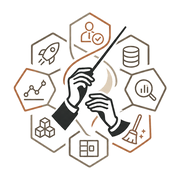
OrchestraML orchestrates end-to-end ML lifecycles using agentic workflows for dataset search, EDA, cleaning, feature engineering, AutoML, and deployment.
Key features
- Dataset Search: Automatically discovers and ranks candidate datasets from connected sources and public repositories based on the user's described ML goal, surfacing relevant data for inspection and selection.
- Exploratory Data Analysis (EDA): Generates comprehensive EDA reports including summary statistics, visualizations, class balance checks, and data quality diagnostics to help users understand candidate datasets quickly.
- Data Cleaning and Preprocessing: Applies automated cleaning steps (missing value handling, outlier detection, type conversions, encoding) with configurable operations and opportunities for user review and rollback.
- Feature Engineering: Proposes and evaluates engineered features and transformations (aggregation, encoding, interaction terms, embeddings) and ranks feature sets by predictive utility.
- AutoML Model Search and Tuning: Runs automated model selection and hyperparameter optimization across multiple algorithms and pipelines, compares models with consistent metrics, and provides ranked recommendations.
- Deployment Orchestration: Packages selected models into deployable endpoints or artifacts, sets up monitoring hooks and deployment pipelines, and aids in shipping models to production environments.
- Human-in-the-Loop Controls: Inserts approval checkpoints before critical decisions (dataset selection, cleaning operations, final model choice, deployment) and provides explanations for recommended actions.