
Qwen-Image-Layered
AIOpen SourceFreeA named image-layered component associated with the Qwen model family from the Qwen team at Alibaba Cloud.
Qwen-Image-Layered
A named image-layered component associated with the Qwen model family from the Qwen team at Alibaba Cloud.
About Qwen-Image-Layered
The provided official source is the Qwen3 GitHub repository which notes that Qwen3 is a large language model series developed by the Qwen team at Alibaba Cloud. The specific item "Qwen-Image-Layered" is not described in the supplied official content; no technical details, architecture, capabilities, or release notes for Qwen-Image-Layered are available in the provided source. Therefore, precise functionality, workflows, and unique value propositions for Qwen-Image-Layered cannot be confirmed from the given material.
Screenshots

Key Features
Use Cases



Frequently asked questions about Qwen-Image-Layered
What is the pricing model for Qwen-Image-Layered?
Qwen-Image-Layered utilizes a freemium pricing model, allowing users to self-host the model for free while incurring compute costs. For those seeking hosted API access, pricing is custom and typically based on usage, making it flexible for different user requirements.
Key Points
- Freemium Model: Free self-hosting with compute costs.
- Custom Pricing: Hosted API access is usage-based.
- Flexibility: Adaptable pricing structure for various needs.
Detailed Explanation
Qwen-Image-Layered's pricing model is designed to cater to a diverse user base, from individual developers to large enterprises.
-
Freemium Model: Users can choose to self-host the Qwen-Image-Layered model without any initial costs. However, it's important to note that while the software itself is free, users will need to account for compute costs associated with running the model on their infrastructure. This can vary based on the cloud service provider and the resources required.
-
Hosted API Access: For users who prefer not to manage their own hosting, Qwen-Image-Layered offers a hosted API solution. This option comes with custom pricing, which usually depends on the volume of API calls and the specific features utilized. This flexibility allows businesses to scale their usage according to their needs without upfront commitments.
-
Use Cases: The pricing model is particularly advantageous for startups and small businesses wanting to test the waters with AI image processing without significant financial risks. Larger organizations can benefit from the hosted API to integrate advanced image processing capabilities into their applications seamlessly.
Best Practices / Tips
- Calculate Total Costs: When considering self-hosting, carefully estimate compute costs based on expected usage to avoid surprises.
- Evaluate Needs: Assess whether self-hosting or API access is more suitable based on your team’s technical expertise and resource availability.
- Monitor Usage: If using the hosted API, keep track of your usage to optimize costs and adjust your plan as necessary.
Additional Resources
What unique features does Qwen-Image-Layered offer?
Qwen-Image-Layered, part of the Qwen3 model series, offers advanced AI capabilities for image processing, including enhanced layering techniques, improved contextual understanding, and high-resolution outputs. For detailed features and updates, users can refer to the Qwen3 GitHub repository.
Key Points
- Advanced Layering Techniques: Qwen-Image-Layered excels in managing complex image compositions.
- Contextual Understanding: The model offers improved interpretation of visual elements within images.
- High-Resolution Outputs: Users can generate images with impressive detail and clarity.
Detailed Explanation
Qwen-Image-Layered is designed to elevate the capabilities of image processing through sophisticated AI-driven features.
-
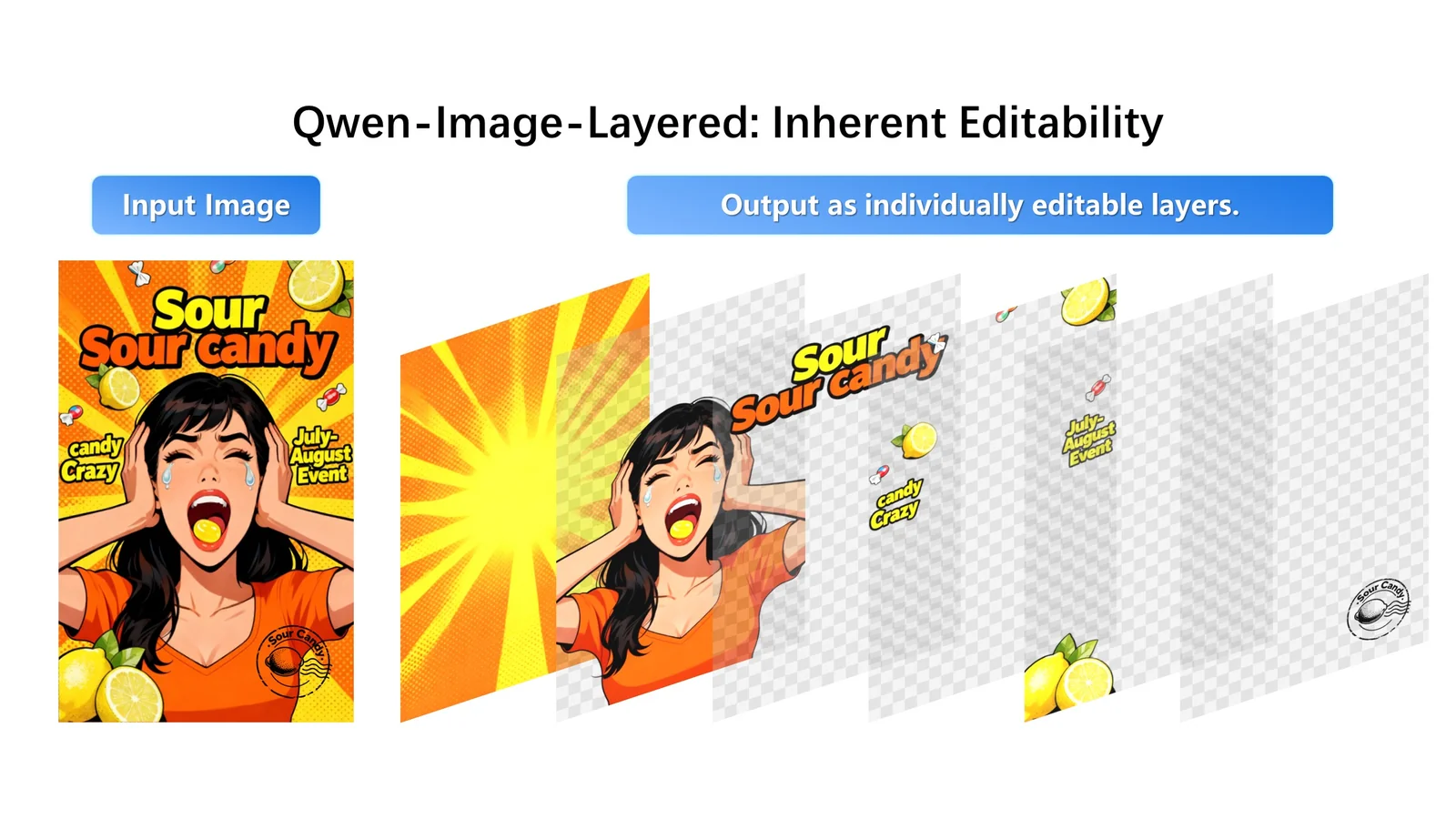
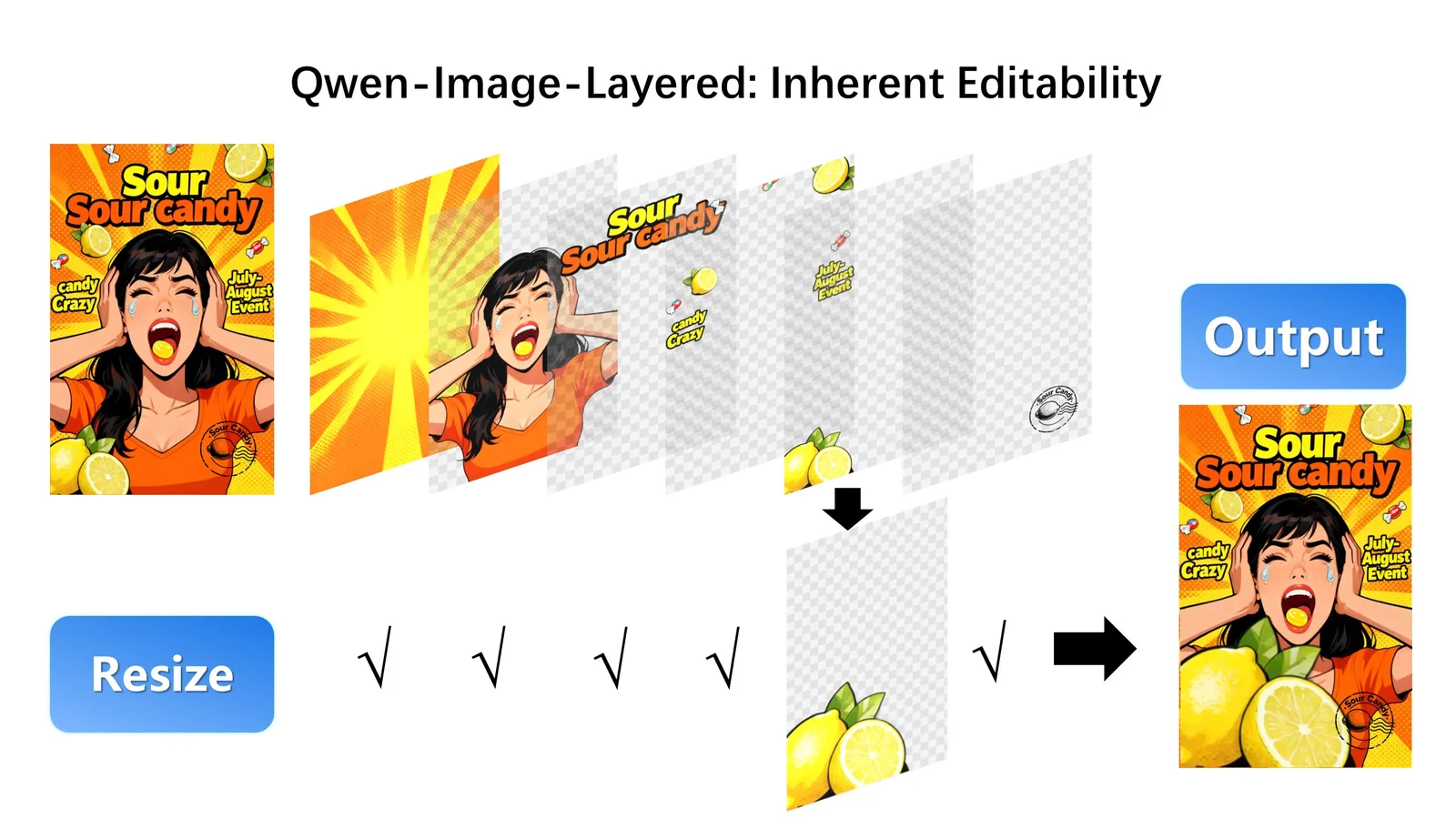
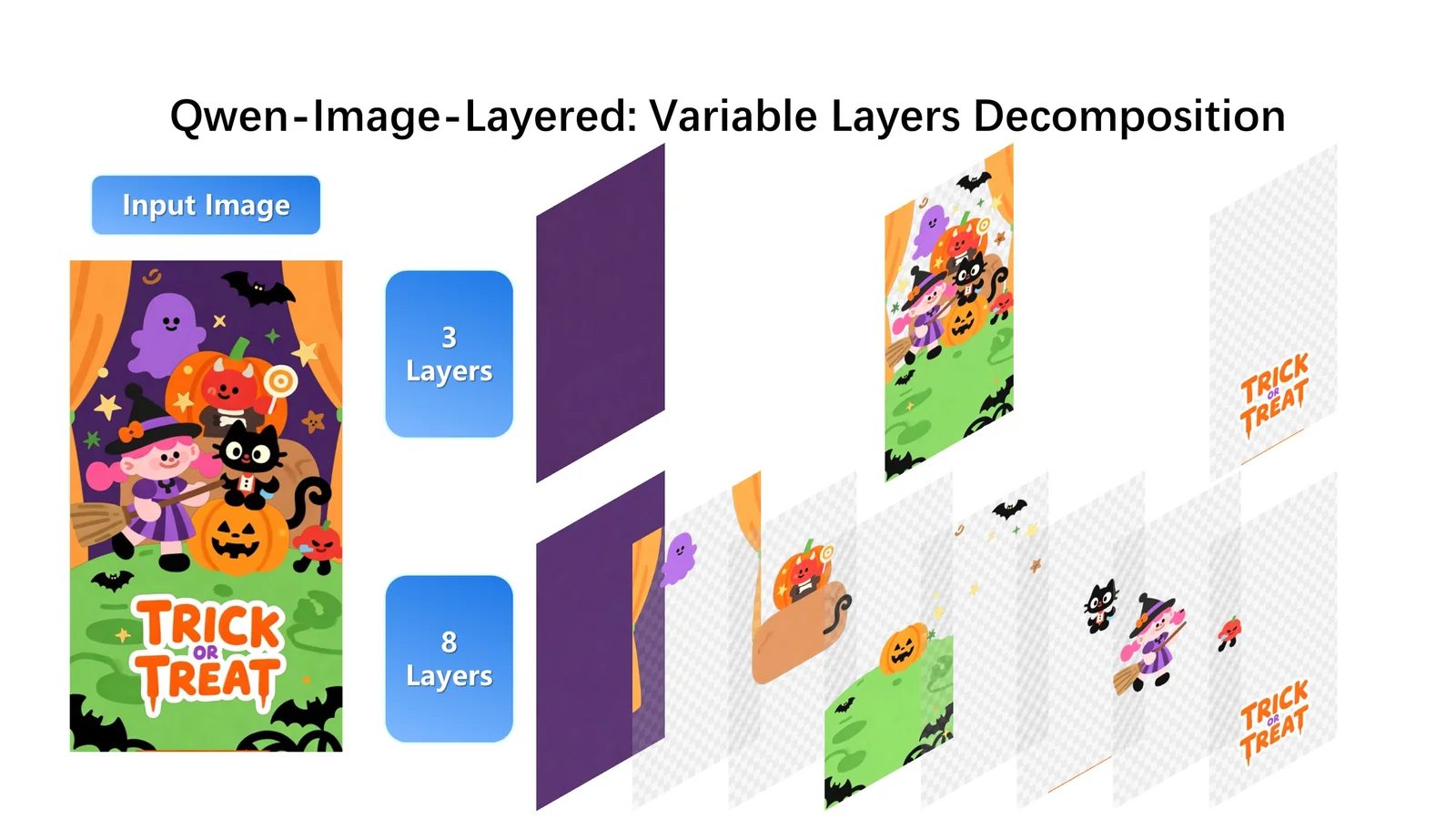
Advanced Layering Techniques: This feature enables users to manipulate images in layers, allowing for intricate edits and enhancements. For instance, designers can apply filters or effects to specific parts of an image without affecting the entire composition. This is particularly useful in graphic design and digital art, where precision is crucial.
-
Contextual Understanding: One of the standout attributes of Qwen-Image-Layered is its ability to comprehend the context of images. This means that the AI can recognize not just objects, but also their relationships within the scene, enabling more nuanced edits. For example, if an image contains a person standing in front of a background, the model can intelligently separate the figure from the backdrop, making it easier to replace or modify either element seamlessly.
-
High-Resolution Outputs: The model supports generating images at high resolutions, making it suitable for professional use where detail is paramount. Users can create stunning visuals that maintain quality even when printed in large formats or displayed on high-definition screens.
Best Practices / Tips
- Experiment with Layering: Take full advantage of the layering capabilities by experimenting with various combinations of filters and effects.
- Use Contextual Features: When editing images, leverage the AI's contextual understanding to save time, especially in tasks like background removal or object enhancement.
- Optimize Output Settings: Always choose the right resolution for your project needs. For web use, a lower resolution may suffice, but for print, opt for the highest setting available.
Additional Resources
- Qwen3 GitHub Repository - For updates, documentation, and community support.
- AI Image Processing Techniques - Explore various methods to maximize your image editing skills.
- Best Practices for Graphic Design - Learn tips and tricks for effective designs using AI tools.
How can I get started with Qwen-Image-Layered?
To get started with Qwen-Image-Layered, download the model code and weights from the official GitHub repository. You can run the model locally on your machine or deploy it on your own infrastructure, depending on your project needs.
Key Points
- Download the model from GitHub.
- Choose between local or remote deployment.
- Familiarize yourself with the model's requirements.
Detailed Explanation
Qwen-Image-Layered is a powerful AI tool designed for image processing and manipulation. To begin using it, follow these steps:
-
Download the Model: Visit the Qwen-Image-Layered GitHub repository and locate the model code and weights files. Ensure you have the latest version for optimal performance.
-
Set Up Your Environment: Before running the model, ensure that your system meets the necessary requirements. This typically includes a compatible operating system (Windows, macOS, or Linux) and the installation of essential libraries such as TensorFlow or PyTorch. Detailed installation instructions can usually be found in the repository's README file.
-
Run the Model Locally: Once the environment is set up, you can run the model locally. Open your terminal or command prompt, navigate to the model's directory, and execute the provided scripts. You can test the model with sample images to familiarize yourself with its capabilities.
-
Deploying on Infrastructure: For large-scale applications, consider deploying the model on cloud infrastructure. Options like AWS, Google Cloud, or Azure provide scalable environments for running AI models. Be sure to check the specific deployment instructions in the documentation for your chosen platform.
Best Practices / Tips
- Environment Management: Use virtual environments (like Conda or virtualenv) to manage dependencies and avoid conflicts.
- Stay Updated: Regularly check the GitHub repository for updates or bug fixes, as AI models evolve quickly.
- Experiment with Parameters: Tweak the model's parameters to optimize performance for your specific use case. Testing different configurations can yield better results.
Additional Resources
What are the technical requirements for integrating Qwen-Image-Layered?
To integrate Qwen-Image-Layered, you need a robust computing infrastructure, preferably with a GPU, sufficient RAM (at least 16 GB), and compatible operating systems like Windows or Linux. Always refer to the official GitHub repository for specific dependencies and installation instructions.
Key Points
- Computing Infrastructure: A robust setup is essential.
- RAM Requirements: Minimum of 16 GB is recommended.
- Operating System Compatibility: Works best on Windows or Linux.
Detailed Explanation
Integrating Qwen-Image-Layered requires careful consideration of your technical environment. Here’s a breakdown of the critical aspects:
1. Computing Infrastructure
- GPU Requirements: Qwen-Image-Layered is designed to leverage GPU acceleration for enhanced performance. An NVIDIA GPU with CUDA support is highly recommended, as it will significantly speed up model training and inference.
- CPU Performance: While a powerful GPU is essential, having a multi-core CPU (Intel i5 or higher) will also aid in processing tasks efficiently.
2. Memory Specifications
- RAM: Ensure you have at least 16 GB of RAM. If you plan to handle larger datasets or run multiple instances, consider upgrading to 32 GB or more. Insufficient memory can lead to crashes or performance bottlenecks.
3. Operating System Compatibility
- Supported OS: Qwen-Image-Layered is compatible with both Windows (version 10 or higher) and various Linux distributions (like Ubuntu). Make sure your system is updated to the latest version for optimal compatibility.
- Dependency Management: Use package managers like pip or conda to manage dependencies easily. Refer to the GitHub repository or official documentation for a list of required libraries, such as TensorFlow or PyTorch.
Best Practices / Tips
- Use Virtual Environments: Set up a virtual environment to manage dependencies and avoid conflicts with other projects. This practice keeps your main environment clean and organized.
- Monitor System Resources: Use monitoring tools to keep an eye on CPU and GPU usage. This will help you identify performance issues early.
- Regular Updates: Frequently check for updates in the GitHub repository to ensure you are using the latest version with potential bug fixes and enhancements.
Additional Resources
How does Qwen-Image-Layered compare to other AI image models?
Qwen-Image-Layered stands out from other AI image models due to its open-source nature and self-hosted deployment, which grants users greater flexibility and control. Its performance metrics and suitability vary depending on specific user requirements and use cases, making it essential to evaluate individual needs before choosing a model.
Key Points
- Open-Source Advantage: Qwen-Image-Layered is open-source, offering transparency and community support.
- Self-Hosted Flexibility: Users can deploy the model on their own infrastructure, ensuring data privacy and customization.
- Performance Metrics: Comparison with other models should focus on specific metrics like speed, image quality, and resource usage.
Detailed Explanation
Qwen-Image-Layered provides unique advantages over other AI image models. Being open-source, it allows developers to access the source code, modify it, and contribute to its evolution. This fosters a community-driven approach, enabling continuous improvement and innovation.
The self-hosted aspect means users can run the model on their own servers or cloud environments, enhancing control over data privacy and deployment strategies. This is crucial for businesses handling sensitive information or those with specific compliance requirements.
When comparing performance, it’s important to consider metrics such as:
- Image Quality: Evaluate how well the model generates images compared to others in terms of resolution and detail.
- Speed: Assess processing times, especially for real-time applications.
- Resource Usage: Understand the computational resources required, including GPU and memory needs.
For instance, while some proprietary models may offer high-quality outputs, they often come with subscription costs and less customization. In contrast, Qwen-Image-Layered allows users to optimize for their specific use cases without ongoing fees.
Best Practices / Tips
- Evaluate Specific Needs: Determine your project requirements, such as desired image quality and processing speed, before choosing an AI image model.
- Test Performance: Conduct benchmark tests using sample datasets to compare Qwen-Image-Layered with other models in real-world scenarios.
- Engage with the Community: Utilize forums and communities around open-source models for support and best practices.
Additional Resources
Explore more AI Ai Models tools
Browse all Ai Models tools →Browse by use case: Image Generation
Compare Qwen-Image-Layered: vs Mouse-1 · vs Milliseconds.ai · vs SWE-2 · vs Desert Ant Labs