

Palantir
AIEnterprise software platform for integrating, analyzing, and operationalizing complex organizational data and decisions.
Palantir
Enterprise software platform for integrating, analyzing, and operationalizing complex organizational data and decisions.
About Palantir
Palantir builds enterprise-grade software that helps organizations integrate disparate data sources, derive analytical insights, and operationalize decisions into everyday workflows. Its platforms provide unified data models, secure access controls, and tools to build custom applications and operational pipelines so teams can collaborate on data-driven decisions. Palantir is designed for mission-critical use at scale, emphasizing governance, auditability, and deployment across cloud and on-premise environments.
Screenshots



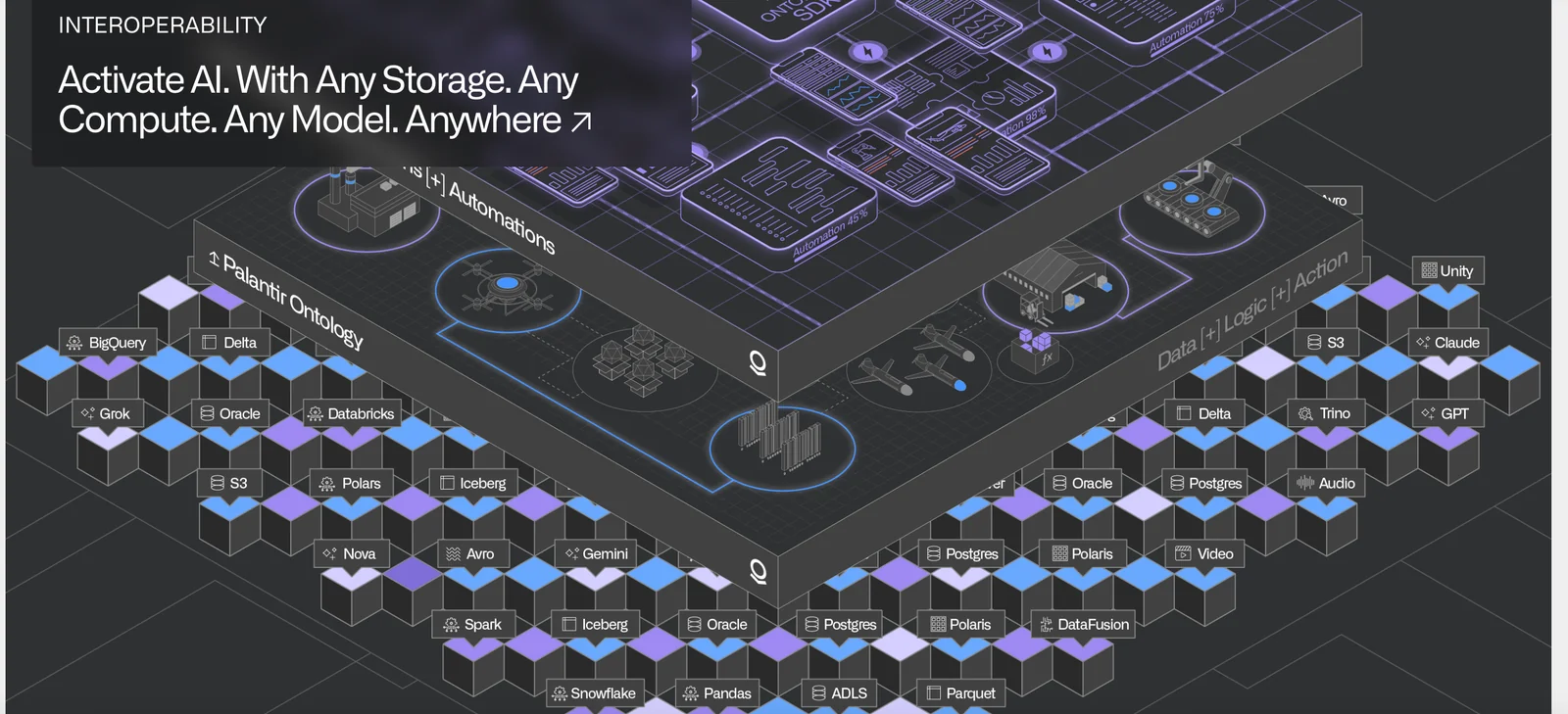

Key Features
Use Cases



Frequently asked questions about Palantir
What is the pricing structure for Palantir?
Palantir employs a custom pricing model tailored to individual enterprise needs, offering various options that include full platform access and professional services. Additionally, Palantir AIP is available for free to self-serve users, making it accessible for small-scale projects and experimentation.
Key Points
- Palantir's pricing structure is customized for each enterprise.
- Options include full platform access and professional services.
- Palantir AIP is available for free for self-serve users.
Detailed Explanation
Palantir's pricing model is designed to cater to the diverse needs of enterprises, ranging from small startups to large corporations. This adaptability allows organizations to select the services and features that align with their specific operational requirements.
-
Custom Pricing: Enterprises interested in Palantir's services must engage in a consultation to determine their specific needs. This often involves assessing the scale of data operations, required integrations, and expected outcomes. This approach ensures that clients only pay for the features they truly need.
-
Full Platform Access: For businesses looking for comprehensive solutions, Palantir offers full access to its platforms, which can include advanced analytics, data integration, and visualization tools. Pricing for these packages varies significantly based on the complexity and scale of deployment.
-
Professional Services: In addition to platform access, Palantir provides professional services, which might include training, support, and customization. These services are particularly beneficial for enterprises that require assistance in implementing the technology effectively.
-
Palantir AIP: The Palantir AI Platform (AIP) is accessible for free to self-serve users. This option allows startups or smaller teams to experiment with AI and data analytics without the burden of initial costs, making it a great entry point for those new to data-driven decision-making.
Best Practices / Tips
- Consult Early: If considering Palantir, initiate a consultation early in your planning process to understand potential costs and options.
- Define Needs Clearly: Clearly outline your business needs and goals before discussing with Palantir representatives to ensure you receive the most relevant pricing options.
- Explore Free Options: Take advantage of the free Palantir AIP to familiarize yourself with the platform’s capabilities before committing to a paid solution.
Additional Resources
What are the key features of Palantir's AI models?
Palantir's AI models feature robust data integration, advanced modeling capabilities, secure access protocols, collaborative tools, and custom application development. These attributes make Palantir particularly effective for managing and analyzing complex datasets across various industries, enhancing decision-making processes and operational efficiency.
Key Points
- Data Integration and Modeling: Seamlessly combines diverse data sources.
- Operational Workflows: Streamlines processes for efficiency.
- Collaboration Tools: Enhances teamwork and communication.
Detailed Explanation
Palantir's AI models excel in data integration and modeling, allowing users to consolidate data from multiple sources—whether structured or unstructured—into a single platform. This feature is crucial for organizations that deal with vast amounts of information, such as financial institutions or healthcare providers.
The operational workflows offered by Palantir facilitate the automation of routine tasks, helping teams to focus on strategic initiatives. For example, in supply chain management, Palantir can optimize inventory levels by predicting demand trends, thereby reducing costs and improving service levels.
Collaboration tools within Palantir's ecosystem enable teams to work together in real-time. Features like shared dashboards and customizable reports allow stakeholders to visualize data insights collectively, fostering a culture of data-driven decision-making. This is particularly valuable in sectors like government and defense, where cross-agency collaboration is essential.
Best Practices / Tips
- Leverage Data Integration: Ensure all relevant data sources are connected to maximize insights.
- Train Teams on Tools: Invest in training for employees to effectively use Palantir's collaboration features.
- Customize Workflows: Tailor operational workflows to fit your organization's specific needs for maximum efficiency.
Avoid common pitfalls such as underutilizing the data integration capabilities or neglecting team training, as these can hinder the effectiveness of Palantir's AI solutions.
Additional Resources
How do I get started with using Palantir?
To get started with Palantir, sign up for Palantir AIP at build.palantir.com for free access to its components. For enterprise solutions, contact Palantir sales for personalized onboarding assistance tailored to your organization’s needs.
Key Points
- Free Access: Sign up for Palantir AIP for trial access.
- Enterprise Solutions: Contact Palantir sales for tailored solutions.
- Learning Resources: Utilize available documentation and tutorials.
Detailed Explanation
To begin using Palantir's advanced data analytics platform, first, head to build.palantir.com and create a free account for Palantir AIP (Artificial Intelligence Platform). This initial step provides access to a suite of components that can be utilized for various data integration and analysis tasks.
Steps to Sign Up:
- Visit the Palantir AIP website: Go to the official site.
- Create an Account: Fill in required details to register.
- Explore Components: After registration, explore the available tools, such as data integration, visualization, and AI capabilities.
- Follow Tutorials: Utilize the provided tutorials and documentation to familiarize yourself with the platform.
For organizations seeking enterprise-level solutions, it’s recommended to reach out to Palantir's sales team. They can provide personalized onboarding services that align with your business objectives. This often includes consultation on best practices for data management and implementation strategies.
Best Practices / Tips
- Start with Tutorials: Leverage free tutorials and documentation to understand the interface and functionalities.
- Utilize Community Support: Join online forums or user groups to exchange tips and experiences with other users.
- Pilot Projects: Consider starting with a pilot project to assess how Palantir can meet your specific needs before a full-scale implementation.
- Engage Experts: If transitioning to enterprise solutions, engage Palantir’s experts early on to ensure smooth implementation and adaptation.
Additional Resources
- Palantir AIP Official Documentation
- Palantir Community Forum
- Contact Palantir Sales for enterprise inquiries.
What technical requirements are needed to integrate Palantir with existing systems?
Palantir integration requires support for APIs, Kubernetes, or OpenShift, ensuring your existing systems can manage container orchestration and microservices. Compatibility with these technologies is essential for smooth deployment and operational efficiency.
Key Points
- API Support: Essential for data interchange and functionality.
- Kubernetes and OpenShift: Recommended for container orchestration and scalability.
- System Compatibility: Existing infrastructure must support these technologies.
Detailed Explanation
Integrating Palantir with your existing systems involves several technical requirements that facilitate seamless data flow and operational efficiency. The primary integration methods include:
-
APIs: Palantir provides robust APIs that enable data exchange between its platform and your existing systems. This allows for real-time data access and manipulation, ensuring that users can leverage Palantir's analytics capabilities without disrupting workflows.
-
Kubernetes: As a container orchestration tool, Kubernetes is vital for deploying applications in a scalable manner. Organizations looking to integrate Palantir should have Kubernetes set up to manage their containerized applications effectively. This ensures that you can deploy, scale, and manage applications across clusters of hosts.
-
OpenShift: Similar to Kubernetes, OpenShift is another platform for container orchestration. It adds developer and operational tools on top of Kubernetes, enhancing the integration experience. If your organization uses OpenShift, ensure that it is properly configured to support Palantir's deployment requirements.
Example Use Case
For instance, a healthcare provider looking to analyze patient data could integrate Palantir using APIs to pull in data from Electronic Health Records (EHR) systems. By deploying on Kubernetes, they can scale their analytics capabilities to handle fluctuating data loads, ensuring they have insights available at critical times.
Best Practices / Tips
- Assess Compatibility: Before integration, conduct a thorough assessment of your current infrastructure to ensure compatibility with Kubernetes and OpenShift.
- Maintain Security Protocols: Ensure that your API integrations adhere to industry-standard security practices to protect sensitive data.
- Plan for Scalability: Design your integration with future growth in mind; consider how your data needs might evolve.
Additional Resources
How does Palantir compare to its competitors in the enterprise data space?
Palantir excels in the enterprise data space due to its robust data integration features and high degree of customizability. While its pricing may be higher than some competitors, organizations should carefully assess their specific use cases to determine the best fit for their data needs.
Key Points
- Data Integration: Palantir offers superior capabilities for integrating diverse data sources.
- Customizability: The platform can be tailored to meet specific organizational needs.
- Cost Considerations: Palantir's pricing may exceed that of competing solutions, necessitating a careful cost-benefit analysis.
Detailed Explanation
Palantir Technologies, known for its platforms like Palantir Foundry and Palantir Gotham, provides powerful tools for data integration, analysis, and visualization. One of its standout features is the ability to seamlessly integrate data from various sources, whether structured or unstructured, making it ideal for complex organizations that rely on data-driven decision-making.
Data Integration
Palantir’s data integration capabilities allow users to connect to numerous data sources, including databases, APIs, and even real-time data streams. For example, a large healthcare organization can integrate patient records, clinical data, and operational metrics into a single dashboard, enabling comprehensive insights for improved patient care.
Customizability
The platform is highly customizable, allowing organizations to tailor their data solutions to specific workflows and needs. Businesses in sectors such as finance or defense can design bespoke applications that fit their unique operational requirements, enhancing user experience and efficiency.
Cost Considerations
While Palantir provides powerful tools, it is often viewed as a premium solution, with pricing structures that can be significantly higher than those of competitors like Tableau or Microsoft Power BI. This makes it crucial for organizations to conduct a thorough evaluation of their data needs and budget constraints. A detailed analysis of the potential ROI from using Palantir versus less expensive alternatives can guide decision-makers in choosing the right platform.
Best Practices / Tips
- Assess Your Requirements: Before choosing Palantir, clearly define your data integration and analysis needs to ensure the platform aligns with your objectives.
- Analyze Cost vs. Benefit: Conduct a comprehensive cost-benefit analysis to justify the investment in Palantir compared to other data solutions.
- Leverage Training Resources: Utilize available training and support to maximize the benefits of Palantir’s features and ensure your team is proficient in using the platform.
Additional Resources
Explore more AI Ai Models tools
Browse all Ai Models tools →Compare Palantir: vs SWE-2 · vs Desert Ant Labs · vs Hy4 preview · vs Soup CLI