

GPT-5.1 Instant and Thinking
AIGPT-5.1 Instant and GPT-5.1 Thinking: a GPT‑5 upgrade with adaptive reasoning — Instant for fast conversational replies and Thinking for dynamic, precise reasoning.
GPT-5.1 Instant and Thinking
GPT-5.1 Instant and GPT-5.1 Thinking: a GPT‑5 upgrade with adaptive reasoning — Instant for fast conversational replies and Thinking for dynamic, precise reasoning.
About GPT-5.1 Instant and Thinking
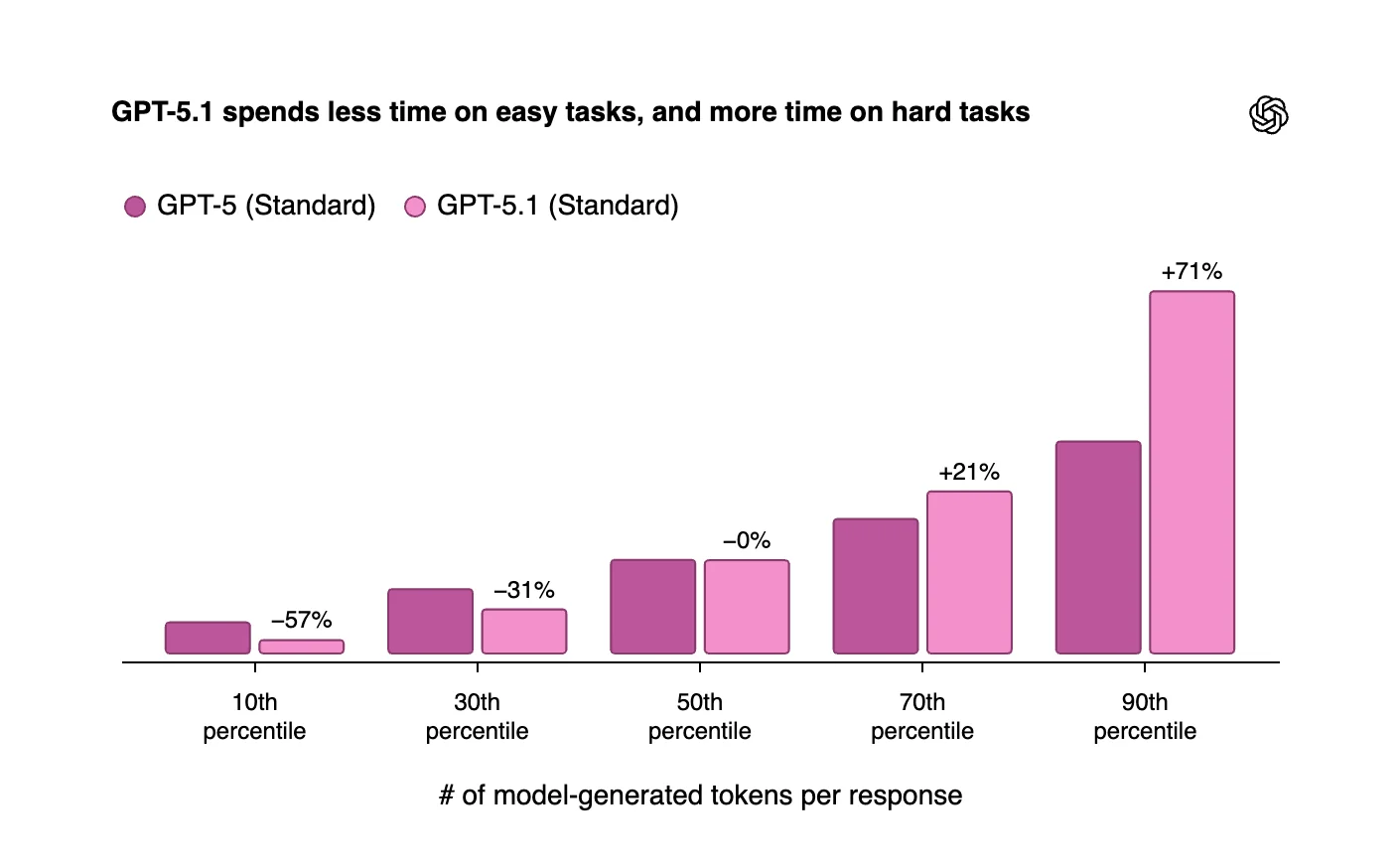
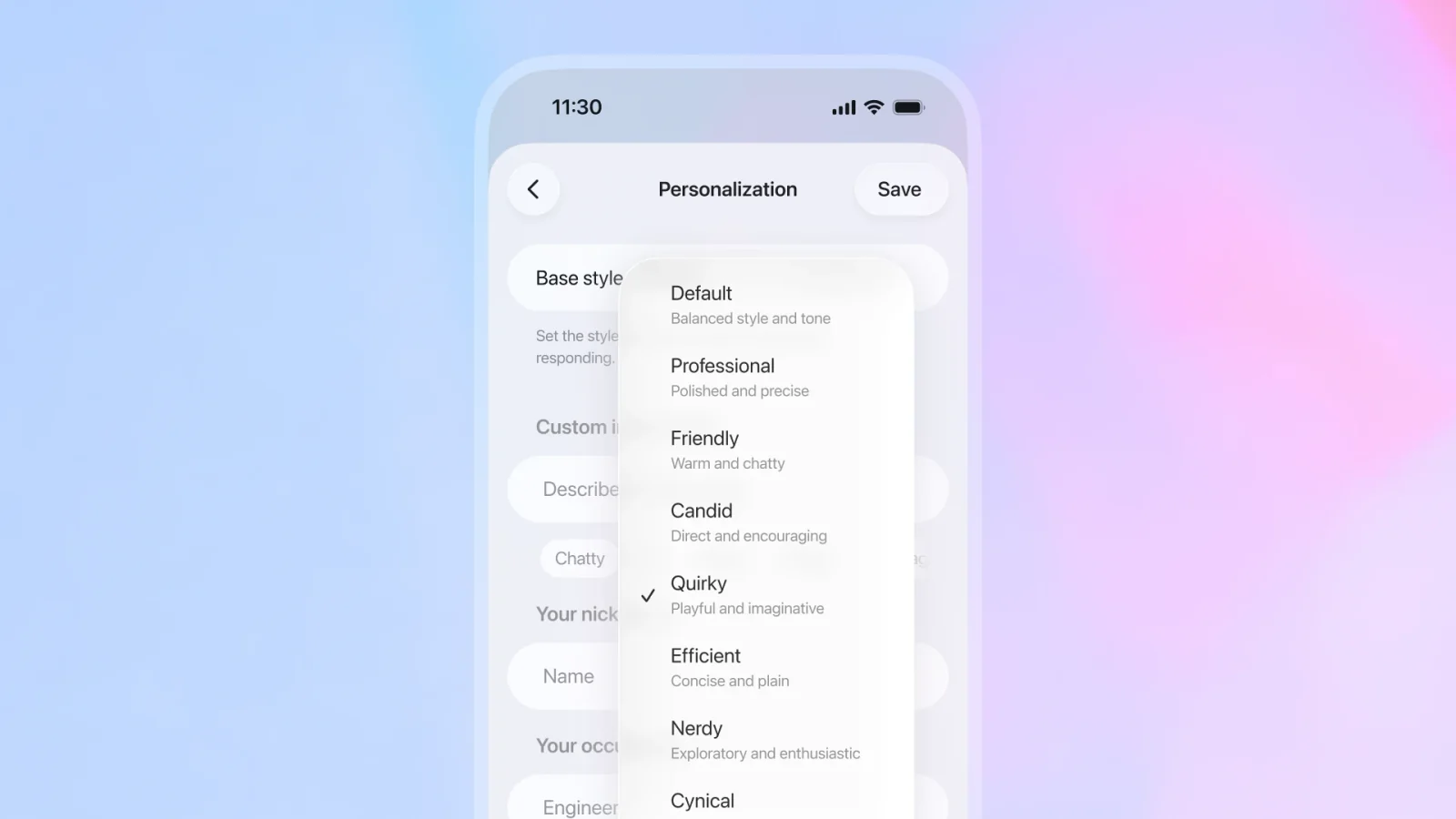
GPT-5.1 is the next iteration of OpenAI's GPT-5 family, split into two primary variants: GPT-5.1 Instant (optimized for fast, conversational responses with adaptive reasoning) and GPT-5.1 Thinking (which dynamically adapts thinking time to question complexity). The models introduce an adaptive reasoning capability that lets the model decide when to 'think' before responding and a new explicit reasoning mode 'none' to force no reasoning tokens for faster responses and improved compatibility with hosted tools. Developers get API access to gpt-5.1-chat-latest, specialized codex variants (gpt-5.1-codex and gpt-5.1-codex-mini) optimized for long-running, agentic coding tasks, and integration features like Auto routing that dispatches queries to the best-suited model. Compared to prior GPT-5 models, GPT-5.1 improves instruction-following, coding quality, token efficiency on simple tasks, and offers more steerability and safer guardrails documented in the system card addendum.
Screenshots
Key Features
Use Cases



Frequently asked questions about GPT-5.1 Instant and Thinking
What are the pricing options for GPT-5.1 Instant and Thinking?
GPT-5.1 offers a range of pricing options to suit different user needs. Free users have limited access, while Plus, Pro, Business, and Enterprise tiers provide enhanced capabilities. Custom pricing is available for larger organizations, ensuring tailored access and features for various use cases.
Key Points
- Free Tier: Limited access to basic features.
- Plus and Pro Tiers: Enhanced features for individual users.
- Business and Enterprise Tiers: Comprehensive solutions for organizations with custom pricing.
Detailed Explanation
GPT-5.1 is designed to accommodate a variety of users by offering multiple pricing tiers:
-
Free Tier: This option allows users to explore basic functionalities of GPT-5.1, perfect for casual users or those new to AI tools. It includes restricted access to certain features and limited usage quotas.
-
Plus Tier: For a monthly subscription fee, the Plus tier unlocks advanced features, including faster response times and priority access during peak periods. This tier is suitable for freelancers and small businesses that require more robust capabilities without a significant financial commitment.
-
Pro Tier: This option is tailored for professional users demanding extensive features, including API access, advanced analytics, and customizable settings. The Pro tier typically involves a higher monthly fee but provides significant value for developers and businesses needing API integration.
-
Business Tier: Designed for teams, this tier offers collaboration tools, enhanced security features, and priority customer support. Pricing is determined based on the number of users and specific requirements, making it flexible for growing teams.
-
Enterprise Tier: Larger organizations benefit from this tier, which includes a custom pricing structure based on specific needs, extensive usage, and dedicated account management. It provides maximum capabilities, including advanced integrations and compliance features.
Best Practices / Tips
- Evaluate Your Needs: Before selecting a pricing tier, assess your usage requirements. Consider factors like the number of users, required features, and budget constraints.
- Trial Before Committing: Utilize the free tier to test GPT-5.1's capabilities. This will help you determine which paid tier best suits your needs.
- Leverage Customer Support: If you're unsure about which tier to choose, reach out to customer support for guidance based on your unique use case.
Additional Resources
- OpenAI Pricing Page
- GPT-5.1 Documentation
- User Community Forums for discussions and tips on optimizing your GPT-5.1 experience.
How does the adaptive reasoning feature work in GPT-5.1?
GPT-5.1's adaptive reasoning feature intelligently adjusts processing resources based on the complexity of the inquiry. This means it provides rapid responses for straightforward questions while engaging in deeper, more thorough reasoning for intricate queries, significantly improving overall response accuracy and relevance.
Key Points
- Dynamic Resource Allocation: Adjusts processing power based on question complexity.
- Quick Responses: Efficient handling of simple queries.
- Thorough Reasoning: In-depth analysis for complex questions.
Detailed Explanation
Adaptive reasoning in GPT-5.1 is designed to optimize user experience by intelligently managing computational resources. For example, when a user asks a simple question like "What is the capital of France?", the model quickly retrieves the answer, "Paris," utilizing minimal processing power.
In contrast, if the user poses a more complex question such as "Explain the impact of climate change on global agriculture," GPT-5.1 allocates additional resources to gather data, analyze trends, and construct a nuanced response. This feature ensures that users receive answers tailored not only to their inquiries but also adjusted for the depth required.
Use Cases
- Customer Support: Businesses can deploy GPT-5.1 to answer FAQs quickly while providing detailed explanations for more complicated issues, enhancing customer satisfaction.
- Educational Tools: Students can leverage adaptive reasoning for quick facts and detailed analyses in subjects like history or science.
- Content Creation: Writers can use GPT-5.1 to generate both concise summaries and in-depth articles based on the complexity of the topic.
Best Practices / Tips
- Clarify Your Questions: Frame your queries to reflect their complexity. This helps GPT-5.1 allocate resources appropriately.
- Leverage Context: Provide context where necessary to improve the accuracy of complex responses.
- Iterate and Refine: If the initial response isn't satisfactory, ask follow-up questions for clarification or further details.
Additional Resources
- OpenAI Documentation for in-depth technical specifications.
- AI and Machine Learning Trends for insights into adaptive reasoning and other features.
- User Guides to maximize the effectiveness of GPT-5.1 in various applications.
What are the best use cases for GPT-5.1 Instant?
GPT-5.1 Instant is best suited for applications requiring instant communication, such as conversational agents, tutoring systems, and customer support. Its ability to deliver quick, contextually relevant responses makes it invaluable in any setting where timely interactions are critical.
Key Points
- Conversational Agents: Enhances user engagement with real-time dialogue capabilities.
- Tutoring Systems: Provides immediate feedback and explanations for learners.
- Customer Support Applications: Resolves queries swiftly, improving customer satisfaction.
Detailed Explanation
GPT-5.1 Instant leverages advanced natural language processing (NLP) capabilities, making it a powerful tool across various domains.
-
Conversational Agents: Businesses can integrate GPT-5.1 Instant into chatbots and virtual assistants, allowing them to handle multiple customer inquiries simultaneously. For example, a retail website can utilize this AI to guide users through product selections, providing answers to questions about features and availability in real time.
-
Tutoring Systems: In educational settings, GPT-5.1 Instant can function as a personal tutor, offering instant feedback on assignments or explaining complex concepts. For instance, a student struggling with calculus can receive immediate help on problem-solving techniques, enhancing their learning experience.
-
Customer Support Applications: Companies can implement GPT-5.1 Instant in their customer service platforms to automate responses to frequently asked questions (FAQs), reducing wait times. For example, a telecom company might use this AI to troubleshoot common issues for users, allowing customer service representatives to focus on more complex queries.
Best Practices / Tips
- Define Clear Use Cases: Identify specific scenarios where rapid responses are crucial to leverage GPT-5.1 Instant effectively.
- Monitor Performance: Regularly assess response accuracy and user satisfaction to optimize the AI's performance.
- Integrate Human Oversight: While GPT-5.1 Instant excels in speed, combining AI with human agents ensures nuanced understanding in complex situations.
Additional Resources
What API features are available for developers using GPT-5.1?
Developers using GPT-5.1 can access several API features, including the gpt-5.1-chat-latest endpoint for real-time conversational responses and the gpt-5.1-codex endpoint optimized for programming tasks. Pricing operates on a usage-based model, consistent with existing GPT-5 rates.
Key Points
- API Endpoints: Multiple endpoints are available for varied functionalities.
- Usage-Based Pricing: Costs are based on actual usage, similar to GPT-5.
- Versatile Applications: Suitable for chatbots, coding, and content generation.
Detailed Explanation
The GPT-5.1 API offers developers powerful tools to integrate AI capabilities into their applications. The key endpoints include:
-
gpt-5.1-chat-latest: This endpoint is designed to handle conversational queries. It excels in generating human-like text responses, making it ideal for chatbots, virtual assistants, and customer support applications. For example, a developer can create a chatbot that answers user inquiries in real-time, enhancing user engagement.
-
gpt-5.1-codex: Specifically tailored for coding tasks, this endpoint aids developers in generating code snippets, debugging, and providing programming suggestions. It supports various programming languages and can be used in Integrated Development Environments (IDEs) to streamline coding workflows. For instance, it can suggest optimizations or complete functions based on natural language prompts.
Usage-Based Pricing
The pricing model is based on the number of tokens processed, which includes both input and output tokens. While specific rates may vary, it's essential to monitor usage to manage costs effectively. Developers can anticipate a similar pricing structure to GPT-5, making budgeting more straightforward.
Best Practices / Tips
- Understand Token Usage: Familiarize yourself with how tokens are counted. A clear understanding can help optimize costs and improve performance.
- Experiment with Parameters: Utilize adjustable parameters like temperature and max tokens to tailor responses to your needs. For instance, a lower temperature can produce more predictable responses, while a higher one can yield more creative outputs.
- Monitor API Usage: Regularly check your API usage statistics to avoid unexpected charges. Implement logging to track the number of requests and tokens used.
Additional Resources
- OpenAI API Documentation: Comprehensive guide on using OpenAI APIs.
- Pricing Information: Detailed breakdown of costs associated with GPT-5.1 and other models.
- Best Practices for API Usage: Recommendations for effective utilization of GPT models in applications.
How does GPT-5.1 compare with other AI models?
GPT-5.1 stands out among AI models due to its advanced adaptive reasoning capabilities and dual-mode variants, enabling both instant responses and in-depth analysis. This flexibility enhances performance across various applications, making it a top choice for businesses and developers seeking powerful AI solutions.
Key Points
- Advanced Adaptive Reasoning: GPT-5.1 features an improved algorithm that allows for more nuanced understanding and responses.
- Dual-Mode Variants: It operates in two modes, offering rapid replies or thorough reasoning based on user needs.
- Versatile Applications: Suitable for diverse use cases, from customer support to content creation.
Detailed Explanation
GPT-5.1's architecture leverages state-of-the-art machine learning techniques to enhance its reasoning skills. This model adapts to context dynamically, making it more effective in understanding complex queries. For example, in customer service scenarios, GPT-5.1 can quickly provide FAQs while also being able to delve into detailed explanations when necessary.
In contrast, many traditional models may excel in either speed or depth but not both. For instance, models like BERT are optimized for understanding context but may struggle with generating responses as fluidly. Conversely, simpler models might quickly generate answers but lack the depth of understanding required for more complex inquiries.
The dual-mode functionality allows users to switch between needing a quick answer and requiring a detailed analysis seamlessly. This adaptability is especially beneficial in industries such as healthcare and finance, where understanding context is crucial for providing accurate information.
Use Cases:
- Customer Support: Automatically answering common queries while providing detailed resolutions for complicated issues.
- Content Creation: Assisting writers by generating ideas or drafts quickly, while also offering in-depth analyses on specific topics.
- Education: Providing instant answers to student questions, coupled with detailed explanations for deeper learning.
Best Practices / Tips
- Choose the Right Mode: Depending on your needs, leverage either the instant response or detailed reasoning mode.
- Contextual Input: Provide clear and specific prompts to get the most accurate and relevant results from GPT-5.1.
- Iterate and Refine: Use the model iteratively by refining your queries based on the responses received for best results.
Additional Resources
Explore more AI Ai Models tools
Browse all Ai Models tools →Browse by use case: Code Generation · Chatbots & Assistants
Compare GPT-5.1 Instant and Thinking: vs SWE-2 · vs Desert Ant Labs · vs Hy4 preview · vs Soup CLI