

BrowserBook
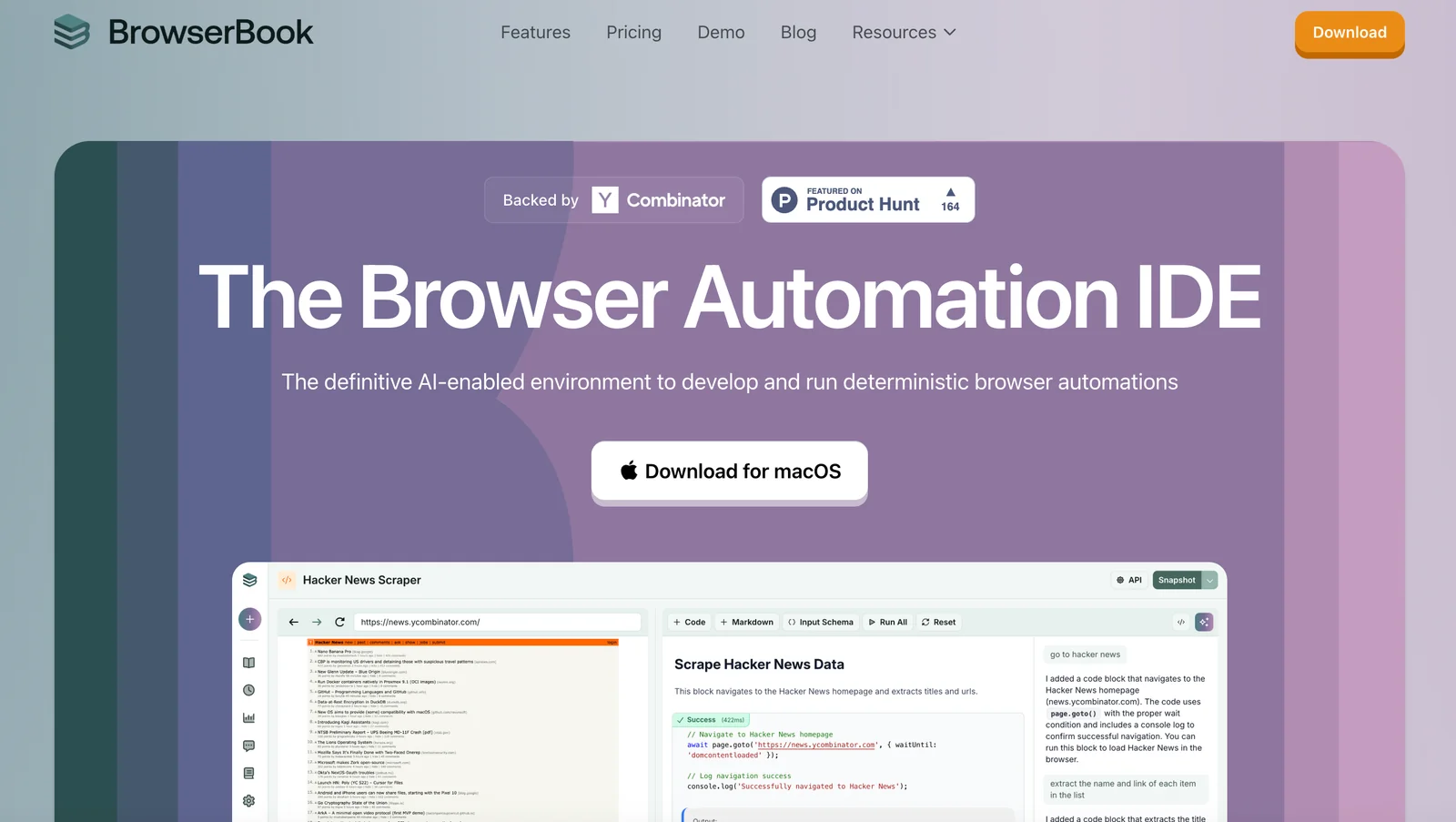
AIThe Browser Automation IDE — an integrated environment for building and running browser automation workflows.
BrowserBook
The Browser Automation IDE — an integrated environment for building and running browser automation workflows.
About BrowserBook
BrowserBook is presented on its official site as "The Browser Automation IDE." The official website provides only a brief title and description and does not publish further public details about features, architecture, pricing, or release history. Based on the site copy, it intends to serve as an IDE for creating and managing browser automation workflows, but no additional official documentation or developer information was provided in the supplied content.
Screenshots
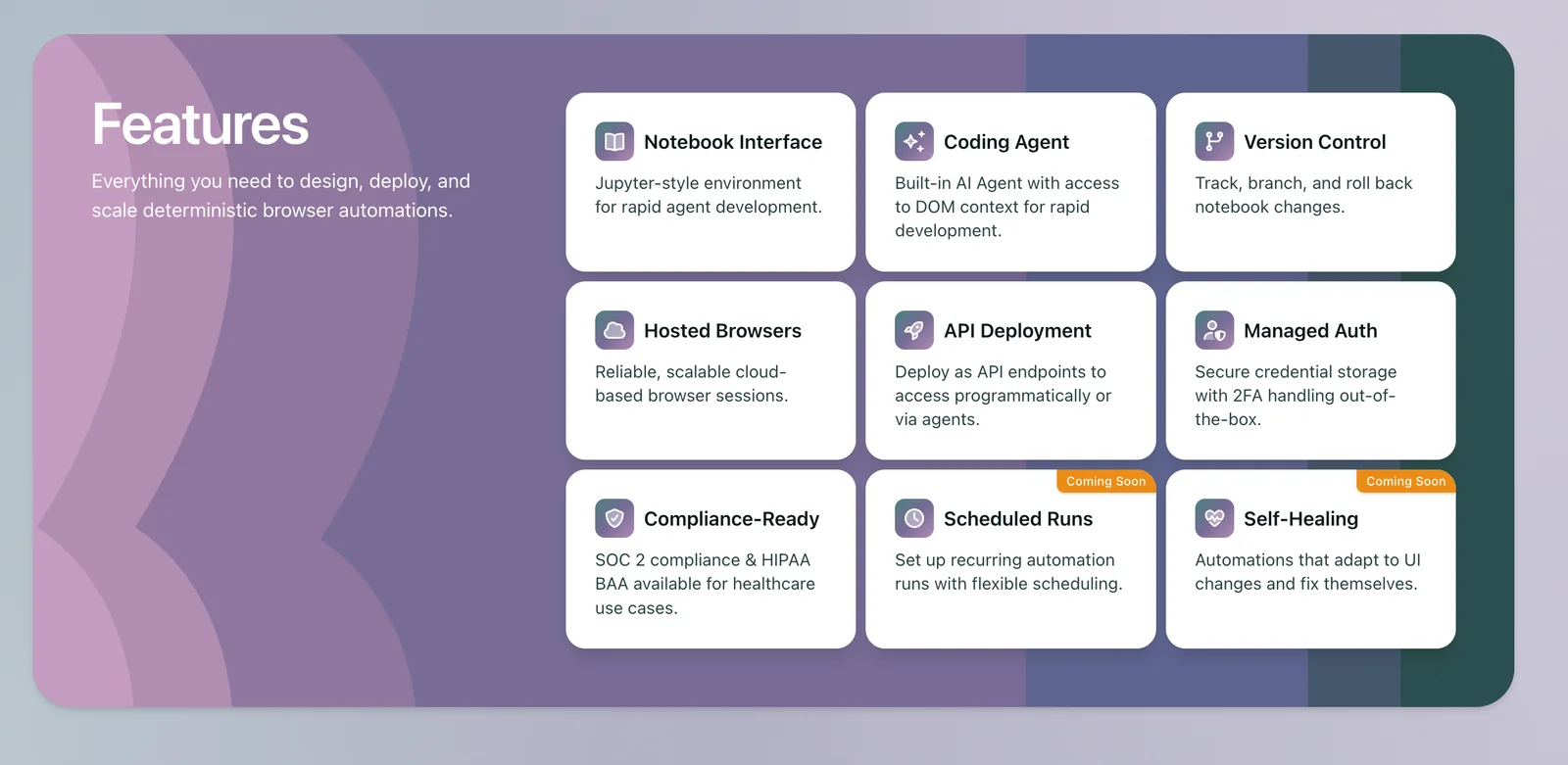
Key Features
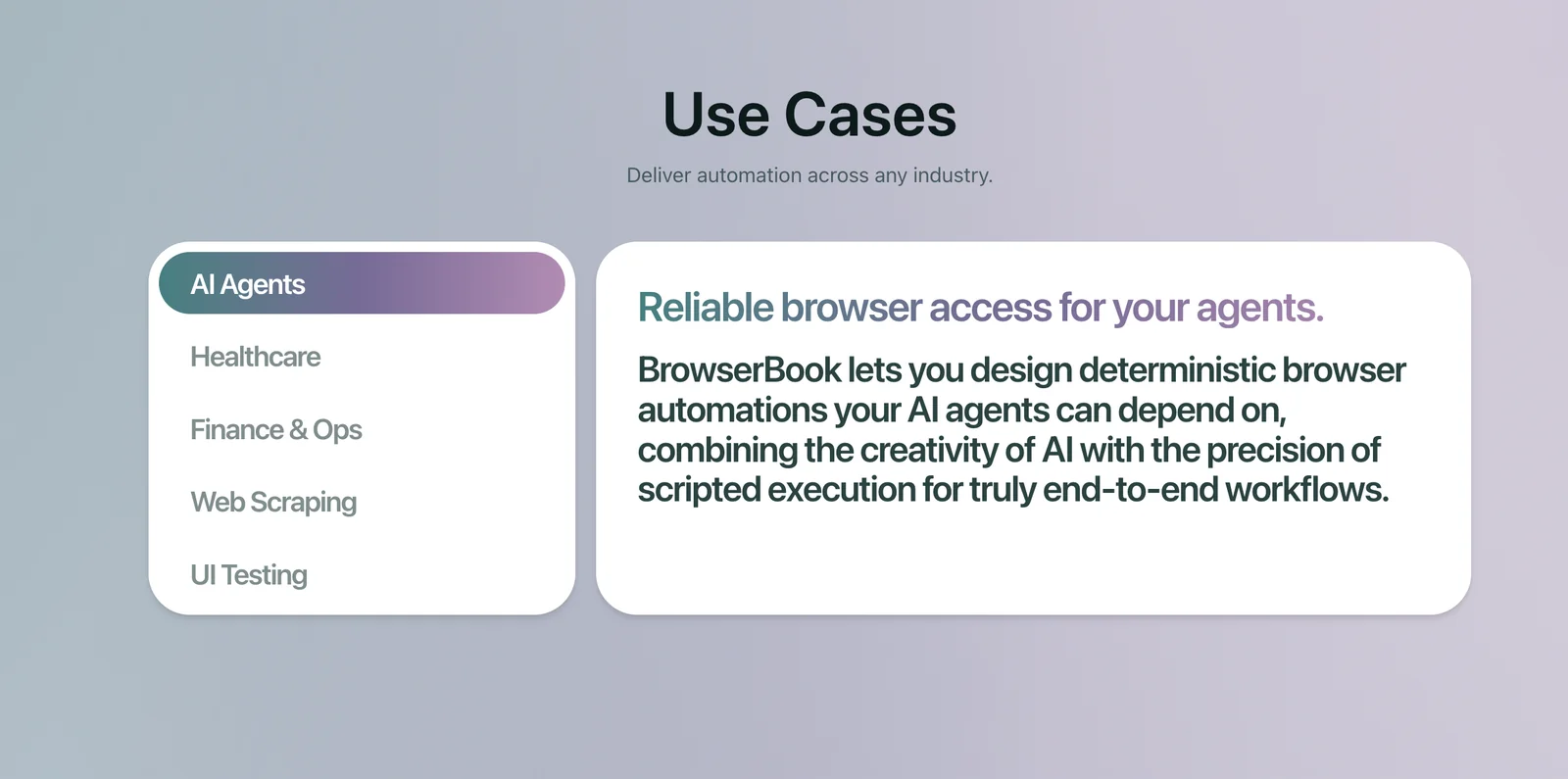
Use Cases



Frequently asked questions about BrowserBook
What is the pricing structure for BrowserBook?
BrowserBook employs a freemium pricing model with four distinct tiers: Free ($0), Developer ($29/month), Pro ($99/month), and Enterprise (custom pricing). Each tier includes varying features and usage limits tailored to different user needs, from individual developers to large organizations.
Key Points
- Freemium Model: Offers a free tier with essential features.
- Tiered Pricing: Four distinct pricing tiers cater to different user requirements.
- Custom Solutions: Enterprise pricing is tailored for larger organizations.
Detailed Explanation
BrowserBook's pricing structure is designed to accommodate a broad range of users, from casual browsers to professional developers and large enterprises. Here’s a breakdown of each tier:
-
Free Tier ($0): Ideal for individuals or small projects, this tier provides basic features, allowing users to explore BrowserBook's functionalities without any financial commitment. Common use cases include personal browsing and basic testing.
-
Developer Tier ($29/month): This tier is suited for developers who need access to advanced tools and features. It includes enhanced usage limits, priority support, and additional functionalities that facilitate development workflows. Developers can utilize this tier for building and testing applications more efficiently.
-
Pro Tier ($99/month): Aimed at teams and small businesses, the Pro tier offers comprehensive features, including collaborative tools, analytics, and increased data storage. This tier is beneficial for teams needing robust project management capabilities within BrowserBook.
-
Enterprise Tier (Custom Pricing): Tailored for large organizations with specific needs, this tier includes custom pricing based on the scale and requirements of the business. Features might include dedicated support, advanced security options, and integration capabilities with existing corporate systems.
Best Practices / Tips
- Evaluate Your Needs: Before choosing a tier, assess your requirements to avoid overspending on features you won’t use.
- Utilize Free Trial: Take advantage of the free tier to test BrowserBook’s capabilities before committing to a paid plan.
- Monitor Usage: Keep track of your usage and feature requirements regularly to ensure you’re on the most cost-effective plan.
Additional Resources
This structured approach ensures that users can find the right BrowserBook plan for their needs while maximizing their investment.
What are the key features of BrowserBook?
BrowserBook is a comprehensive Browser Automation IDE that offers key features such as unlimited inline IDE usage, API execution, managed authentication, and support for concurrent browsers based on your subscription tier. These functionalities make it an efficient tool for automating web tasks and testing applications.
Key Points
- Unlimited Inline IDE Usage: Allows users to write and execute scripts directly within the browser.
- API Execution: Enables seamless integration with APIs for enhanced automation.
- Managed Authentication: Simplifies authentication processes for various web applications.
- Concurrent Browser Support: Facilitates the simultaneous execution of tasks across multiple browsers.
Detailed Explanation
BrowserBook stands out as a powerful tool for developers and testers looking to automate their browser tasks efficiently.
Unlimited Inline IDE Usage
This feature allows users to write, edit, and execute automation scripts directly in the browser environment. This means you can test changes in real-time without switching contexts, enhancing productivity.
API Execution
With built-in support for API execution, BrowserBook allows users to automate interactions with various web services. This is particularly useful for testing APIs in conjunction with the user interface, ensuring that both components function harmoniously.
Managed Authentication
Authentication can be a bottleneck in automation. BrowserBook simplifies this process by managing user credentials securely. Whether it's logging into a web application or handling OAuth tokens, this feature ensures that automated workflows remain uninterrupted.
Concurrent Browser Support
For teams that need to run tests across different browsers simultaneously, BrowserBook offers robust concurrent browser support. Depending on your subscription tier, you can execute automated scripts in Chrome, Firefox, and other browsers at the same time, saving valuable testing time.
Best Practices / Tips
- Leverage Inline IDE: Take full advantage of the inline IDE to test scripts immediately. This helps in identifying issues early in the development process.
- Utilize API Integration: Use API execution capabilities to streamline your testing processes. Automating API calls can significantly enhance your testing coverage.
- Manage Authentication Efficiently: Regularly update and manage authentication details within BrowserBook to avoid disruptions in automated workflows.
- Optimize for Concurrency: If you are running extensive tests, consider upgrading your subscription tier for better concurrent browser support, ensuring faster execution times.
Additional Resources
By utilizing these features and following best practices, you can maximize the efficiency and effectiveness of your browser automation tasks with BrowserBook.
How do I get started with BrowserBook for browser automation?
To get started with BrowserBook for browser automation, sign up for a free account on their official website. After that, you can access the inline IDE, where you can begin creating and executing your browser automation workflows with ease and efficiency.
Key Points
- Sign Up: Create a free account on the BrowserBook website.
- Inline IDE: Utilize the integrated development environment for coding.
- Automation Workflows: Start building and executing browser automation tasks.
Detailed Explanation
BrowserBook is a powerful tool for automating tasks in web browsers, making it ideal for developers and businesses looking to streamline operations. To begin, follow these steps:
-
Create an Account: Visit the BrowserBook website and click on the 'Sign Up' button. Fill in your details, including your email address and a secure password.
-
Access the Inline IDE: Once your account is confirmed, log in to the platform. You will be directed to the inline IDE, which is designed for writing and executing automation scripts without needing to set up a local development environment.
-
Explore Sample Workflows: Before diving into your own projects, browse through the sample workflows provided by BrowserBook. These templates can give you a solid foundation and inspiration for your automation tasks.
-
Create Your First Workflow: Start a new project in the IDE. You can write scripts to automate repetitive tasks such as filling out forms, scraping data from websites, or testing web applications. The user-friendly interface allows for easy coding and debugging.
-
Execute and Test: After writing your script, run it directly within the IDE. This allows you to see the results instantly and make adjustments as necessary.
-
Save and Share: Once satisfied with your automation workflow, save it for future use or share it with your team for collaborative efforts.
Best Practices / Tips
- Utilize Documentation: Regularly refer to the BrowserBook documentation for updates and best practices.
- Start Simple: Begin with simple automation tasks to familiarize yourself with the IDE and scripting language.
- Test Regularly: Run your scripts frequently during development to catch errors early.
- Explore Community Resources: Engage with forums and community groups for troubleshooting and advanced tips.
- Optimize Scripts: Keep your workflows efficient by minimizing unnecessary steps and using built-in functions.
Additional Resources
By following these steps and best practices, you will efficiently leverage BrowserBook for your browser automation needs, making your workflows smoother and more productive.
Can BrowserBook integrate with existing APIs or other tools?
Yes, BrowserBook can seamlessly integrate with existing APIs and tools, enabling users to execute API calls and streamline workflows. This integration capability is included in the Developer and Pro subscription tiers, making it accessible for advanced users looking to enhance their productivity.
Key Points
- API Integration: BrowserBook supports various APIs for enhanced functionality.
- Tier Availability: Integration features are available in Developer and Pro tiers.
- Workflow Optimization: Streamline processes by connecting with existing tools.
Detailed Explanation
BrowserBook's API integration capabilities allow developers and advanced users to connect their existing applications and workflows directly with the BrowserBook platform. This functionality is particularly beneficial for businesses that rely on multiple software solutions to manage their operations.
Examples of API Integration:
- Data Retrieval: Users can pull data from external databases or services, making it easy to display up-to-date information within BrowserBook.
- Automation: Automate repetitive tasks by connecting BrowserBook with project management tools like Trello or Asana, thus enhancing productivity.
- Custom Workflows: Create tailored workflows by integrating with services like Zapier, allowing users to trigger actions based on specific events.
To get started with API integration in BrowserBook, users should:
- Access API Documentation: Review the official API documentation to understand the endpoints and authentication methods required.
- Choose Subscription Tier: Ensure you are subscribed to either the Developer or Pro tier to utilize these features.
- Set Up API Calls: Use the built-in interface to configure and execute API calls directly from the BrowserBook platform.
Best Practices / Tips
- Test API Calls: Before implementing in a live environment, test API calls in a controlled setting to ensure they function as expected.
- Monitor Usage: Keep track of API call limits and performance metrics to avoid disruptions.
- Stay Updated: Regularly review the API documentation for updates or changes to endpoints and functionalities.
Additional Resources
How does BrowserBook compare to other browser automation tools?
BrowserBook stands out from other browser automation tools due to its freemium model and integrated IDE, which provides unlimited inline usage and managed authentication features. These functionalities are often missing in competing tools, making BrowserBook a uniquely flexible option for developers and testers.
Key Points
- Freemium Model: Users can access essential features without upfront costs.
- Integrated IDE: Streamlines the development process by providing a built-in environment for coding.
- Managed Authentication: Simplifies the handling of login processes and session management.
Detailed Explanation
BrowserBook offers a distinct approach to browser automation, combining ease of access with powerful tools. The freemium model allows users to start using the platform without any financial commitment, making it an attractive option for startups and individual developers. Once users are familiar with the tool, they can opt for premium features that enhance their automation capabilities.
The integrated IDE is a significant advantage. It allows users to write, test, and debug scripts within the same environment, reducing the friction often associated with switching between tools. This can lead to faster development cycles and fewer errors, as users can instantly see the effects of their code.
Additionally, BrowserBook's managed authentication feature is a game changer. Many browser automation tools require manual script management for login processes, which can be cumbersome and error-prone. BrowserBook simplifies this by managing sessions and cookies automatically, allowing users to focus on writing effective automation scripts rather than handling authentication intricacies.
Use Cases
- Web Scraping: Easily extract data from websites while managing logins seamlessly.
- Testing Applications: Automate user interactions for testing web applications without extensive setup.
- Continuous Integration: Integrate BrowserBook into CI/CD pipelines for automated testing and deployment.
Best Practices / Tips
- Start with the Freemium Model: Take advantage of the free features to explore BrowserBook's capabilities before committing financially.
- Utilize the Integrated IDE: Embrace the built-in IDE for a smoother workflow—this can enhance productivity significantly.
- Master Managed Authentication: Familiarize yourself with the authentication settings to streamline your scripts and reduce manual errors.
Additional Resources
Explore more AI Ai Agents tools
Browse all Ai Agents tools →Browse by use case: Automation & Productivity
Compare BrowserBook: vs Playad · vs Concierge by Juniors AI · vs Scout by Fini · vs Ruflo