

App Store
AIPlatform to learn, practice, and prove real AI skills through project-based missions with AI grading and verified profiles.
App Store
Platform to learn, practice, and prove real AI skills through project-based missions with AI grading and verified profiles.
About App Store
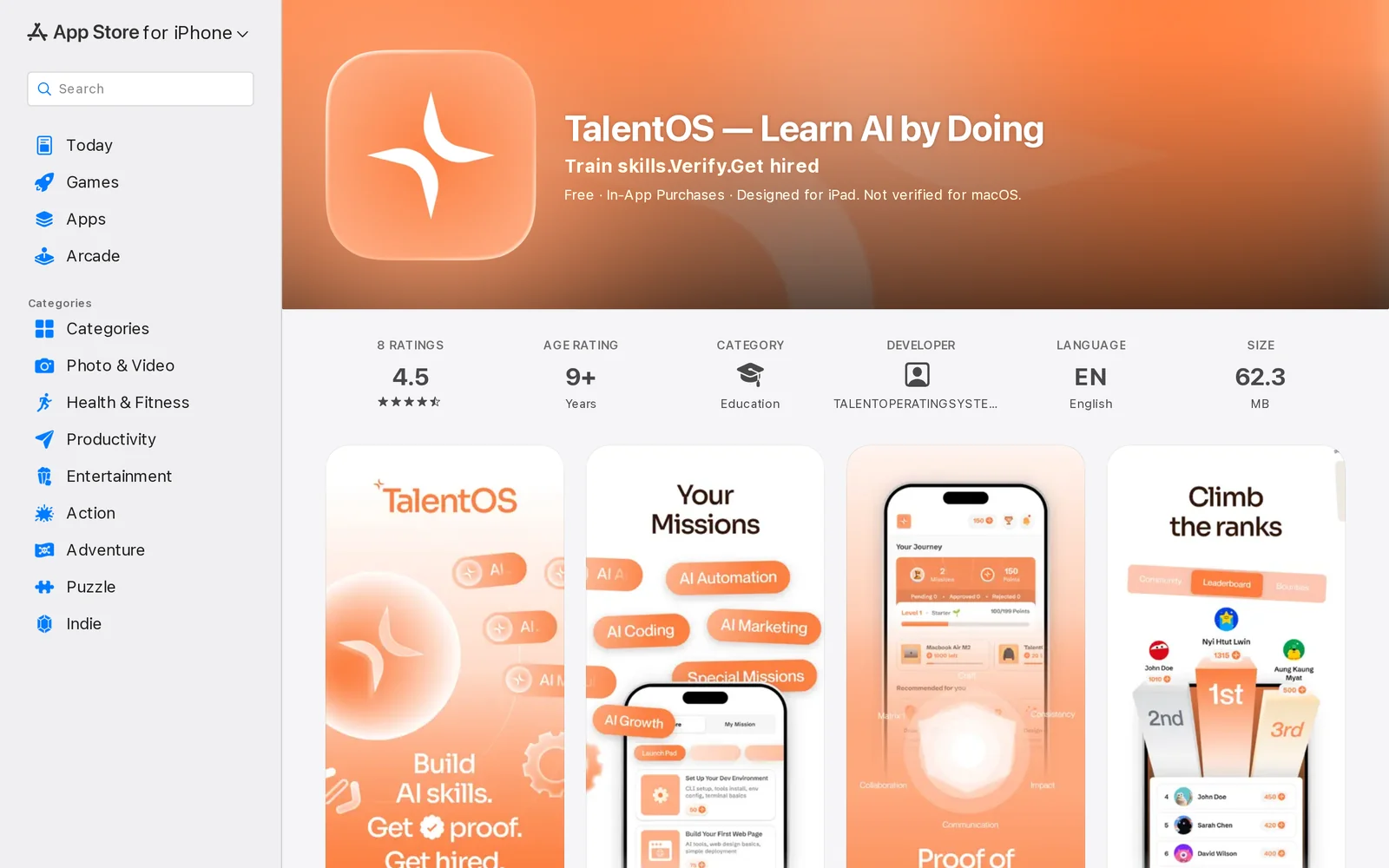
TalentOS is a project-based learning and verification platform where builders complete real AI missions across tracked skill areas and receive instant AI-graded feedback. Users build verified profiles that record Proof of Growth over time, compete on leaderboards, earn points and levels, and unlock paid bounties posted by companies. The platform focuses on demonstration of practical work (projects graded by AI) rather than quizzes or certificates, helping career switchers, students, and professionals showcase tangible AI capabilities to employers.
Screenshots
Key Features
Use Cases



Frequently asked questions about App Store
What is App Store?
The App Store is a digital platform developed by Apple, allowing users to browse, purchase, and download applications for iOS devices. It features a vast library of apps across various categories, including games, productivity tools, and educational resources, all supported by user ratings, reviews, and screenshots.
Key Points
- Platform Accessibility: Available exclusively on iOS devices like iPhones and iPads.
- Diverse App Categories: Offers applications ranging from games to business tools.
- User Engagement: Features ratings, reviews, and user-generated content to enhance app discovery.
Detailed Explanation
The App Store is integral to the Apple ecosystem, providing a user-friendly interface for downloading applications. Users can explore a variety of categories, including:
- Games: From casual games to complex strategy games, the App Store offers options for all types of gamers.
- Productivity: Tools for note-taking, project management, and time management help users enhance their productivity.
- Education: Educational apps like TalentOS allow users to learn AI through hands-on experience.
To access the App Store, simply tap the icon on your iOS device. You can search for specific apps using the search bar or browse the curated lists under categories like "Top Charts" and "Categories." Each app's page includes essential information such as user ratings, reviews, and screenshots, helping users make informed decisions.
Best Practices / Tips
- Use Filters: Utilize filters to narrow down your search based on ratings, price, and other criteria.
- Read Reviews: Always check user reviews and ratings to gauge app performance and reliability.
- Keep iOS Updated: Ensure your device runs the latest iOS version for optimal app compatibility and security.
Additional Resources
How does App Store work?
The App Store functions as a digital platform where users can discover, download, and manage applications for their devices. It leverages advanced AI capabilities to enhance user experience, streamline workflows, and recommend apps tailored to individual preferences.
Key Points
- User-Centric Design: The App Store is designed to prioritize user needs and preferences.
- AI Integration: It uses AI to improve app discovery and recommendations.
- Developer Support: Offers tools and resources for developers to publish and manage their apps.
Detailed Explanation
The App Store operates as a centralized hub for apps on devices such as iPhones, iPads, and Macs. When a user opens the App Store, they can browse various categories, search for specific applications, and read reviews to make informed choices.
How It Works
- App Discovery: Users can explore apps through curated lists, trending sections, and personalized recommendations powered by AI algorithms that analyze user behavior.
- Download and Installation: After selecting an app, users can download it directly to their devices. Most apps are free, but some may require payment or offer in-app purchases, which are processed securely through the user's Apple ID.
- Updates: The App Store notifies users when updates are available for their installed apps, ensuring they have the latest features and security enhancements.
- User Reviews and Ratings: Users can rate and review apps, providing feedback that helps others make decisions and developers improve their offerings.
Use Cases
- Personal Productivity: Apps like Notion or Evernote help users organize tasks and notes.
- Entertainment: Streaming apps such as Netflix or Spotify provide multimedia content.
- Health and Fitness: Apps like MyFitnessPal or Headspace support users in achieving wellness goals.
Best Practices / Tips
- Optimize App Listings: Developers should focus on app titles, descriptions, and keywords to improve visibility in the App Store.
- Encourage User Reviews: Positive reviews can significantly influence new users; incentivize feedback through in-app prompts.
- Regular Updates: Continuously update apps to fix bugs and add features, which helps maintain user engagement and satisfaction.
Additional Resources
What are the main features of App Store?
The main features of the App Store include a vast selection of applications, user reviews, personalized recommendations, and robust security measures. Additionally, it offers seamless integration with Apple devices, regular updates, and a user-friendly interface that enhances the overall experience for both developers and consumers.
Key Points
- Extensive App Selection: Thousands of apps across various categories.
- User Reviews and Ratings: Insightful feedback from users to guide choices.
- Personalized Recommendations: Tailored app suggestions based on user preferences.
Detailed Explanation
The App Store serves as a centralized marketplace for iOS applications, offering users access to millions of apps ranging from productivity tools to entertainment options. The app selection is categorized into various genres, such as Games, Education, Health & Fitness, and Business, making it easy for users to discover the software that meets their needs.
User Reviews and Ratings: One of the standout features of the App Store is the ability for users to read reviews and ratings from other consumers. This feedback helps users make informed decisions, as they can see the experiences of others before downloading an app. For instance, an app with a high rating and positive reviews is more likely to be trusted.
Personalized Recommendations: The App Store leverages algorithms to analyze user behavior and preferences, providing personalized app suggestions. This feature enhances user engagement and satisfaction, as users can discover new apps that align with their interests without extensive searching.
Robust Security Measures: Security is a top priority for Apple, and the App Store reflects this with stringent app review processes. Every app is vetted for quality and security, reducing the risk of malware and ensuring that user data remains protected. Users can also enable features like Family Sharing to keep their accounts secure while sharing apps with family members.
Best Practices / Tips
- Utilize App Store Optimization (ASO): For developers, optimizing app listings with relevant keywords can significantly improve visibility. Focus on the app title, description, and tags.
- Encourage User Reviews: Prompt users to leave reviews after using the app. Positive feedback can enhance credibility and attract more downloads.
- Regular Updates: Keep your app updated to fix bugs and add features, which not only improves user experience but also boosts rankings in the App Store.
Additional Resources
Who is App Store for?
The App Store is designed for a diverse audience, including everyday users, businesses, and developers seeking to integrate AI into their daily workflows. It provides access to a wide range of AI tools that enhance productivity, streamline tasks, and foster innovation across various sectors.
Key Points
- Target Audience: Everyday users, businesses, and developers.
- Functionality: Tools for productivity, task automation, and innovation.
- Accessibility: Available on multiple devices for seamless integration.
Detailed Explanation
The App Store caters to anyone looking to improve efficiency by incorporating AI tools into their daily tasks. Everyday users can find apps that simplify routine activities, such as personal finance management, health tracking, and productivity enhancements. For businesses, the App Store offers solutions that automate processes, analyze data, and improve customer engagement. Developers can also benefit by accessing APIs and SDKs that facilitate the creation of custom AI applications.
For example, a small business owner might use an AI-powered app for customer relationship management (CRM) that automates email responses and tracks customer interactions, ultimately saving time and improving service quality. Similarly, a developer could leverage machine learning APIs from the App Store to build intelligent applications that predict user behavior or analyze large datasets.
Best Practices / Tips
- Explore Categories: Take time to explore different categories in the App Store to find the tools that best suit your needs.
- Read Reviews: User reviews can provide insights into the effectiveness and usability of specific AI applications.
- Start Small: If you’re new to AI tools, begin with simple applications to understand their functionality before scaling to more complex systems.
- Stay Updated: Regularly check for updates and new releases to ensure you're utilizing the latest features and improvements.
Additional Resources
How much does App Store cost?
The App Store is free to use for downloading and installing apps on your Apple devices. However, some apps may offer in-app purchases or subscriptions, which can vary in cost. Users should be aware of these additional charges while enjoying the free services.
Key Points
- The App Store itself is free to use.
- In-app purchases can range from a few cents to hundreds of dollars.
- Subscriptions can offer monthly or yearly billing options.
Detailed Explanation
The App Store is Apple's digital distribution platform for apps on iOS devices, such as iPhones and iPads. While accessing the App Store and downloading most apps is free, many applications include in-app purchases that enhance functionality or provide additional content.
For example, popular games often offer virtual currency, extra levels, or special features for a price, which can range from $0.99 to $99.99. Subscription-based apps, such as streaming services or productivity tools, may charge monthly fees, typically between $4.99 to $19.99, depending on the service.
Users should keep an eye on their app settings to manage in-app purchases effectively. Apple provides guidelines on how to set up parental controls to prevent unauthorized purchases, especially important for families.
Best Practices / Tips
- Always review app descriptions and pricing before downloading to avoid unexpected costs.
- Set up Family Sharing to manage purchases across devices and keep track of spending.
- Regularly check your subscriptions in the App Store settings to ensure you are not paying for unused services.
- Enable notifications for price drops or special offers on apps you are interested in.
Additional Resources
How do I get started with App Store?
To get started with the App Store, visit this link to sign up. After signing up, you can explore various apps and features tailored to your interests and needs.
Key Points
- Sign Up Process: Create your Apple ID to access the App Store.
- Exploring Apps: Discover apps across various categories.
- Managing Purchases: Learn how to download, purchase, and manage your apps.
Detailed Explanation
To begin using the App Store, follow these steps:
-
Create an Apple ID: If you don't already have an Apple ID, you'll need to create one. This ID is essential for downloading apps, making purchases, and accessing Apple services. You can sign up directly on the App Store by following the prompts.
-
Browse the App Store: Once signed in, navigate the App Store by exploring the Today, Games, Apps, Updates, and Search tabs. Each section offers a curated list of popular and new applications. You can filter by categories like productivity, games, or utilities.
-
Download and Install Apps: To download an app, simply tap the app icon and then select "Get" or the price button if it’s a paid app. Follow the on-screen instructions to complete the installation. Make sure to check the app's ratings and reviews for informed choices.
-
Manage Your Apps: Access your downloaded apps from the home screen. You can update them through the App Store's Updates tab. For purchased apps, you can manage subscriptions and settings by visiting your account settings.
Best Practices / Tips
- Use Wi-Fi for Downloads: Large apps can consume significant mobile data, so it’s best to download them while connected to Wi-Fi.
- Check Compatibility: Ensure your device is compatible with the app’s requirements before downloading.
- Set Up Family Sharing: If you have family members, consider setting up Family Sharing to share purchases across devices, saving money and time.
Additional Resources
Explore more AI Ai Tools tools
Browse all Ai Tools tools →Compare App Store: vs Humanizer · vs Worktrunk · vs Mise · vs BiBimba