

App Store
AIAll-in-one AI workspace that automates research, documents, slides, code, meetings, and media generation from simple prompts.
App Store
All-in-one AI workspace that automates research, documents, slides, code, meetings, and media generation from simple prompts.
About App Store
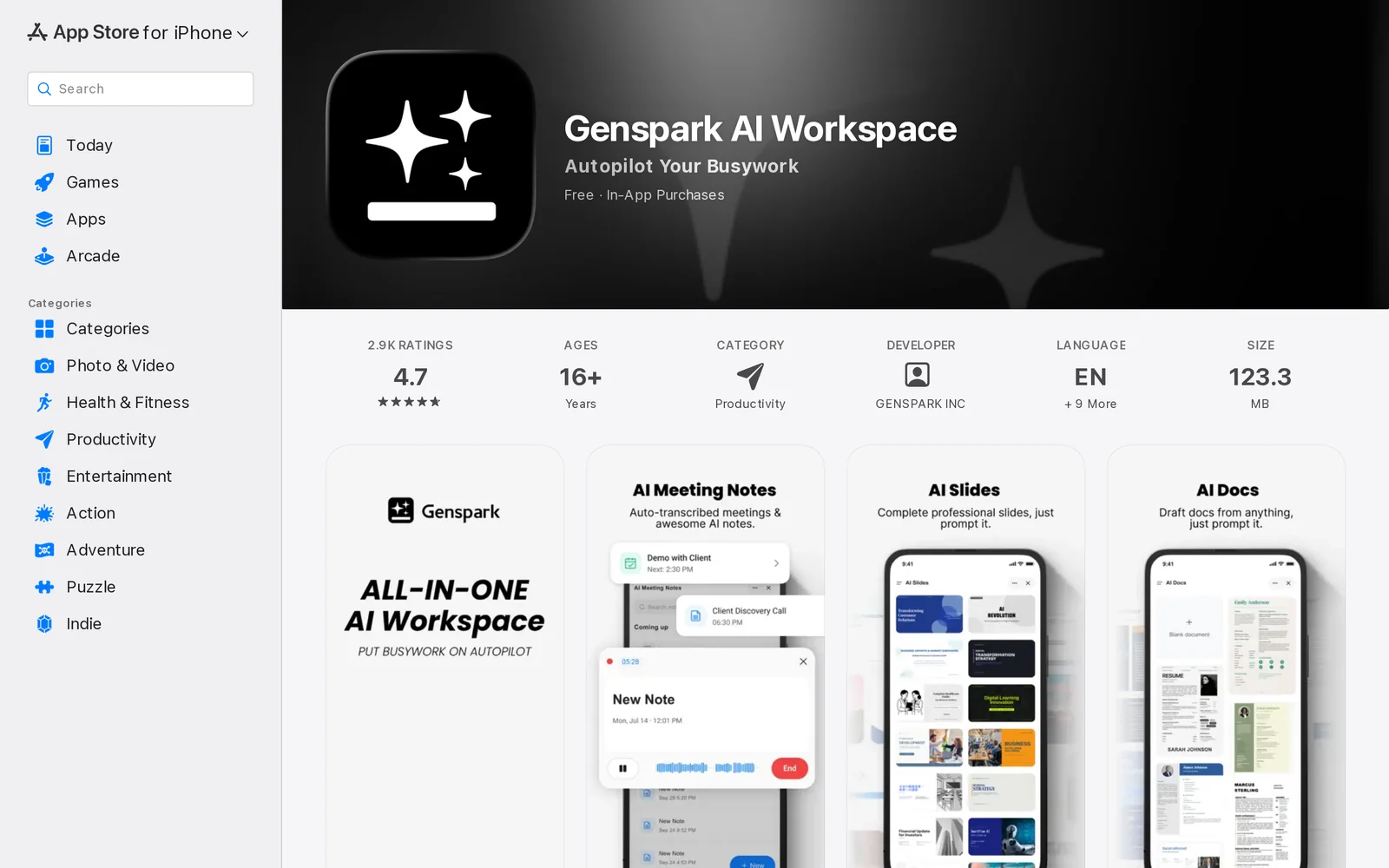
Genspark AI Workspace is a mobile-first productivity platform that consolidates autonomous agents, multimodal generation, and developer tools into a single app. Users can prompt the system to autonomously research topics, draft documents, create boardroom-quality slide decks, build spreadsheets with formulas, generate images/videos/audio, transcribe meetings, and scaffold apps or websites with GitHub integration. It integrates access to multiple top-tier models for chat, image, and video generation, and emphasizes automation to eliminate busywork and accelerate content and product creation on the go.
Screenshots
Key Features
Use Cases



Frequently asked questions about App Store
What is App Store?
The App Store is a digital marketplace developed by Apple Inc. for iOS and macOS applications. Users can download, purchase, and review apps like Genspark AI Workspace, along with accessing screenshots, ratings, and user tips to enhance their app experience.
Key Points
- Digital Marketplace: The App Store offers a wide range of apps for iOS and macOS.
- User Interaction: Users can review, rate, and share experiences about apps.
- Diverse Categories: Apps are categorized for easier navigation and discovery.
Detailed Explanation
The App Store serves as Apple's exclusive digital distribution platform where users can find applications for their iPhones, iPads, and Macs. Launched in 2008, the App Store has transformed how users access software, with millions of apps available across various categories, including productivity, games, education, and health.
For example, when you search for Genspark AI Workspace on the App Store, you can view detailed screenshots showcasing the app's interface and features. Additionally, user ratings and reviews provide insights into the app's performance and usability. This feedback helps potential users make informed decisions before downloading.
Developers can submit their apps to the App Store, where they undergo a review process to ensure compliance with Apple’s guidelines. This ensures that users have access to high-quality applications. The App Store also features regular updates, allowing users to keep their apps current with the latest features and security improvements.
Best Practices / Tips
- For Users: Always read user reviews and check ratings before downloading an app to ensure it meets your needs.
- For Developers: Optimize your app's listing with appealing visuals and engaging descriptions to attract more downloads.
- Stay Updated: Regularly check for updates on your apps to benefit from the latest features and security enhancements.
Additional Resources
How does App Store work?
The App Store functions as a digital marketplace where users can discover, download, and purchase applications for their devices. It leverages advanced algorithms and AI capabilities to enhance user experiences, streamline workflows, and provide personalized recommendations based on user behavior and preferences.
Key Points
- Digital Marketplace: The App Store serves as a platform for app developers and users.
- AI Integration: It utilizes AI to personalize app recommendations.
- User Engagement: The App Store enhances user experiences through ratings and reviews.
Detailed Explanation
The App Store is designed to facilitate the distribution and management of applications across Apple's ecosystem, including iOS, iPadOS, and macOS devices. Here’s how it works:
-
App Submission: Developers submit their applications to the App Store, where they undergo a review process to ensure compliance with Apple's guidelines. This includes checks for functionality, content appropriateness, and security.
-
Discovery and Search: Users can browse or search for apps using keywords or categories. The App Store employs AI algorithms that analyze user preferences, past downloads, and trending apps to present personalized recommendations. For instance, if a user frequently downloads productivity apps, the App Store will suggest similar tools.
-
Downloading and Purchasing: Users can easily download free apps or purchase premium apps directly within the App Store. Once downloaded, apps are automatically updated to the latest versions, ensuring users have access to new features and security patches.
-
User Reviews and Ratings: The App Store allows users to leave feedback on their downloaded apps, which helps other users make informed decisions. High ratings can significantly boost an app’s visibility, while low ratings may lead to reduced downloads.
-
In-App Purchases: Many apps offer additional features or content through in-app purchases, which can enhance the user experience. The App Store manages these transactions securely, allowing users to buy extras without leaving the app.
Best Practices / Tips
- Optimize App Listings: Developers should use relevant keywords in their app titles and descriptions to improve search visibility.
- Encourage Reviews: Prompt users to leave positive reviews and ratings, as they influence app ranking and visibility.
- Regular Updates: Keep apps updated with new features and bug fixes to retain user interest and improve ratings.
- Monitor Analytics: Use the App Store Connect analytics tools to track user engagement and app performance.
Additional Resources
What are the main features of App Store?
The main features of the App Store include a vast selection of apps, user-friendly interface, personalized recommendations, robust security measures, and core AI capabilities that enhance user experience. Users can easily discover, download, and manage applications tailored to their preferences.
Key Points
- Vast Selection of Apps: Offers millions of applications across various categories.
- User-Friendly Interface: Intuitive design makes navigation seamless for all users.
- Personalized Recommendations: AI-driven suggestions based on user behavior and preferences.
Detailed Explanation
The App Store serves as a centralized platform for discovering and downloading applications on Apple devices, including iPhones, iPads, and Macs. Here are some of the standout features:
-
Vast Selection of Apps: With millions of apps available, users can find everything from productivity tools to games. The App Store categorizes apps into sections like "Top Charts," "Categories," and "Today," making it easier for users to explore new offerings.
-
User-Friendly Interface: The App Store's design is optimized for ease of use, featuring a clean layout and intuitive navigation. Users can easily search for apps, view ratings and reviews, and access detailed app descriptions, which enhances their overall experience.
-
Personalized Recommendations: Leveraging core AI capabilities, the App Store analyzes user behavior to suggest apps that align with individual interests. This personalization increases user engagement and satisfaction, as users discover relevant applications without extensive searching.
-
Robust Security Measures: The App Store prioritizes user safety with stringent app review processes. Each application undergoes a thorough vetting to ensure compliance with security and privacy standards, significantly reducing the risk of malware.
-
Regular Updates and Support: Developers frequently update their apps to introduce new features or fix bugs. The App Store notifies users of available updates, ensuring they always have the best version of their applications.
Best Practices / Tips
- Utilize Search Filters: When searching for apps, use filters to narrow down results by category, rating, or price, which helps in finding the perfect app quickly.
- Read Reviews: Always check user reviews and ratings before downloading an app to gauge its performance and reliability.
- Explore App Bundles: Look for bundles that offer multiple apps at a discounted price, providing better value for your money.
- Stay Updated: Regularly check the App Store for updates on your installed apps; this can enhance functionality and security.
Additional Resources
Who is App Store for?
The App Store is designed for a diverse range of users, including individual consumers, developers, and businesses seeking to enhance their daily AI workflows. It's particularly beneficial for those looking to streamline tasks, improve productivity, and access innovative tools tailored to their specific needs.
Key Points
- Target Audience: Individuals and organizations interested in AI applications.
- Use Cases: From personal productivity to enterprise-level solutions.
- Accessibility: Easy access to a wide variety of AI tools and applications.
Detailed Explanation
The App Store serves as a centralized platform for users looking to explore and utilize AI tools that can simplify and enhance their everyday tasks.
Target Audience
- Consumers: Individuals who want to leverage AI for personal tasks, such as organizing schedules or managing finances.
- Developers: Tech professionals looking to create, test, and distribute AI applications.
- Businesses: Organizations aiming to integrate AI into their operations for efficiency and innovation.
Use Cases
- Personal Productivity: Apps like AI-based calendar assistants help users manage time effectively.
- Education: AI tutoring apps provide personalized learning experiences.
- Healthcare: Tools for telemedicine and patient management streamline workflows for practitioners.
Accessibility
The App Store provides a user-friendly interface where users can easily search for applications based on their specific requirements. The wide variety of tools ensures that both novices and experts can find solutions that fit their needs.
Best Practices / Tips
- Explore Categories: Utilize the App Store’s categories to discover new tools that can enhance your workflow.
- Read Reviews: Before downloading, check user reviews and ratings to determine the app's effectiveness and reliability.
- Stay Updated: Regularly check for updates to existing apps for new features and improvements.
- Utilize Trials: Many apps offer free trials; leverage them to test functionalities before committing to purchases.
Additional Resources
How much does App Store cost?
The App Store does not have a fixed cost, as it operates on a revenue-sharing model. Developers typically pay a $99 annual fee for an Apple Developer account, while apps can be free or priced at various amounts, with Apple taking a commission on sales.
Key Points
- Developers pay an annual fee of $99 for an Apple Developer account.
- Apps can be offered for free or priced starting from $0.99.
- Apple takes a commission of 15-30% on app sales based on the developer's earnings.
Detailed Explanation
The App Store, part of Apple's ecosystem, provides a platform for developers to offer applications to millions of users worldwide. The costs associated with the App Store can be broken down into several components:
-
Developer Account Fee: To publish apps on the App Store, developers must enroll in the Apple Developer Program, which costs $99 per year. This fee grants access to app distribution, beta testing, and various development tools.
-
App Pricing: Developers can set their app prices, ranging from free to a maximum of $999.99 per app. Many apps use a freemium model, offering basic features for free and charging for premium content or functionalities through in-app purchases.
-
Revenue Share: Apple takes a commission from app sales and in-app purchases, which typically ranges from 15% to 30%. This tiered commission structure rewards developers who earn less with a lower rate, encouraging small developers to monetize their apps effectively.
For example, an app priced at $1.99 would yield approximately $1.39 to the developer after Apple's commission, while a subscription service at $9.99 per month would provide $6.99 to the developer if they qualify for the lower commission rate.
Best Practices / Tips
- Optimize Pricing: Consider your target audience when setting app prices. Research competitor pricing to ensure your app remains competitive.
- Utilize In-App Purchases: Implementing in-app purchases can enhance revenue potential for free apps, allowing users to unlock premium features.
- Monitor Trends: Stay updated on App Store guidelines and pricing trends to adapt your strategy accordingly and maximize profitability.
Additional Resources
How do I get started with App Store?
To get started with the App Store, visit the official Apple App Store link at this link to sign up for an account. From there, you can explore and download a wide range of applications tailored to your needs.
Key Points
- Create an Apple ID to access the App Store.
- Browse or search for apps according to your preferences.
- Download and install applications directly on your device.
Detailed Explanation
To effectively start using the App Store, follow these steps:
-
Create an Apple ID: If you don't have one, you will need an Apple ID to download apps. Visit the Apple ID website or create one directly on your device.
-
Open the App Store: On your iPhone, iPad, or Mac, locate the App Store icon and tap or click to open it.
-
Browse or Search for Apps: You can explore various categories like "Top Charts," "Games," or "Updates." Alternatively, use the search bar to find specific apps.
-
Download and Install: Once you find an app, click "Get" or the price button if it's a paid app. Follow the prompts to download and install it on your device.
-
Manage Your Apps: After installation, you can manage your downloaded apps from your device's home screen or the App Store under your account.
Best Practices / Tips
- Stay Updated: Regularly check for app updates to ensure you have the latest features and security improvements.
- Use Reviews: Read user reviews and ratings to make informed decisions before downloading an app.
- Privacy Settings: Familiarize yourself with privacy settings for apps to ensure your personal data remains secure.
- Storage Management: Monitor your device's storage space to avoid issues during downloads, especially for larger apps.
Additional Resources
Explore more AI Ai Tools tools
Browse all Ai Tools tools →Browse by use case: Automation & Productivity
Compare App Store: vs Humanizer · vs Worktrunk · vs Mise · vs BiBimba