

App Store
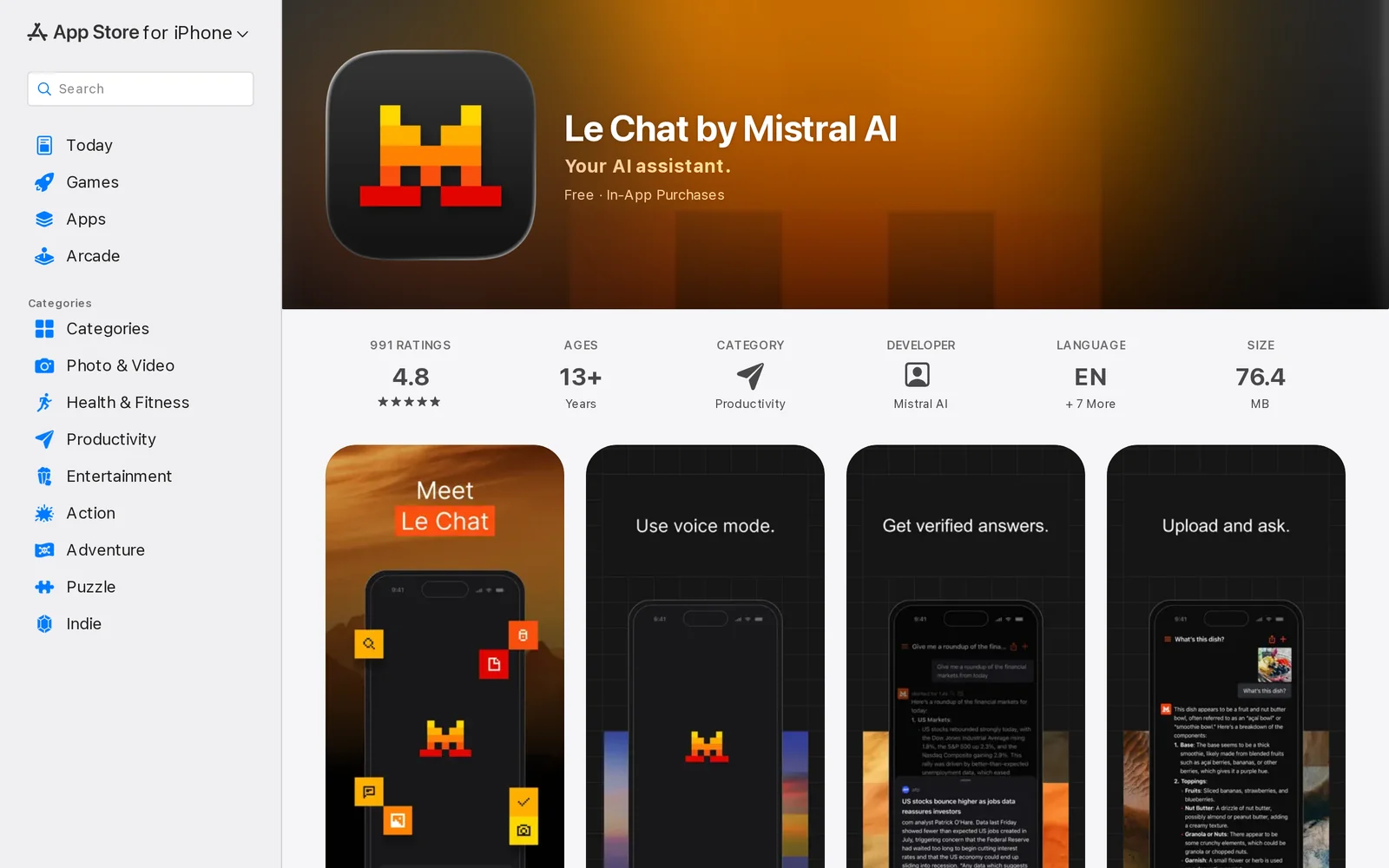
AIVibe by Mistral is a mobile AI agent that performs long‑horizon tasks, researching, analyzing, and producing finished work from your phone.
App Store
Vibe by Mistral is a mobile AI agent that performs long‑horizon tasks, researching, analyzing, and producing finished work from your phone.
About App Store
Vibe is an AI agent designed to complete complex, long‑horizon work by combining knowledge, connected tools, and multi-step reasoning in a single run. From a phone, it can aggregate email, chat, calendar, and internal documents, run deep web and internal research with sourced analysis, analyze spreadsheets and connected resources to surface patterns and anomalies, and draft reports, updates, or announcements based on internal context. It offers free access for quick answers and everyday tasks, a Pro tier for deeper reasoning and complex workflows, and custom enterprise options for deployments, model training, and dedicated support.
Screenshots
Key Features
Use Cases



Frequently asked questions about App Store
What is App Store?
The App Store is a digital distribution platform created by Apple for iOS applications. Users can download apps, games, and updates, access screenshots, reviews, and ratings, and discover new applications like Le Chat by Mistral AI, enhancing their device's functionality and entertainment options.
Key Points
- Digital Distribution: The App Store serves as a marketplace for iOS applications.
- User Engagement: Users can view app ratings, reviews, and screenshots before downloading.
- Diverse Applications: It offers a wide range of apps, from productivity tools to games.
Detailed Explanation
The App Store is essential for Apple device users, providing a centralized location to find and download applications. Launched in 2008, it has evolved significantly, now hosting millions of apps across various categories, including productivity, entertainment, education, and more.
How to Access the App Store
- Open the App Store: Locate the blue icon on your iPhone or iPad.
- Browse or Search: Use the 'Today', 'Games', or 'Apps' tabs to explore or type the app's name in the search bar.
- Download Apps: Tap on the app you are interested in to view its details, including screenshots, user reviews, and ratings. Press the "Get" button to download it.
Example Applications
- Le Chat by Mistral AI: A popular AI-driven chatbot app that enhances user experience through interactive conversations.
- Productivity Apps: Tools like Notion and Trello help users manage projects efficiently.
- Games: Titles like Among Us and Candy Crush offer entertainment and engagement for all age groups.
Best Practices / Tips
- Check Ratings and Reviews: Always read user feedback to ensure the app meets your needs.
- Stay Updated: Regularly update your apps to access the latest features and security improvements.
- Manage Your Storage: Periodically delete unused apps to free up space on your device.
Additional Resources
How does App Store work?
The App Store functions as a digital marketplace where users can discover, download, and purchase applications for their devices. It integrates core AI capabilities that enhance user experience, streamline workflows, and optimize app recommendations tailored to individual preferences.
Key Points
- Digital Marketplace: The App Store offers a wide range of applications for various needs.
- AI Integration: AI technologies help in personalizing user experiences and improving app discovery.
- User Accessibility: Simple navigation and secure payment options make it user-friendly.
Detailed Explanation
The App Store is a platform developed by Apple, allowing users to browse, download, and purchase applications for iOS devices, such as iPhones and iPads. Users can search for apps by categories, ratings, or recommendations, making it easy to find what they need.
How It Works:
- App Submission: Developers create and submit apps to the App Store, where they undergo a review process to ensure they meet Apple's guidelines.
- User Interface: Once approved, apps are listed in the App Store, categorized by type, popularity, and user ratings, allowing users to discover new and trending applications.
- AI Recommendations: The App Store utilizes AI algorithms to analyze user behavior and preferences, providing personalized app suggestions. For example, if a user frequently downloads fitness apps, the App Store may recommend similar applications that align with their interests.
Use Cases:
- Daily Tasks: Users can download productivity apps to manage tasks more efficiently.
- Entertainment: Access to games, streaming services, and social media apps for leisure and connectivity.
- Health and Wellness: Apps designed for fitness tracking or mental well-being, tailored to individual users based on their activity history.
Best Practices / Tips
- Optimize Your Search: When searching for apps, use specific keywords related to the functionality you need, such as “best photo editing apps” or “top productivity tools.”
- Check Reviews: Always read user reviews and ratings to gauge the app's performance and reliability before downloading.
- Update Regularly: Keep your apps updated to benefit from the latest features and security enhancements.
Additional Resources
- Apple App Store Official Documentation
- App Store Optimization (ASO) Best Practices
- Apple Developer Program for those interested in submitting their own apps.
What are the main features of App Store?
The main features of the App Store include a user-friendly interface, a vast selection of applications, personalized recommendations, and robust security measures. Additionally, it offers seamless integration with Apple devices, regular updates, and a powerful search function to enhance user experience and app discovery.
Key Points
- User-Friendly Interface: Intuitive design for easy navigation.
- Vast Selection of Applications: Millions of apps across various categories.
- Personalized Recommendations: Tailored app suggestions based on user preferences.
Detailed Explanation
The App Store is a digital distribution platform developed by Apple Inc., hosting a wide array of applications for iOS devices. Here’s a deeper look at its main features:
-
User-Friendly Interface: The App Store is designed with a clean and intuitive layout, making it easy for users to browse and search for apps. Categories like "Top Charts," "Categories," and "Today" highlight trending apps and new releases, ensuring users can quickly find what they need.
-
Vast Selection of Applications: With over 2.2 million apps available, the App Store provides diverse options, including games, productivity tools, educational resources, and more. Each app is rigorously vetted for quality and security, ensuring a safe user experience.
-
Personalized Recommendations: The App Store uses advanced algorithms to analyze user behavior and preferences, offering personalized app recommendations. This feature enhances user engagement by showcasing apps that align with individual interests.
-
Robust Security Measures: Apple prioritizes user privacy and data security. The App Store requires developers to adhere to strict guidelines, and all apps undergo a review process to eliminate malicious software. Features like App Tracking Transparency further empower users to control their data.
-
Seamless Integration with Apple Devices: The App Store is fully integrated with all Apple devices, allowing users to download apps across iPhones, iPads, and Macs. This cross-device compatibility enhances the user experience by ensuring apps function smoothly on different platforms.
-
Regular Updates: Apple frequently updates the App Store to introduce new features, improve functionality, and enhance security. Users are notified of these updates, which often include new app releases, bug fixes, and performance enhancements.
-
Powerful Search Function: The App Store's search functionality is robust, allowing users to find apps using keywords, categories, or even voice search. This feature makes it easier for users to discover new and relevant applications that meet their needs.
Best Practices / Tips
- Explore Categories: Regularly check different categories to discover new apps that may enhance your productivity or entertainment.
- Read Reviews: Before downloading an app, read user reviews and ratings to gauge its performance and reliability.
- Use Family Sharing: Take advantage of the Family Sharing feature to share purchased apps with family members without additional costs.
- Update Frequently: Keep your apps updated to benefit from the latest features and security patches.
Additional Resources
Who is App Store for?
The App Store is designed for anyone looking to enhance their daily workflows with AI tools, including professionals, students, and hobbyists. It offers a wide range of applications that streamline tasks, boost productivity, and improve efficiency in various fields, making it accessible for diverse user needs.
Key Points
- Wide User Base: Ideal for professionals, students, and casual users.
- Diverse Applications: Offers tools for productivity, creativity, and task management.
- Continuous Updates: Regularly refreshed with new features and applications.
Detailed Explanation
The App Store caters to a broad audience, from tech-savvy professionals seeking to optimize their work processes to students looking for educational tools. For example, marketing professionals can utilize AI-driven analytics apps to enhance their campaigns, while students might find study aid apps beneficial for managing their studies efficiently.
Use Cases
- For Professionals: If you work in marketing, you can find tools that automate social media posts or analyze customer data. Apps like Canva for design or Trello for project management are great examples.
- For Students: Educational apps such as Quizlet or Notion help in organizing study materials and improving learning efficiency.
- For Hobbyists: Creative individuals can explore AI art generation tools or music composition apps, facilitating their creative pursuits with enhanced capabilities.
Best Practices / Tips
- Explore Categories: Take advantage of the App Store's categorization to discover tools tailored to your specific needs.
- Read Reviews: User reviews can provide insights into app performance and usability.
- Stay Updated: Regularly check for updates to ensure you’re using the latest features and security enhancements.
Additional Resources
How much does App Store cost?
The App Store does not charge users to download or access apps; however, many apps offer in-app purchases or subscriptions, which can vary widely in cost. For developers, Apple charges a $99 annual fee for an Apple Developer Program membership to publish apps.
Key Points
- User Costs: Most apps are free, with optional in-app purchases.
- Developer Fees: Apple charges $99 annually for app publishing.
- Subscription Models: Many apps utilize subscription pricing for premium features.
Detailed Explanation
The App Store offers a vast array of applications, ranging from games and productivity tools to social media platforms. Users can download many apps for free, but they may encounter in-app purchases (also known as microtransactions) designed to enhance the user experience. For instance, popular games often provide additional levels, characters, or features for a fee.
For developers looking to publish apps on the App Store, there is a $99 annual fee associated with the Apple Developer Program. This fee grants access to essential development tools, app analytics, beta testing, and the ability to distribute apps on the App Store. The costs associated with developing and maintaining an app can vary significantly based on complexity and feature set.
Additionally, many apps have evolved to adopt subscription models, charging users monthly or annually for access to premium features. This model can range from a few dollars to over $30 per month, depending on the app's functionalities. For example, streaming services typically charge a consistent monthly fee, while productivity apps may offer tiered pricing based on the number of users or features.
Best Practices / Tips
- Research Pricing: Before downloading or subscribing, check user reviews and pricing details to ensure you understand the full cost.
- Use Free Trials: Many subscription-based apps offer free trials. Take advantage of these to determine if the app meets your needs.
- Monitor In-App Purchases: Be cautious with apps that encourage in-app purchases to avoid unexpected charges.
- Stay Informed: Regularly check for updates on pricing and features, as app developers frequently adjust their offerings.
Additional Resources
How do I get started with App Store?
To get started with the App Store, visit Apple's App Store link to sign up and explore available apps. The App Store allows users to download, buy, and manage applications on Apple devices.
Key Points
- Sign Up Process: Create your Apple ID for access.
- Explore Apps: Browse categories and user reviews.
- Download and Manage: Install apps and manage updates easily.
Detailed Explanation
Getting started with the App Store involves several straightforward steps:
-
Create Your Apple ID:
- Go to the App Store link provided above.
- Click on "Sign In" or "Create Apple ID" if you don’t have one.
- Follow the prompts to enter your email, password, and personal information. This ID is essential for downloading apps and making purchases.
-
Explore Available Apps:
- Once signed in, you can browse the App Store's vast collection of apps.
- Categories include Games, Productivity, Health & Fitness, and more. Use the search bar to find specific apps.
- Check user ratings and reviews to help you make informed choices.
-
Download and Manage Apps:
- Click "Get" or the price button next to the app you want to download.
- For paid apps, your payment method will be charged. Ensure your billing information is up-to-date in your Apple ID settings.
- After downloading, you can manage your apps from your device’s home screen. Updates are typically automatic, but you can check for updates manually in the App Store.
Best Practices / Tips
- Keep Your Device Updated: Regularly update your iOS for better compatibility with apps.
- Read Reviews: User feedback can save you from downloading poor-quality apps.
- Check Privacy Settings: Ensure you understand app permissions before installation.
Additional Resources
Explore more AI Ai Tools tools
Browse all Ai Tools tools →Browse by use case: Chatbots & Assistants · Automation & Productivity
Compare App Store: vs Humanizer · vs Worktrunk · vs Mise · vs BiBimba