
Flowdrop V1.1
AINo-code, AI-powered workflow builder that enables non-coders to build and deploy production automations in under five minutes.
Flowdrop V1.1
No-code, AI-powered workflow builder that enables non-coders to build and deploy production automations in under five minutes.
About Flowdrop V1.1
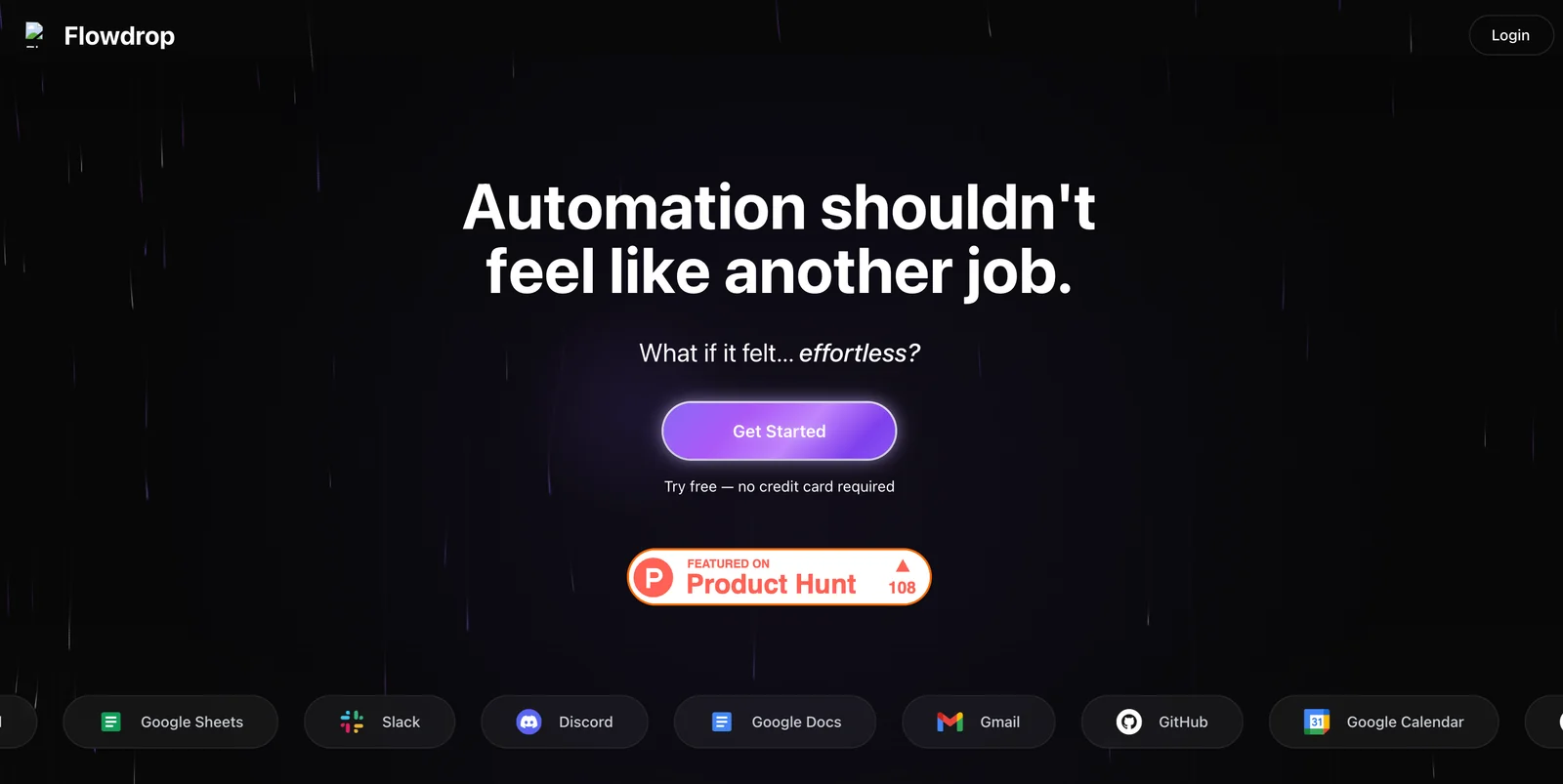
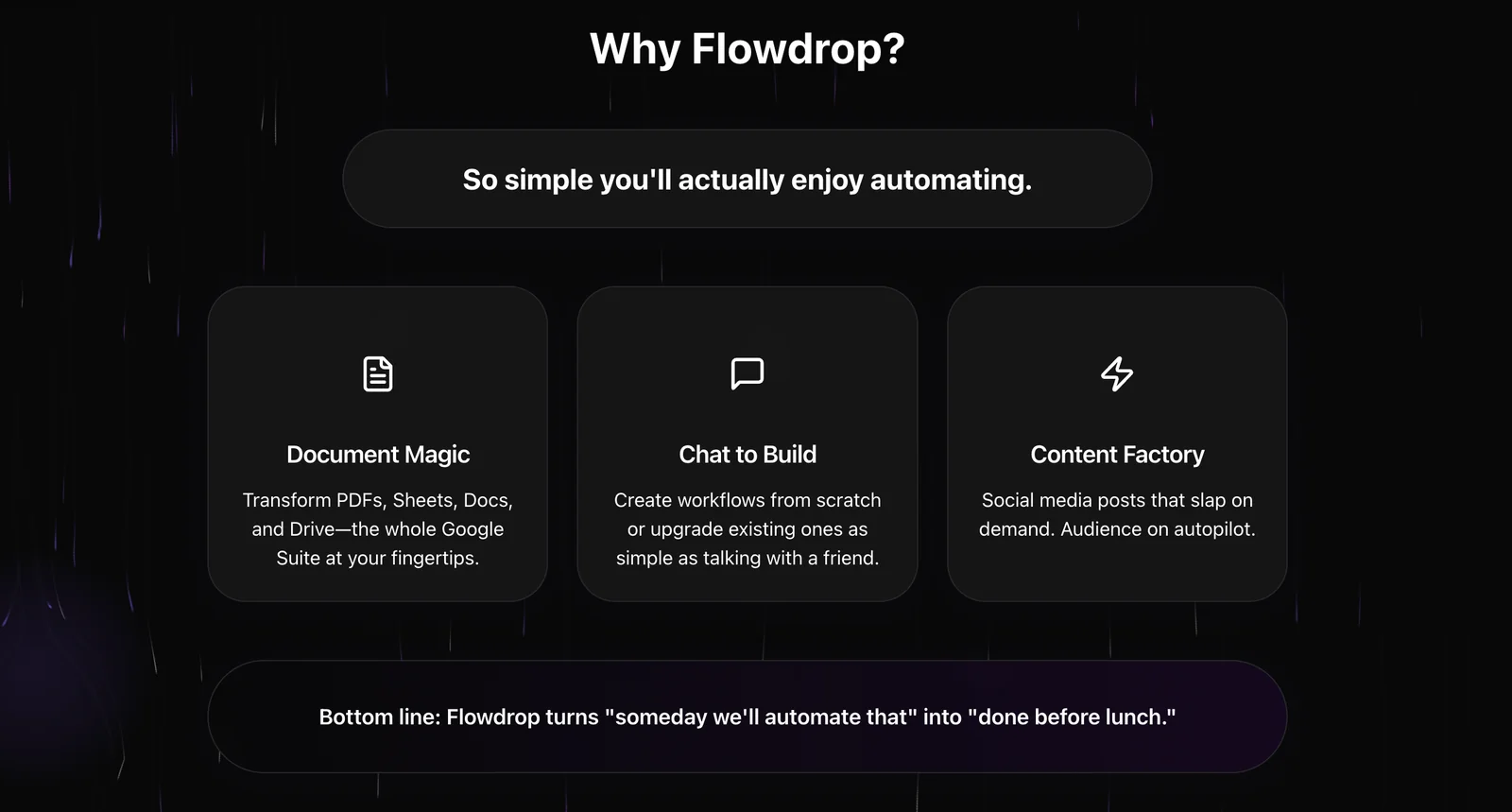
Flowdrop is a no-code, AI-powered workflow builder designed for non-coders to create and deploy production-grade automations rapidly. The platform emphasizes speed and ease of use, enabling users to design workflows, leverage AI to assist in automation logic, and push automations to production in minutes. Flowdrop targets business users who need to automate repetitive processes without engineering resources.
Screenshots
Key Features
Use Cases



Frequently asked questions about Flowdrop V1.1
What pricing options does Flowdrop V1.1 offer?
Flowdrop V1.1 utilizes a Freemium pricing model, providing users with a free tier that includes basic functionalities. For comprehensive information regarding specific features and tiered pricing, it's recommended to visit the official website at flowdrop.ai or reach out to the vendor directly for personalized assistance.
Key Points
- Freemium Model: Flowdrop V1.1 offers a free tier for basic use.
- Tiered Pricing: Additional pricing tiers are available for advanced features.
- Direct Contact: Users can inquire directly with the vendor for specific details.
Detailed Explanation
Flowdrop V1.1 operates under a Freemium pricing model, allowing users to access basic features at no cost. This model is particularly beneficial for individuals or businesses exploring the tool without an initial financial commitment. The free tier typically offers limited functionalities, making it ideal for testing the platform's capabilities.
For users requiring more advanced features, Flowdrop V1.1 provides tiered pricing options. Although specific details about these tiers may not be explicitly listed on the official website, they generally include enhanced functionalities such as increased data capacity, additional integrations, and premium support services. These features are tailored to meet the demands of businesses that rely heavily on automation and data analysis.
To ensure that you are making an informed decision, it's advisable to visit flowdrop.ai for the most up-to-date information. Alternatively, reaching out to their customer support can provide clarity on pricing structures and the specific features included in each tier.
Best Practices / Tips
- Explore the Free Tier: Utilize the free version to familiarize yourself with Flowdrop's interface and capabilities.
- Assess Your Needs: Determine what features are essential for your business to select the most appropriate paid tier.
- Contact Support: If unsure about which plan to choose, don't hesitate to contact Flowdrop’s support team for tailored advice.
Additional Resources
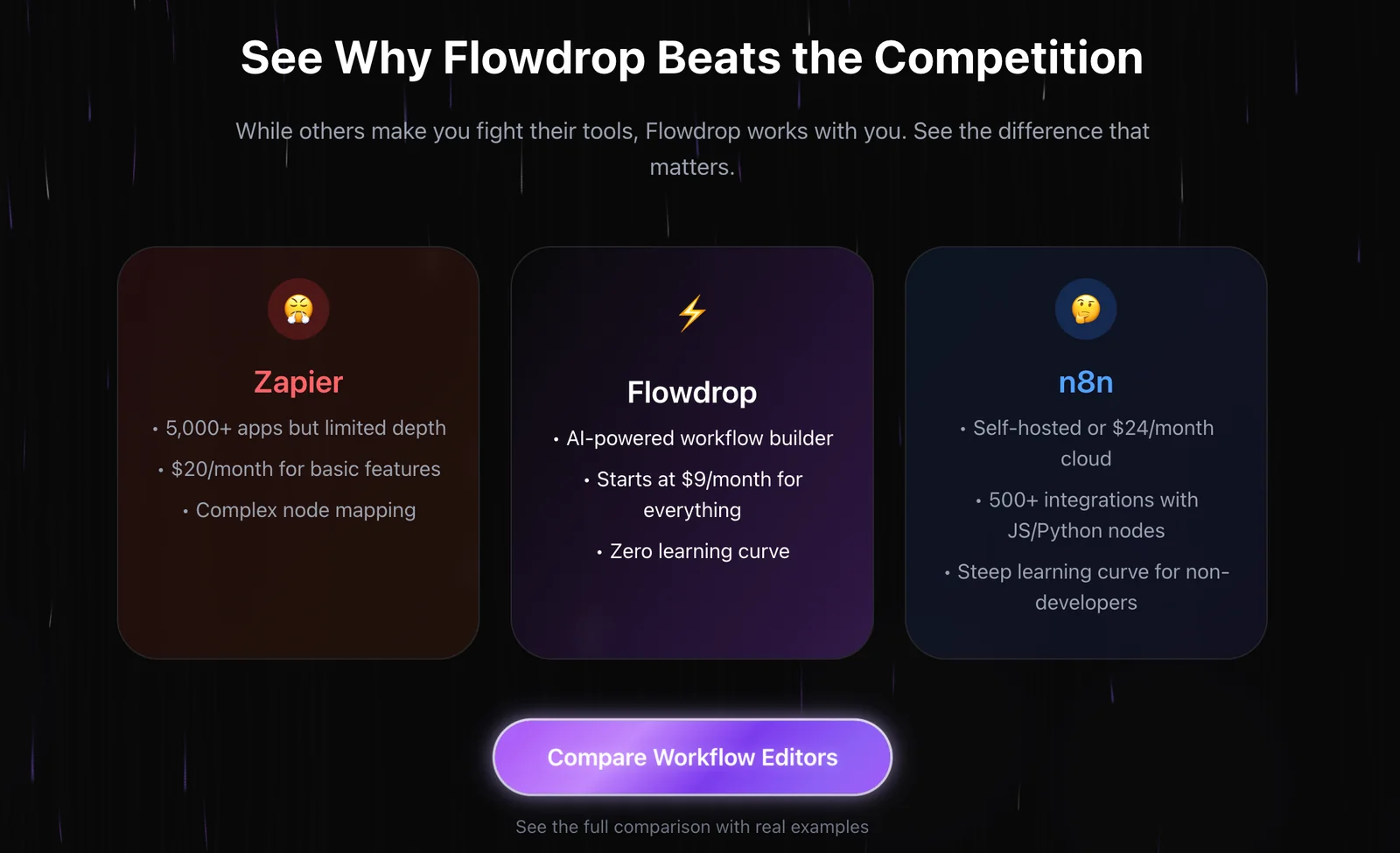
How does Flowdrop V1.1 compare to other no-code automation tools?
Flowdrop V1.1 distinguishes itself from other no-code automation tools by enabling rapid deployment of automation workflows in under five minutes. Its AI-powered assistance simplifies workflow design, making it particularly user-friendly for non-coders, while also offering features that enhance integration and customization.
Key Points
- Rapid Deployment: Publish automations in under five minutes.
- AI-Powered Assistance: Streamlines workflow design for non-coders.
- User-Friendly Interface: Intuitive design that enhances usability.
Detailed Explanation
Flowdrop V1.1 is designed to facilitate quick automation without requiring extensive technical knowledge. Unlike many competitors, which may take hours or days to set up automations, Flowdrop allows users to publish their workflows in just a few minutes. This is particularly beneficial for businesses needing quick solutions to automate repetitive tasks, thereby increasing productivity.
The AI-powered assistance feature sets Flowdrop apart. It provides users with intelligent suggestions during the workflow creation process, ensuring that even those unfamiliar with coding can design effective automations. For example, if a user wants to automate data entry from a spreadsheet to a CRM, Flowdrop's AI can suggest the best methods and integration points, making the process seamless.
Moreover, the platform supports various integrations with popular applications, such as Google Sheets, Slack, and Trello, enabling users to create customized workflows that cater to their specific needs. This level of flexibility is crucial for businesses that rely on multiple tools to manage their operations.
Best Practices / Tips
- Start Small: Begin with simple automations to familiarize yourself with Flowdrop’s interface and features before tackling more complex tasks.
- Utilize AI Features: Take full advantage of the AI assistance to optimize your workflow designs and reduce errors.
- Test Your Automations: Always run tests on your automations before full deployment to ensure they function as intended.
Additional Resources
What key features make Flowdrop V1.1 unique?
Flowdrop V1.1 stands out due to its no-code workflow builder, AI-powered assistance, extensive template library, and robust integration capabilities. These features empower users to automate tasks efficiently without needing any technical expertise, transforming workflow management into a seamless experience.
Key Points
- No-Code Workflow Builder: Easily create and manage workflows.
- AI-Powered Assistance: Provides smart suggestions and automates routine tasks.
- Template Library: Access a variety of pre-built workflows for quick implementation.
Detailed Explanation
Flowdrop V1.1 offers powerful features that enable users to optimize their workflows without the need for programming skills.
-
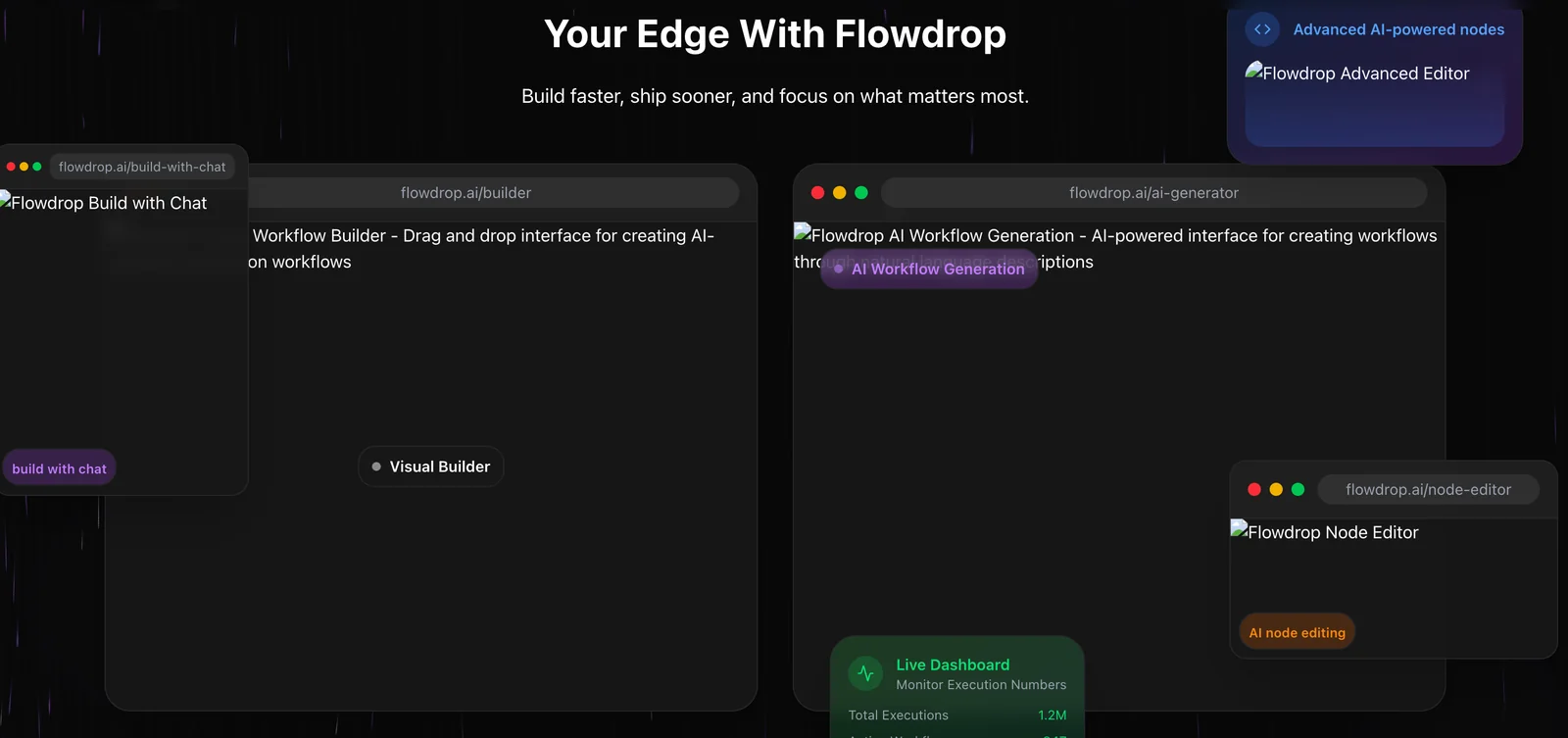
No-Code Workflow Builder: This intuitive drag-and-drop interface allows users to construct workflows visually. For example, a marketing team can create a lead nurturing process by simply dragging elements like email notifications and task assignments onto a canvas. This eliminates the need for coding knowledge and accelerates the setup time.
-
AI-Powered Assistance: The built-in AI feature analyzes user actions and suggests optimal workflow improvements. For instance, if a user frequently assigns tasks to the same team member, the AI might recommend automating that step, saving time and reducing errors. This capability enhances productivity by streamlining repetitive tasks.
-
Template Library: Flowdrop V1.1 includes a comprehensive library of templates tailored for various industries. Users can select from templates like project management, customer onboarding, or sales funnels, which are fully customizable. This feature significantly shortens the time to deployment, allowing users to focus on their core business activities.
-
Integration Capabilities: Flowdrop seamlessly integrates with popular applications like Slack, Google Workspace, and Salesforce. This interoperability ensures that users can connect their existing tools, enhancing data flow and collaboration across platforms. For example, a sales team can integrate Flowdrop with their CRM to automate follow-up emails based on lead status.
Best Practices / Tips
- Start Small: Begin with simple workflows to familiarize yourself with the platform before scaling up.
- Utilize Templates: Take advantage of the template library to save time and ensure best practices are followed.
- Regularly Review Workflows: Periodically analyze and optimize your workflows based on performance metrics to ensure they remain effective.
- Leverage AI Suggestions: Don’t hesitate to implement AI recommendations to improve efficiency and effectiveness.
Additional Resources
These resources provide further insights and guidance on maximizing the potential of Flowdrop V1.1, helping users to fully harness its capabilities.
How can I get started with Flowdrop V1.1?
To get started with Flowdrop V1.1, visit the official website, create an account, and explore the intuitive no-code workflow builder. Take advantage of the extensive template library to efficiently design and deploy your first automation project without any coding skills.
Key Points
- Official Website: Access Flowdrop through its official site.
- Account Creation: Register for a free account to unlock features.
- No-Code Workflow Builder: Utilize the user-friendly interface to create workflows.
Detailed Explanation
-
Accessing the Official Website: Navigate to Flowdrop's official site to find complete information about the platform. This includes features, pricing plans, and user testimonials that can help you understand its capabilities.
-
Creating an Account: Click on the "Sign Up" button to begin the registration process. You can choose between a free trial or a paid plan, depending on your needs. The free trial allows you to explore basic features, while paid plans offer advanced functionalities.
-
Using the No-Code Workflow Builder: Once logged in, you’ll be greeted with an easy-to-use dashboard. The no-code workflow builder enables you to create automations by simply dragging and dropping elements. Start by selecting a template from the library that suits your needs, such as a customer onboarding process or a lead generation funnel.
-
Exploring the Template Library: Flowdrop offers a variety of pre-built templates that can significantly reduce setup time. These templates are customizable, allowing you to modify workflows to meet specific business requirements.
-
Deploying Your First Automation: After designing your workflow, you can test it in a sandbox environment to ensure everything runs smoothly. Once tested, deploy it with a single click. Monitor performance through the analytics dashboard for real-time insights.
Best Practices / Tips
- Start Simple: Begin with basic automations to familiarize yourself with the platform's features.
- Leverage Templates: Use templates as a foundation but customize them to fit your unique processes.
- Regularly Review Analytics: Monitor your automations after deployment to identify areas for improvement or optimization.
- Seek Support: If you encounter challenges, utilize Flowdrop’s support resources, including tutorials and community forums.
Additional Resources
- Flowdrop Official Documentation
- Flowdrop Blog for Tips and Updates
- Community Forum for User Discussions
By following these steps and utilizing the resources provided, you'll be well on your way to mastering Flowdrop V1.1 and enhancing your automation workflows effectively.
What integration capabilities does Flowdrop V1.1 provide?
Flowdrop V1.1 provides extensive integration capabilities, enabling users to connect seamlessly with a variety of external systems and APIs through connectors and webhooks. This functionality ensures efficient data movement and allows users to trigger actions across multiple services, enhancing workflow automation and collaboration.
Key Points
- Wide Range of Connectors: Flowdrop V1.1 supports numerous pre-built connectors for popular platforms.
- Custom Webhooks: Users can create custom webhooks for unique integration needs.
- Real-Time Data Sync: Integration features facilitate real-time data synchronization across services.
Detailed Explanation
Flowdrop V1.1 enhances productivity by offering a variety of integration options. Users can connect with popular platforms like Salesforce, Slack, and Google Sheets using pre-built connectors. This means you can automate data transfers from your CRM to your communication tools, ensuring that your team is always updated.
For specific integration scenarios, Flowdrop allows the creation of custom webhooks. This feature is particularly advantageous for developers who need to connect with less common systems or third-party APIs. By setting up custom webhooks, you can push and pull data as needed, allowing for tailored solutions that fit your unique requirements.
An example use case might include automatically updating a Google Sheet with new leads from a web form. By integrating Flowdrop with your form service via a webhook, every new submission can trigger an action to add a row to your spreadsheet, simplifying data management and reducing manual entry errors.
Best Practices / Tips
- Start with Pre-Built Connectors: Whenever possible, utilize the pre-built connectors to save time and complexity.
- Thorough Testing: Always test integrations in a staging environment before going live to ensure data flows correctly.
- Monitor Performance: Regularly monitor the performance of your integrations to identify any issues or areas for improvement.
Additional Resources
Explore more AI Ai Agents tools
Browse all Ai Agents tools →Browse by use case: Automation & Productivity
Compare Flowdrop V1.1: vs Phoenix.vu · vs Dropstone · vs Apache Maka · vs Construct Computer