
Hyper vs OrchestraML: Features, Pricing & Which Is Better (2026)
A side-by-side comparison of Hyper and OrchestraML — features, pricing, and ideal use cases — to help you decide which AI tool fits your workflow.

Hyper
Hyper
A company knowledge layer that learns from Docs, Slack, Email and Calendar to power smarter, context-aware AI across teams.
Key features
- Unified Knowledge Ingestion: Continuously imports and indexes data from Docs, Slack, Email, and Calendar to build a central, searchable company knowledge graph.
- Contextual AI Plug-ins: Provides an interface and connectors so teams can inject company-specific context into external or internal AI models, improving accuracy and relevance of responses.
- Persistent Institutional Memory: Retains historical context across conversations and workflows so the system remembers past decisions, preferences, and policies without manual re-entry.
- Real-time Sync and Updates: Keeps ingested sources up to date with near real-time synchronization so answers reflect the latest documents, messages, and schedule changes.
- Access Controls & Security: Enables role-based access and privacy controls to ensure sensitive documents and communications are only used where permitted.
- Searchable Knowledge Retrieval: Offers semantic search and retrieval of relevant docs, messages, and calendar events to surface precise context for queries and automations.
- Workflow Automation: Leverages stored knowledge to trigger or assist with routine tasks (e.g., follow-ups, meeting summaries) and reduce manual work.
- Integration Framework: Supports connectors and APIs to integrate with common productivity tools and plug the company brain into existing AI assistants or platforms.
- Ingests and learns from Docs, Slack, Email and Calendar
- Creates a centralized, searchable company knowledge layer
- Integrates/"plugs into" existing AI systems to provide context and memory
- Context enrichment for downstream AI responses and workflows
- Connectors to common collaboration sources (Docs, Slack, Email, Calendar)
Best for
- Onboarding Acceleration: New hires query the company brain to get accurate, contextual answers about processes, past decisions, and team norms without repeatedly asking colleagues.
- Customer Support Enablement: Support agents retrieve up-to-date product docs, past tickets, and policy notes to craft faster, consistent responses to customers.
- Meeting Summaries & Action Items: Automatically summarize calendar events and linked documents, then surface follow-ups and owners based on historical context.
- Internal Knowledge Discovery: Employees search across Slack, emails, and docs to find precedents, design decisions, or technical notes relevant to current projects.
- Automated Follow-ups: Use contextual knowledge to draft or schedule follow-up emails and tasks after meetings, ensuring continuity and reducing manual tracking.
- Compliance & Audit Readiness: Aggregate and index communications and documents to simplify internal audits and demonstrate policy adherence with searchable records.
- Developer and Product Support: Engineers and PMs query past architecture decisions, bug histories, and release notes to speed troubleshooting and planning.
- Provide company-specific context to LLMs and AI assistants
- Centralized knowledge retrieval and enterprise search across Docs, Slack, Email and Calendar
- Faster onboarding by surfacing institutional knowledge
- Automated summarization and context-aware drafting for email and meetings
- Enriching customer-support or internal automation agents with up-to-date company info
OrchestraML
OrchestraML
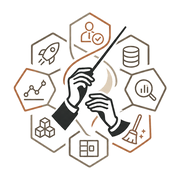
OrchestraML orchestrates end-to-end ML lifecycles using agentic workflows for dataset search, EDA, cleaning, feature engineering, AutoML, and deployment.
Key features
- Dataset Search: Automatically discovers and ranks candidate datasets from connected sources and public repositories based on the user's described ML goal, surfacing relevant data for inspection and selection.
- Exploratory Data Analysis (EDA): Generates comprehensive EDA reports including summary statistics, visualizations, class balance checks, and data quality diagnostics to help users understand candidate datasets quickly.
- Data Cleaning and Preprocessing: Applies automated cleaning steps (missing value handling, outlier detection, type conversions, encoding) with configurable operations and opportunities for user review and rollback.
- Feature Engineering: Proposes and evaluates engineered features and transformations (aggregation, encoding, interaction terms, embeddings) and ranks feature sets by predictive utility.
- AutoML Model Search and Tuning: Runs automated model selection and hyperparameter optimization across multiple algorithms and pipelines, compares models with consistent metrics, and provides ranked recommendations.
- Deployment Orchestration: Packages selected models into deployable endpoints or artifacts, sets up monitoring hooks and deployment pipelines, and aids in shipping models to production environments.
- Human-in-the-Loop Controls: Inserts approval checkpoints before critical decisions (dataset selection, cleaning operations, final model choice, deployment) and provides explanations for recommended actions.