

Smithery
AIOpen SourceFreeA registry and hosting platform (app store) for discovering, publishing, and running Model Context Protocol (MCP) servers for AI agents.
Smithery
A registry and hosting platform (app store) for discovering, publishing, and running Model Context Protocol (MCP) servers for AI agents.
About Smithery
Smithery is a centralized platform and registry that lets developers publish, discover, install, and host Model Context Protocol (MCP) servers to extend the capabilities of language-model agents. It provides standardized MCP interfaces, an SDK and scaffolding for building MCP servers, a CLI for installing and running servers, and hosting/gateway functionality so agents can access external services through a unified gateway. By combining a searchable registry, developer tooling, and one-line installers for multiple clients, Smithery accelerates distribution and adoption of interoperable agent extensions and simplifies integration across agent platforms.
Screenshots
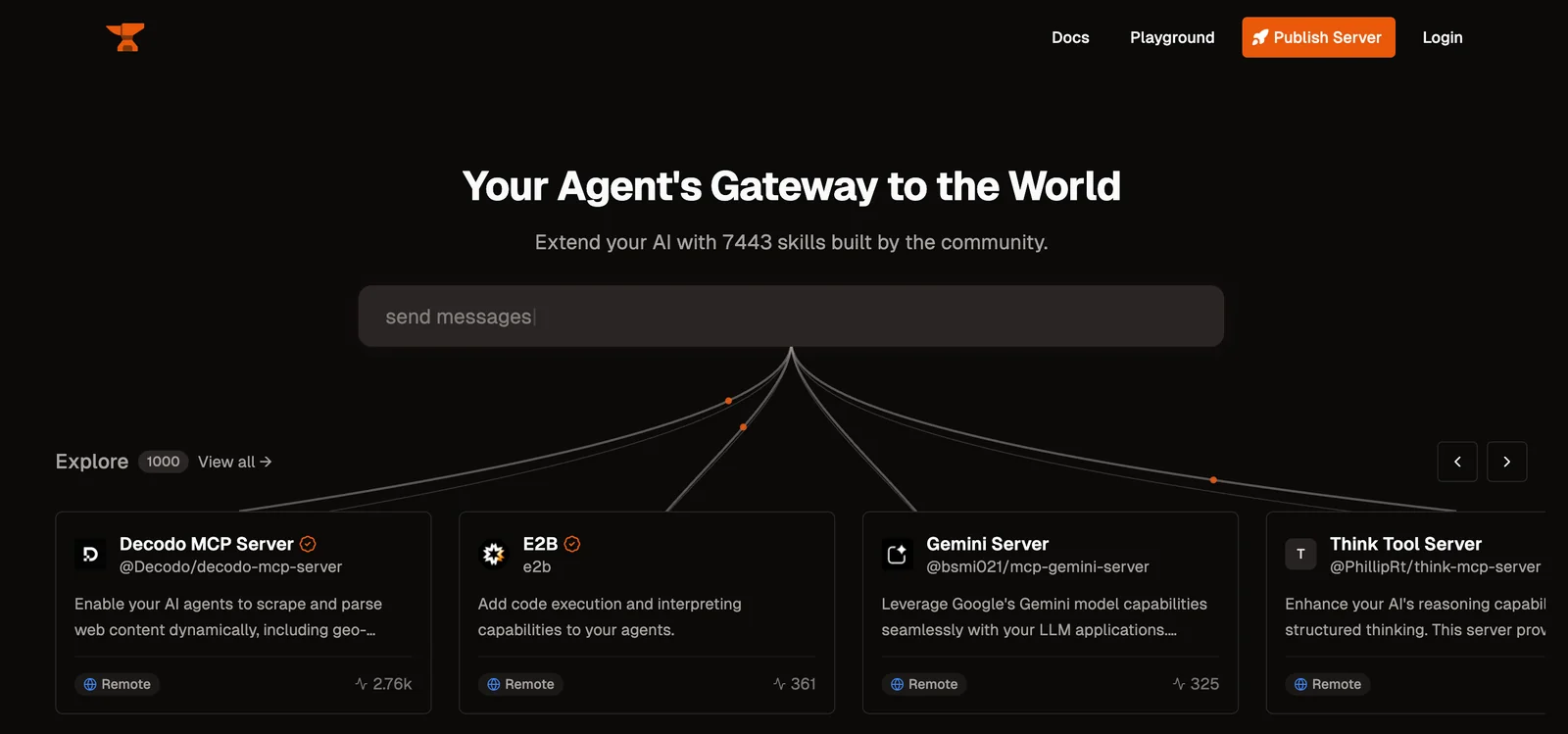
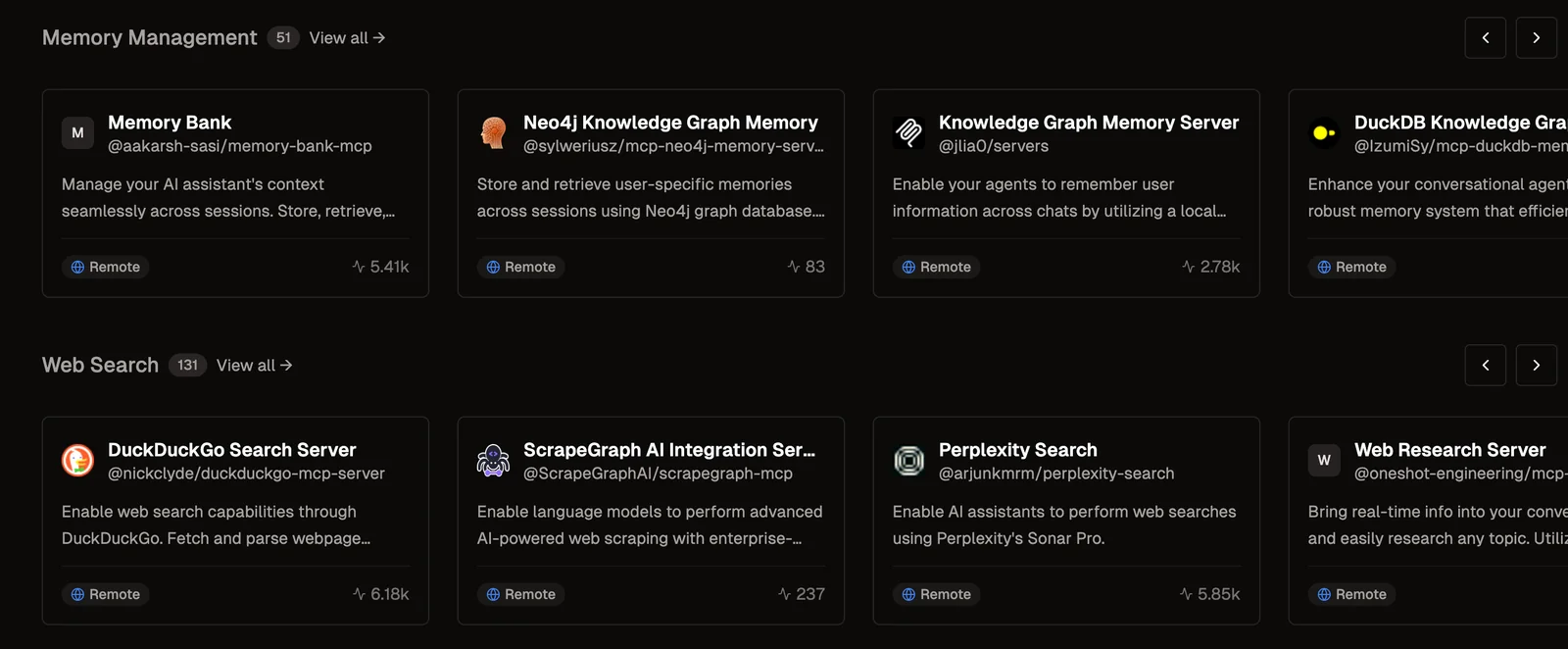
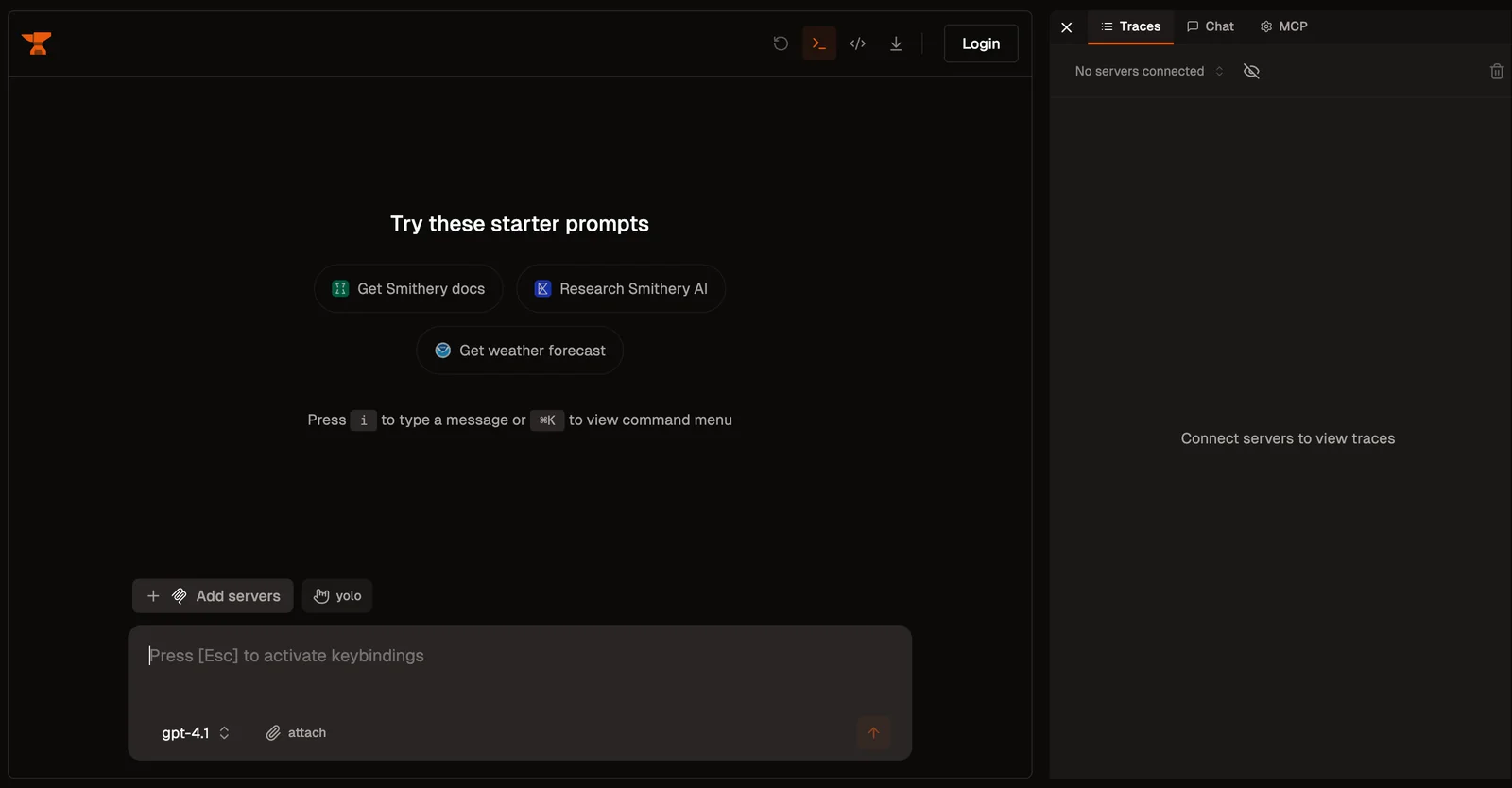
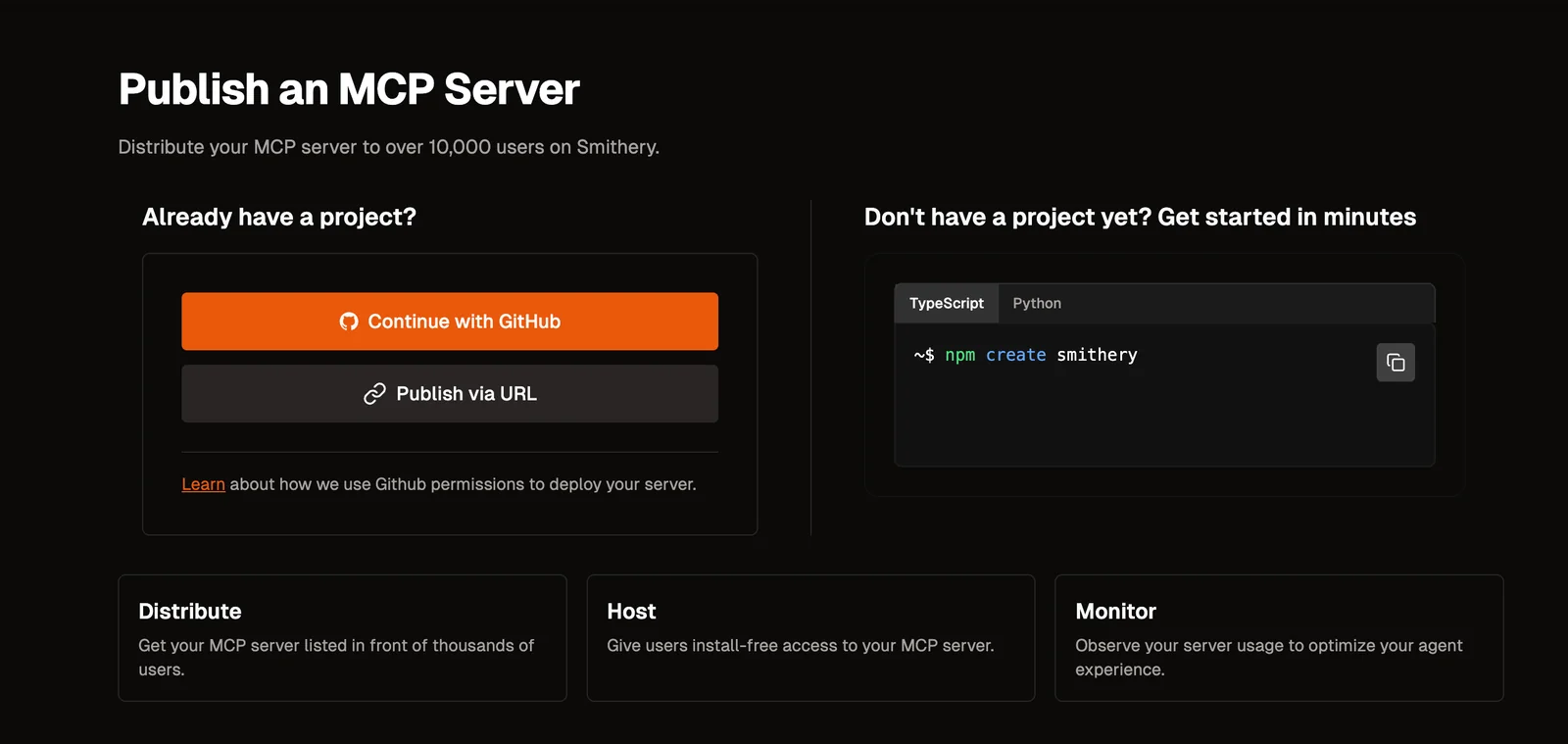
Key Features
Use Cases



Frequently asked questions about Smithery
Is Smithery free to use?
Yes, Smithery is free to use, providing several free options such as an open-source registry and tools for discovering and hosting Minecraft Pocket Edition (MCP) servers at no cost. Users can access these features without any subscription fees or hidden charges.
Key Points
- Open-Source Registry: Smithery offers a fully open-source registry for community contributions.
- Hosting Tools: Users can discover and host MCP servers easily and for free.
- No Hidden Costs: The platform ensures transparency with no subscription fees.
Detailed Explanation
Smithery is designed to support Minecraft Pocket Edition enthusiasts by offering a suite of free tools. The open-source registry allows users to contribute to the platform's development, ensuring it evolves with community needs. This means that developers can modify the source code and enhance the functionality of Smithery.
Additionally, Smithery provides powerful hosting tools that simplify the process of discovering and running MCP servers. This feature is particularly beneficial for gamers looking to create their own gaming environments without incurring costs. Users can easily navigate through the user-friendly interface to find existing servers or set up their own.
It’s important to note that while Smithery offers these features for free, there may be optional premium services or features in the future. However, as of now, all essential tools remain completely free, promoting accessibility and community involvement.
Best Practices / Tips
- Explore All Features: Take full advantage of the open-source nature by exploring community contributions and suggestions.
- Stay Updated: Regularly check for updates and new features on the Smithery platform to maximize your experience.
- Engage with the Community: Participate in forums or discussions to learn from other users and share your own experiences.
Additional Resources
What are the key features of Smithery?
Smithery is an advanced management tool that offers a centralized registry for MCP servers, a command-line interface for seamless management, SDKs for easy development, and a unified gateway for agent access. These features streamline server administration and enhance development efficiency, making it ideal for businesses looking to optimize their workflows.
Key Points
- Centralized Registry: Simplifies server management by providing a single location for MCP server information.
- Command-Line Interface: Enhances management capabilities for advanced users through efficient command execution.
- SDKs for Development: Facilitates the integration of Smithery into existing applications or services.
Detailed Explanation
Smithery's centralized registry is a powerful feature that allows users to manage multiple MCP servers from one location. This feature reduces the complexity of managing separate servers, making it easier to track configurations, monitor performance, and apply updates. For instance, IT teams can quickly access server statuses and logs, ensuring timely troubleshooting and maintenance.
The command-line interface (CLI) provided by Smithery is designed for developers and system administrators who prefer script-based management. This feature allows users to automate tasks, execute batch commands, and integrate with other tools, improving operational efficiency. An example use case includes automating server backups or updates using shell scripts, which can save time and reduce the risk of human error.
Smithery's SDKs enable developers to build custom applications that leverage the platform's capabilities. These SDKs support various programming languages, allowing for flexibility in development. For instance, a developer can create a monitoring dashboard that pulls data directly from the Smithery registry, providing real-time insights into server health.
Best Practices / Tips
- Utilize the CLI: Incorporate the command-line interface into your daily operations to streamline repetitive tasks.
- Explore SDK Documentation: Familiarize yourself with the SDKs and their capabilities to maximize integration potential.
- Regularly Update the Registry: Keep your centralized registry updated to ensure accurate server tracking and management.
Additional Resources
How do I get started with Smithery?
To get started with Smithery, visit the official website, explore the registry, and follow the provided documentation to install and run MCP servers using the command-line interface (CLI) tools. This process will enable you to leverage Smithery's powerful features effectively.
Key Points
- Visit the official Smithery website for resources.
- Browse the registry to understand available tools.
- Follow the documentation for installation and setup.
Detailed Explanation
Starting with Smithery involves several straightforward steps:
-
Visit the Official Website: Head to Smithery's official website to access all resources, including documentation, tutorials, and community support.
-
Explore the Registry: The registry contains a variety of tools and templates that Smithery offers. Familiarize yourself with these options to determine which tools best suit your project needs.
-
Installation Instructions: Follow the official documentation closely. It provides step-by-step guidance on how to install and configure MCP servers using CLI tools. Ensure you have the necessary system requirements met, such as compatible operating systems and dependencies.
-
Run MCP Servers: Once installed, use the command-line interface to run your MCP servers. The documentation includes commands and examples to help you get started quickly.
By following these steps, you can efficiently set up and utilize Smithery, enhancing your project development experience.
Best Practices / Tips
- Read the Documentation Thoroughly: Don’t skip any step in the documentation; it contains vital information regarding configurations and troubleshooting.
- Engage with the Community: Join forums or social media groups related to Smithery to learn from other users' experiences and get support.
- Regular Updates: Keep your tools and libraries updated to the latest versions to benefit from new features and security improvements.
Additional Resources
- Smithery Documentation – Comprehensive guides on installation and usage.
- Smithery Community Forum – A platform to ask questions and share insights with other users.
- YouTube Tutorials – Visual guides for installation and usage tips.
What integrations does Smithery support?
Smithery supports a wide range of integrations, including popular agent frameworks and tools, enabling users to deploy MCP servers effortlessly through standardized APIs and simple one-line installers. This flexibility enhances the user experience and streamlines development processes.
Key Points
- Agent Framework Compatibility: Smithery integrates with various agent frameworks like AWS Lambda, Google Cloud Functions, and more.
- Standardized APIs: Seamlessly connect with multiple tools using easily accessible APIs, simplifying integration.
- One-Line Installers: Rapid deployment of MCP servers with minimal setup time.
Detailed Explanation
Smithery offers a robust integration ecosystem designed to simplify the deployment of Managed Cloud Platforms (MCP). It is compatible with numerous agent frameworks, such as:
- AWS Lambda: Ideal for serverless computing, allowing users to run code without provisioning servers.
- Google Cloud Functions: Offers a similar serverless architecture, enabling event-driven applications.
Using Smithery’s standardized APIs, developers can connect various tools effortlessly. These APIs are designed to be intuitive, ensuring that even those with minimal technical expertise can utilize them. For instance, you can integrate with CI/CD tools like Jenkins and GitHub Actions, enhancing your development workflow.
The one-line installers significantly reduce the time and effort required to set up MCP servers. With just a single command, users can initiate the entire installation process, making it particularly useful for rapid prototyping and development environments.
Best Practices / Tips
- Explore API Documentation: Familiarize yourself with Smithery's API documentation to maximize integration potential.
- Test Integrations: Before deploying in production, test integrations in a staging environment to identify issues early.
- Utilize Community Forums: Join Smithery’s user community to share experiences and get tips on best practices for integration.
Additional Resources
How does Smithery compare to other AI model hosting platforms?
Smithery distinguishes itself from other AI model hosting platforms through its open-source framework, centralized model registry, and cost-free hosting options. This combination enhances user-friendliness and accessibility, making it a preferred choice over paid alternatives that can be more cumbersome and expensive.
Key Points
- Open-Source Approach: Smithery's commitment to open-source fosters community collaboration and innovation.
- Centralized Registry: A streamlined model registry simplifies the process of finding and deploying AI models.
- No-Cost Hosting Options: Free hosting makes AI model deployment accessible to developers and startups.
Detailed Explanation
Smithery's open-source approach allows developers to contribute and modify the platform, creating a dynamic ecosystem for AI development. This contrasts with proprietary platforms that may restrict access and customization. For example, developers can easily fork Smithery's codebase to adapt it to their specific needs, which is often not possible with paid services.
The centralized model registry is another significant advantage. Unlike other platforms where finding a suitable AI model can be cumbersome, Smithery provides an organized repository that categorizes models by functionality and performance metrics. This registry reduces the time developers spend searching for models, enabling quicker deployment and integration into applications.
Additionally, the no-cost hosting options available on Smithery make it an attractive choice, especially for startups and individual developers. While many competitors charge hefty fees for hosting services, Smithery offers a generous free tier that accommodates various AI projects without financial burden. This feature is particularly appealing for those looking to experiment with AI without significant upfront investment.
Best Practices / Tips
- Leverage Community Resources: Engage with the Smithery community to share insights, troubleshoot, and access a wealth of knowledge.
- Regularly Update Models: Keep your models updated using the centralized registry to benefit from the latest improvements and optimizations.
- Explore Integration Options: Take advantage of Smithery's APIs for seamless integration into your applications, enhancing functionality and user experience.
Additional Resources
Explore more AI Mcps tools
Browse all Mcps tools →Browse by use case: Code Generation · Automation & Productivity
Compare Smithery: vs OzBrain · vs QApilot MCP for Android · vs Noodle Seed · vs Chrome DevTools MCP